


Microsoft jumped 8%, Meta fell 10%. Warsh's press conference triggered a bond rout. The Pentagon committed $120B to missiles and subs. And retail sold memory at COVID-crash pace.
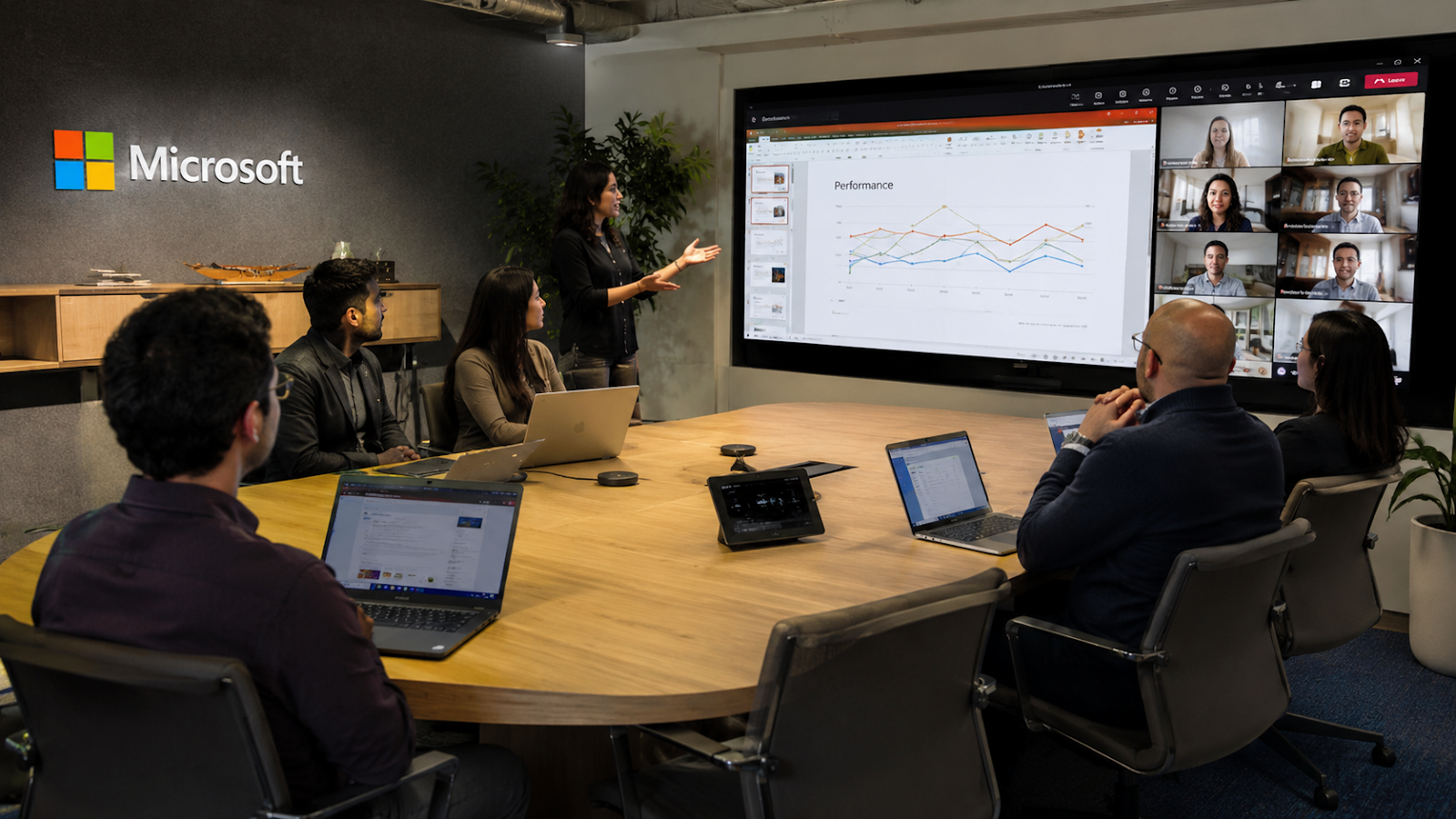
Microsoft Jumped. Meta Sank. Futures Are Trying to Recover.
Wednesday was one of the worst sessions of the year. The Dow fell more than 1,100 points. The S&P 500 dropped over 1.5%. Then Microsoft (MSFT) and Meta (META) reported after the close and split the tape in two.
Microsoft jumped roughly 8% in premarket. Meta fell about 9%. The AI trade is no longer a rising tide. It is a sorting machine.
Futures opened higher on the Microsoft result. Amazon (AMZN) and Apple (AAPL) report after the close.
The Signal
Yesterday's selloff was about Warsh saying the bond market does his job for him. The bond market agreed and pushed yields to a 19-year high. Microsoft's results give the tape a genuine reason to stabilize. If Amazon confirms similar cloud momentum after the close, yesterday starts to look like the low. If it does not, Warsh's credibility gap stays the dominant story.
The Big AI Story Nobody Knows

There's a website called RentAHuman.ai. Its tagline: "Robots need your body."
721,000 people across 100 countries have signed up.
And according to Alexander Green - the man who bought Apple under $1, Netflix at $1.62, Amazon under $2* - this is the clearest signal yet that Phase 2 of the AI supercycle has arrived. (Split adjusted prices)
He's identified three companies set to dominate this next phase.
Microsoft Jumped 8%. Meta Fell 10%. Same Night. Completely Different Stories.
Microsoft posted 43% Azure growth, accelerating from 40% last quarter. Azure crossed $100 billion in annual revenue for the first time. Copilot users hit 30 million paid, up from 20 million. Free cash flow stayed positive.
Meta's free cash flow collapsed to $784 million from $12.4 billion the prior quarter. Zuckerberg gave no 2027 capex guidance, no compute resale timeline, and over $2 billion in social media legal liabilities. Same night, same industry, very different story.
What's Moving
- Microsoft holds $678 billion in contracted revenue backlog, much tied to OpenAI
- Microsoft guided to 45% Azure growth next quarter, still accelerating
- Qualcomm (QCOM) fell on mixed results
- Meta hit its longest losing streak on record, then extended it
The Read
Microsoft showed what AI monetization looks like. Meta showed what happens without an answer. AWS after the close determines which one is the exception.
Warsh Said Yields Do His Job. The Market Agreed and Pushed Them Higher.
Warsh said rising bond yields provide "some comfort" and reduce the need for immediate action. Essentially telling the market it was doing his job for him. The market heard that and pushed the 30-year Treasury to a 19-year high. The Dow fell more than 1,100 points.
JPMorgan pulled its hike call forward from late 2027 to December 2026 within hours. Without forward guidance, the Fed can only hike or hold. A hold now looks like weakness by design.
PCE data is the next input. A print at or above the consensus hardens the September case.
The Fault Line
Warsh speaks at Jackson Hole in late August. He called his prepared remarks "a blank piece of paper." That framing is either deliberate flexibility or the next credibility risk. September 15-16 is the next FOMC meeting. Between now and then, data is the only signal he is willing to give.
He Was Ranked #1 Stock Picker on TipRanks in 2020 — Now He's Sharing his Next 10X Target.
Luke Lango called Nvidia before its 6,164% run… He called Tesla before it shot up as high as 3,825%... And he called AMD before it soared an incredible 27,000%. All told he's found his followers forty-one 10X picks. Click here to hear about Luke Lango's next 10X target.
This ad is sent on behalf of InvestorPlace Media at 1125 N. Charles Street, Baltimore, Maryland 21201. If you're not interested in this opportunity, please click here.
The Pentagon Committed $120 Billion to Patriots and Submarines. Iran Named the Bill.
The Pentagon expanded Lockheed Martin's (LMT) Patriot contract to nearly $59 billion and awarded General Dynamics (GD) and Huntington Ingalls Industries (HII) a $76.6 billion submarine deal. Iran burned through roughly 1,500 interceptors since the war began. Tuesday's attack made replenishment urgent.
The Pentagon's shift to multiyear contracts is designed to push contractors to invest in new factories before the next order arrives. Both deals are undefinitized, meaning full congressional funding is still required.
What's Moving
- Lockheed also holds a preliminary $35 billion Thaad contract on top of the Patriot expansion
- Raytheon (RTX), Northrop Grumman (NOC), and L3Harris (LHX) all benefit from the broader demand surge
- The Virginia-class submarines are nuclear-capable strike vessels; Columbia-class carries ballistic missiles
- Congressional funding approval remains the specific execution risk on both deals
The Read
Defense contractors are now pricing a multi-year demand signal, not a one-off order. The structural shift has been building since Iran closed Hormuz. Tuesday's attack accelerated the bureaucratic timeline but did not change the direction.
Retail Sold Memory at COVID-Crash Pace. Samsung Guided to Undersupply Through 2026.
Retail investors dumped individual stocks at the fastest pace since COVID. Of $213 million sold, 88% was in memory names: Micron (MU), Sandisk (SNDK), Seagate (STX), and Western Digital (WDC). At the same time they rotated into the Roundhill Memory ETF (DRAM), choosing the basket over the names.
Samsung posted a record quarterly profit and guided to AI memory undersupply through 2026. SK Hynix (SKHY) flagged a 50% capex increase. Both stocks barely moved anyway.
What's Moving
- Sandisk fell roughly 55% in July alone, one of the sharpest single-month reversals of the year
- Samsung guided explicitly to undersupply through 2026 driven by agentic AI adoption
- The DRAM ETF is down nearly 38% in July but retail is still buying the basket over individual names
- SK Hynix flagged 50% capex growth for AI demand in the same report that sent its stock lower
The Read
Samsung sees undersupply. Retail sees a broken chart. Both can coexist, but only briefly. Micron reports later this quarter and will be the deciding data point on which read was right.
He predicted the 2008 financial crisis…
He predicted Trump’s election in 2016….
He even predicted the rise of COVID-19 writing:
“The chance we don’t have something on the scale of a national pandemic in the next few years is near zero”
That was three months before the first reported case.
If he’s right again, God Bless America…
Because this crisis will be tectonic in scale…and it's going to begin with the bubble popping in AI.
Carvana Grew 40%. A Million New-Car Buyers Have Vanished and Are Not Coming Back.
Carvana (CVNA) sold nearly 200,000 vehicles in Q2, up 40% year over year. Revenue rose 52%. The stock still fell after hours because full-year guidance came in below the highest analyst estimates. That miss overshadowed a genuinely strong result.
About one million annual buyers have left the new-car market since the pandemic. Average new-vehicle prices are near $50,000. Carvana's fastest-growing segment is households earning over $100,000, up 60% year over year. Affluent buyers are choosing used when they can afford new. That is structural.
The Read
Ford (F) raised full-year guidance despite new-car sales falling nearly 10% in the first half. Carvana grew 40% in the market Ford is losing. Both companies are winning in different halves of the same bifurcated auto market. The consumer is not gone. They are just shopping somewhere Ford is not, and Carvana is.
Microsoft proved AI monetization is real. Meta proved you have to show your work. Warsh gave the bond market permission to do his job, and it obliged with a 19-year high on the 30-year. The Pentagon committed $120 billion to weapons Iran already burned through. Retail panic-sold memory while Samsung guided to undersupply.
Amazon and Apple report after the close. Two more answers needed.
