


Warsh said conditions are not restrictive and September hike odds jumped to 58%. Japan spent $99B defending the yen and mostly lost. Marvell beat and fell 10%. Chevron neared Venezuelan fields. a16z raised a hardware fund.
Short End Sold Off. Long End Held. That Tells You Everything.
The S&P 500 fell slightly. The Nasdaq dropped. The Dow was barely lower.
The 2-year Treasury yield jumped sharply. The 10-year rose less. The 30-year barely moved. That curve move is the market's verdict on Warsh's speech. It expects hikes, not structural inflation.
Gold fell hard. Bitcoin dropped as well. The dollar rose. PayPal (PYPL) dropped after a consortium reportedly abandoned its pursuit. Chip stocks broadly fell. WTI held over $83.
Investor Signal
September hike odds went from 35 percent to 58 percent in a single session. The 2-year moved more than the 10-year or 30-year. That is the rate-hike trade, not the fiscal-panic trade. The market decided the Fed will act. The question now is whether the data between here and September 15 changes that.
AI's "All In" Moment
In the dot-com days, former Wall Street money manager Alexander Green bought Apple under $1. Netflix at $1.62. Amazon under $2. (Split adjusted.)
Now he's doing the same with AI.
And he says it's the biggest opportunity he's seen in 40 years.
Every few decades, a window opens that can change your financial life forever.
Warsh Answered the Question He Had Spent Three Months Avoiding.
Warsh gave his first full account of how he reads the economy. Credit spreads are near historical lows. Business investment is growing at its fastest pace since 2021. Financial conditions are not restrictive. He said the 2 percent PCE target is firm and fixed. Summer's softer prints do not tell him the trend has improved. His standard: the Fed needs to be confident underlying inflation is moving clearly and at sufficient speed. Otherwise there is work to do.
He refused forward guidance and a reaction function. The 2-year jumped about 10 basis points. The 30-year barely moved. September odds jumped from 35.4% to 57.5% in a single session, back to where they sat a month ago before the summer's softer prints pulled them down.
September on the Table
- Warsh said credit conditions "are not restrictive." That is the key phrase.
- He set the burden: confident inflation is moving clearly. Anything short of that is a reason to act.
- The 2-year moved more than the 30-year. That is a hike trade, not a debt spiral.
- Evercore called September "close to a coin toss." Capital Economics called the speech "far clearer and hawkish."
Payrolls Are Now the Only Answer
Payrolls next week are the last major data point before September 15. The committee has one more print. The jobs number decides whether the market's read holds.
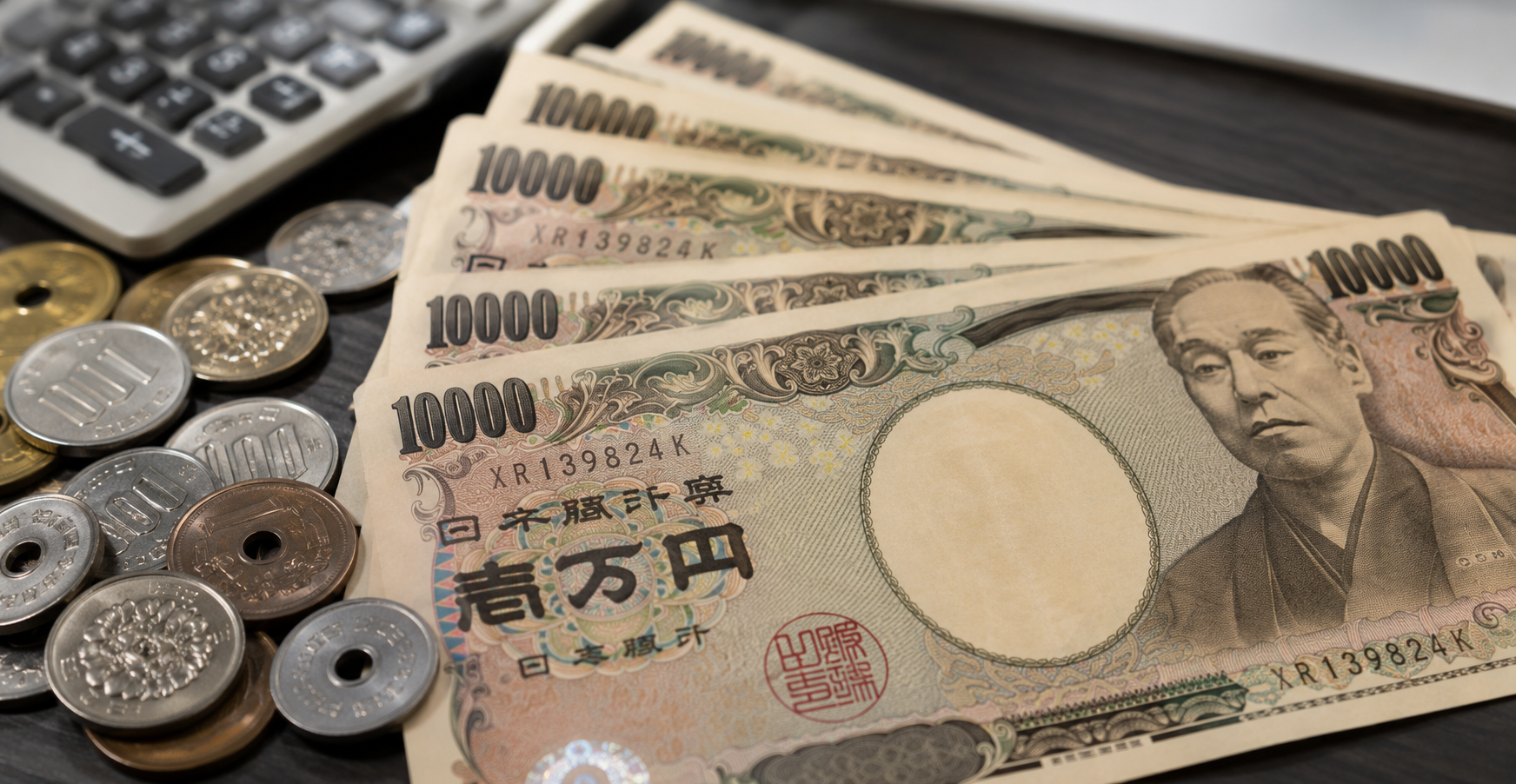
Japan Spent Roughly $99 Billion Defending the Yen and Moved It Three Percent.
Japan spent roughly $99 billion defending the yen over the past month in joint action with the US. Combined with earlier operations, total intervention this year reached roughly $170 billion. The yen traded at 159 to 160 on Friday, against nearly 164 before the operation.
The gains are already fading. The decline is largely driven by foreign investors hedging currency risk while buying Japanese equities. No intervention reverses that flow. The Bank of Japan is expected to hike in September to narrow the policy gap.
What $170 Billion Bought
- $170 billion in intervention moved the yen roughly 3 percent off its low
- Most of those gains are already gone
- Structural yen selling from equity hedging continues regardless of interventions
- BOJ's September 17-18 meeting arrives the day after the US FOMC
The BOJ meeting and the FOMC meeting land back to back. Both are now live for hikes. That sequencing has not happened in this cycle.
Policy Gaps Don't Close Cheaply
When two major central banks are tightening simultaneously, currency flows and bond flows both reprice. Japan narrowing its rate gap changes the math for everyone holding yen-funded trades, and there are a lot of them.
They recommended Amazon, Microsoft, Nvidia, Palantir, and more…
Now, two financial legends have joined forces to show Americans how to protect and grow their wealth…
Because as they reveal, Artificial Intelligence is about to change everything during America’s New 1776 Moment.
Marvell Beat, Raised Its Outlook, and Fell Ten Percent.
Marvell reported quarterly revenue up sharply, beating its own guidance. Data center revenue growth accelerated. It raised its fiscal 2028 outlook to roughly $18 billion, well above its prior forecast. CEO Matt Murphy said AI bookings remain exceptionally strong.
The stock fell nearly 10 percent. It is still up sharply on the year. Goldman Sachs (GS) stayed neutral, citing high investor expectations and less certainty about adding more custom chip customers beyond Google. Intel (INTC), Sandisk (SNDK), and Lumentum (LITE) fell with it.
Winning Raised the Bar
- The Google deal gave Marvell a marquee contract and raised investor expectations in the same move
- Management gave limited detail on how the Google relationship flows into $18 billion by 2028
- Goldman noted peers may be harder to win than Google
- Broadcom (AVGO) reports next week. Its results now carry more weight than usual.
AI revenue growth is no longer enough. The market wants evidence of margin on that growth. Marvell did not supply it.
Three Weeks, Three Beats, Three Falls
Cisco, Applied Materials, Marvell. Each beat consensus. Each fell. The pattern names the problem. Meeting expectations is not the same as clearing the bar the market has set for AI-linked companies.
Chevron Is Close to Venezuelan Fields. Venezuela Is Eyeing the Exit From OPEC.
Chevron (CVX) is near a deal to add two heavy-oil fields to its Venezuelan portfolio. Halliburton (HAL) is in talks to bring equipment to Venezuelan producers. Energy Secretary Wright is expected to travel to Caracas next week. ExxonMobil (XOM) and ConocoPhillips (COP) are staying out, still seeking restitution after Chávez nationalized their assets in 2007.
Venezuela is also examining plans to leave OPEC. It pumped well below its level a decade ago. The UAE already announced its departure. Iraq warned it could leave after the September capacity audit.
OPEC's Shrinking Room
- Venezuela founding member potentially leaving after UAE already announced exit
- Iraq's departure threat linked to the September capacity audit
- Combined UAE and Venezuela exits remove a significant share of core cartel capacity
- Chevron's presence in Venezuela is the US assembling a Western Hemisphere position
A weakened OPEC in a potential surplus market changes the oil price floor. The IEA projects a glut if Gulf flows fully resume. Fewer members means less coordination and less ability to defend prices.
What It Means for Energy Stocks
Chevron building Venezuelan production while OPEC fractures is a specific bet on non-OPEC supply winning market share. ExxonMobil and ConocoPhillips staying out names the restitution risk as real. Two different strategies from three US majors in the same week.
Elon Musk Calling on Military 'Dark Energy' to Power AI

When it was put inside U.S. tanks, they moved almost silently and produced no smoke. Now, Elon Musk is using this strange technology to jump ahead in the AI race - and possibly change the course of history. Click here to see how this could ignite a $10 trillion boom for the stocks involved.
Andreessen Horowitz Raised Its First Hardware Fund.
Andreessen Horowitz raised $1.1 billion for Machine Age, its first dedicated hardware infrastructure fund. Targets include AI processors, memory chips, networking equipment, data storage, and robotics. General partner Raghu Raghuram, formerly VMware's CEO, defined the scope as anything inside the four walls of a data center.
Martin Casado, who also leads the firm's software infrastructure fund, explained the shift directly. Every time there is a major technology transition, hardware faces pressure. This one is more dramatic than any he has seen. Every layer of the supply chain is constrained: chips, memory, power.
Following the Constraint
- Casado's framing: demand is the health indicator. Demand continues. Supply needs capital.
- Memory and power are where the constraint actually binds
- Semiconductor and autonomous-machine startups raised roughly $100 billion over the past year
- Groq licensed to Nvidia (NVDA) for $20 billion. Cerebras (CBRS) went public. New entrants are reaching scale.
The constraint Casado named is the same one Nvidia's $279 billion in supplier commitments named. Capital is now flowing toward supply from multiple directions at once.
Generalist Money Enters Hardware
When a16z, historically a software-first firm, raises a dedicated hardware fund, it signals the opportunity is large enough to justify a structural bet. Memory and power are the two layers where the constraint binds hardest and where the fund's returns will be made or lost.
Warsh moved September odds from 35 to 58 percent with a speech that refused guidance but gave the market everything it needed. The two-year jumped. The long end held. Japan disclosed $99 billion spent defending the yen, mostly surrendered. Marvell beat and fell, the third name in three weeks to do exactly that. Chevron moved toward Venezuelan fields as the cartel Venezuela founded starts to fracture. And a16z raised a hardware fund because every layer of the AI supply chain is constrained.
Payrolls are the last print before September 15.
