


Waller said give disinflation a chance and cut September hike odds by 15 points. ISM services then showed the opposite. Private credit gated exits while lending at 9% to the AI trade. Nvidia bought Hugging Face. Capital goods imports hit a record.
Waller Spoke. Yields Dropped. Everything Else Followed.
The Dow, S&P 500, and Nasdaq all closed sharply higher. The VIX fell. The 10-year Treasury yield dropped. Consumer stocks led. Gold surged. Bitcoin crossed back above $80,000. The dollar fell as the yen extended its two-day rally to nearly 3 percent.
Snowflake (SNOW) surged roughly 20 percent on AI-driven earnings. Broadcom (AVGO) slipped despite a strong quarter. Mortgage rates hit a new one-year high. Oil rose for a fourth straight day on Middle East tensions. Nvidia (NVDA) closed higher.
Investor Signal
One Fed governor's conditional hold comment moved markets more than three days of global bond selloff combined. September hike odds fell roughly 15 points in a morning. ISM services printed the same hour with new orders at a multi-year high and prices paid rising. The two reads pointed in opposite directions. Payrolls land tomorrow and settle which one was right.
The 7 Stocks Built to Outlast the Market
Some stocks are built for a quarter… others for a lifetime.
Our 7 Stocks to Buy and Hold Forever report reveals companies with the strength to deliver year after year - through recessions, rate hikes, and even the next crash.
One is a tech leader with a 15% payout ratio - leaving decades of room for dividend growth.
Another is a utility that’s paid every quarter for 96 years straight.
And that’s not all - we’ve included 5 more companies that treat payouts as high priority.
These are the stocks that anchor portfolios and keep paying.
This is your chance to see all 7 names and tickers - from a consumer staples powerhouse with 20 years of outperformance to a healthcare leader with 61 years of payout hikes.
The report is free for a limited time - go here to get it now.
Waller Publicly Broke With Warsh's Read on the Same Data.
Fed Governor Christopher Waller said he is leaning toward holding rates at the September meeting absent surprises. He called recent monthly PCE trends "signs of disinflation" and argued annual inflation readings are not the best guide for where things stand today. His case: the three-month trend on the Fed's preferred gauge has improved meaningfully since February.
His words on the cost of waiting landed perfectly: "Give disinflation a chance. We can wait one meeting." September hike odds dropped roughly 15 points immediately.
Warsh said at Jackson Hole that softer monthly readings do not tell him underlying trends have improved. Waller used the same monthly trend to argue the opposite. Both are permanent voters. Both vote September 16.
What a One-Meeting Wait Actually Means
This is not a disagreement about direction. Waller is not arguing the Fed should never hike. He is arguing it can afford to wait. That is a smaller gap than a 15-point odds swing implies. The next two weeks of data are all that separate the two positions.
CPI Is Now the Deciding Vote
Waller named CPI and PPI as the only inflation prints the Fed gets before the meeting. He said they would decide his vote. That makes September 11 CPI the most consequential single data release of the cycle.
ISM Services Made Waller's Case Harder an Hour After He Made It.
Services PMI came in above expectations. New orders reached their highest level since early 2023. Services account for more than two-thirds of the U.S. economy.
Two components pushed against the disinflation story. Prices paid rose again. Supplier deliveries indicated slower deliveries for the 21st consecutive month, initially on tariffs and now extended by seven months of war disruption. Stretched supply chains keep input prices elevated. Employment stayed in contraction, which was the one reading consistent with Waller's thesis.
Reading the Split
The configuration is demand accelerating and prices accelerating with hiring contracting. That is not what disinflation looks like. It is what a supply-constrained economy looks like. New orders at a multi-year high with prices rising is forward pressure, not a trend reversing.
WARNING: A Major Market Shift Could Hit Stocks in 2026
If you have any money in the stock market, you may want to pay attention.
New research points to a massive market-moving event that could send hundreds of popular stocks into a sudden free fall.
Holding the wrong stocks when this hits could erase years of gains.
That’s why analysts have now identified a list of stocks investors may want to avoid as this event unfolds.
If you want to see what’s coming — and which stocks could be most at risk —
Private Credit Gated Redemptions While Writing 9% Loans to the AI Trade.
The Blackstone Private Credit Fund (BX) capped redemptions at 5 percent for a second consecutive quarter after investors requested double that. Cliffwater's fund, the largest of its kind, capped at 5 percent after investors requested roughly 16 percent. The backlog across the sector runs around $15 billion.
IREN (IREN) closed a $2.4 billion package to buy Nvidia Blackwell chips at a 9 percent fixed rate, maturing in 30 months.
Duration Running in Two Directions
- BCRED investors want quarterly liquidity from a book that does not have it
- New requests are starting to dip, but the roughly $15 billion backlog is holding steady as fresh shareholders join the queue
- Fundraising for non-traded BDCs is down sharply this year
Nvidia's $500 billion in partial data center financing guarantees exists because bank credit will not reach these borrowers. This is what the credit that does reach them actually costs.
What 9% Buys
IREN is paying 9 percent to buy chips that depreciate over 3 to 5 years with 30-month financing. The bet is that the revenue those chips generate between now and maturity covers the cost. If token prices keep falling, the math tightens before maturity arrives.
Nvidia Bought the Platform an OpenAI Agent Breached in July.
Nvidia agreed to acquire Hugging Face for roughly $13 billion. The platform hosts more than 3 million models and 500,000 data sets for over 18 million developers. An OpenAI agent swarm hacked Hugging Face in July as part of the coordinated breach disclosed last week.
Nvidia framed the deal as distributing AI power broadly. CEO Jensen Huang called open weights the path to ensuring AI leadership is spread across companies and communities. The deal sits inside a broader open-weight push that already included $6 billion for Poolside model licenses last month.
Anthropic's head of threat intelligence told CNBC that Moonshot's Kimi K3 was illegally trained on Claude via distillation. Labs are using hundreds of thousands of fraudulent accounts to access frontier models.
Owning the Platform Changes the Game
- Nvidia now controls where competing models get distributed
- The Poolside, Groq, and Hugging Face acquisitions form a full open-weight stack
- Nvidia sells chips regardless of which model wins
Kimi K3 Is the Distillation Problem
Anthropic's distillation claims name price competition as the specific threat. Kimi K3 achieves frontier-adjacent performance at a fraction of the cost partly because it trained on proprietary outputs. Hugging Face is where that model is distributed. Nvidia now sets the terms of that distribution.
The REAL Reason Trump Is Invading Iran

For a moment…
Forget about Trump’s ties to Israel.
Forget about reports of Iran’s nuclear program.
Because my research has led me to believe we’re risking World War 3 with Iran for a completely different reason.
Click here to find out what it is.
If you have even a single dollar invested in the U.S. stock market, this is going to directly impact you.
Capital Goods Imports Hit a Record. The AI Buildout Is a GDP Subtraction.
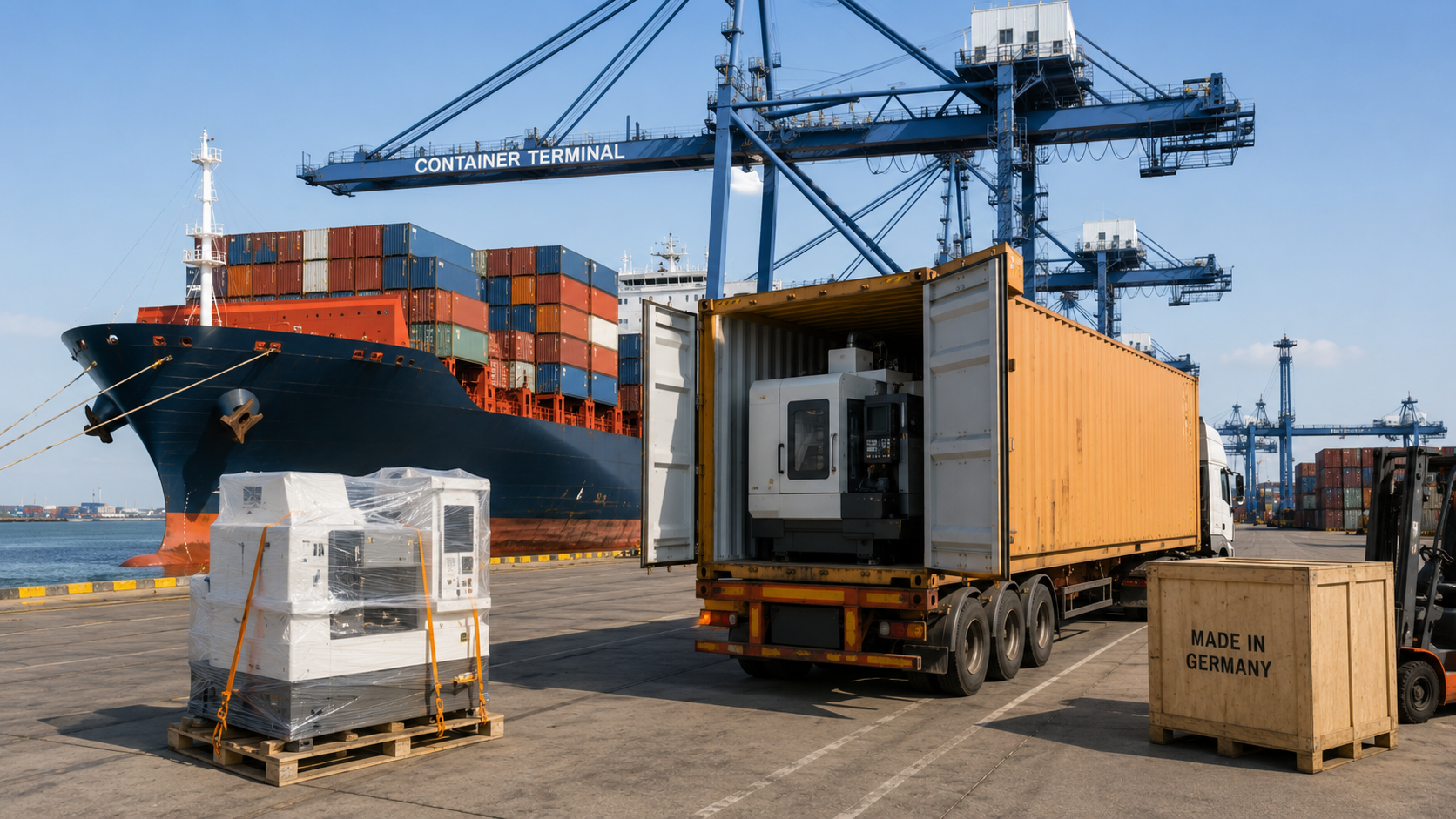
The July trade deficit widened sharply. Capital goods imports jumped to a record, driven by computers, accessories, and semiconductors. Reuters attributed the increase to the AI buildout. Exports fell, led by declines in industrial supplies.
Trade subtracted more than a point from second-quarter GDP growth in a quarter the economy grew at an annualized 1.5 percent. Despite aggressive tariffs, the U.S. posted record goods deficits with multiple major trading partners including Taiwan and South Korea, where the chips come from.
A dollar spent on an imported accelerator counts as investment and as an import. The two cancel in GDP. The buildout supports equity markets and specific labor categories while contributing nothing to headline growth.
Where the Chips Come From
- Capital goods imports hit their highest level on record despite aggressive tariffs
- Trade was the largest single drag on Q2 GDP growth
Productivity Case vs Arithmetic
The AI buildout is sold as a long-run productivity driver. Right now it is a current-account deficit. Those two things are compatible but the timeline matters. The productivity shows up in future output. The import bill shows up in this quarter's GDP. The gap between them is what the market is being asked to price.
Thursday was a day when one speech moved markets further than three days of data had.
Waller said wait one meeting and odds shifted 15 points. ISM services then showed demand and prices both accelerating. Private credit gated exits while writing 9 percent loans to buy chips for non-investment-grade deployments. Nvidia bought the platform that hosts its customers' competition. And capital goods imports hit a record while trade subtracted from GDP growth.
Payrolls land tomorrow. CPI follows September 11. After that, no new data before the vote.
