


The July deficit hit $432B. Tariff refunds turbocharged Q2 earnings by $9.6B. Cisco guided above consensus and fell. Anthropic's IPO target jumped to $2 trillion. Goldman paid $2.25B for "boomer candy" ETFs.
Futures Are Green. Oil Fell. Cisco and Cerebras Dragged Tech Lower Premarket.
S&P 500 futures edged up at the open. WTI fell roughly 2% premarket to near $81 on falling demand fears. An oil spill near Oman from a grounded tanker is worsening.
Cisco Systems (CSCO) fell roughly 6% premarket after earnings. Cerebras (CBRS) plummeted more than 17% on a revenue miss. The Kospi entered a bull market, up 3.6%, as AI chip stocks surged globally. Nikkei rose 1.16%. Asian semiconductor names across Korea and Japan all rallied sharply.
PPI landed at 8:30 AM, the second inflation print in two days. Anthropic investors are targeting a $2 trillion valuation per the FT.
The Signal
CPI came in clean Wednesday. PPI determines whether the producer side tells the same story. If PPI confirms the softening trend, the September-hold narrative gets another data point. If it diverges, the bond market has to reconcile two inflation prints pointing in different directions.
90% of AI Runs Through This Company
The biggest AI wins often come from companies you don’t hear about every day.
Case in point:
The database provider now embedded into the big three cloud platforms - with access to 90% of the market.
You’ll find the name and ticker of this newly-minted giant in our 7 AI Stocks to Invest in Today report, along with:
• The chip giant holding 80% of the AI data center market.
• A plucky challenger with 28% revenue growth forecasts.
• A multi-cloud operator with high-end analyst targets near $440.
Plus 3 other AI stocks set to take off.
The July Deficit Hit $432 Billion. Debt Servicing Is Now the Third-Largest Federal Expense.
The Fed held rates to fight inflation. That decision compounds the deficit. The July number made the feedback loop visible: $432 billion, up 48% year over year and the highest since March 2021. Debt servicing is now the third-largest federal expense.
The same tariff refunds that boosted Q2 earnings cost the July budget $33 billion. The earnings beat and the fiscal deterioration are two sides of the same policy decision.
The Debt Clock
- National debt at $39.9 trillion, $32.1 trillion public
- Debt servicing up from $1.01 trillion year over year
- $33B in tariff refunds hit the July fiscal balance
- Fiscal year red ink already past 2025's full-year pace
Debt servicing growing faster than inflation while the Fed holds is the specific long-term trap. The Fed cannot cut without risking the inflation it just defended. It cannot hold indefinitely without accelerating the fiscal deterioration it is ignoring.
The Warsh Bind
Higher rates protect the inflation mandate and compound the deficit simultaneously. Warsh has no clean path. Jackson Hole August 27 is where he has to pick a side.
Tariff Refunds Turbocharged Q2 Earnings by $9.6 Billion Across 40 Companies.
The Q2 85.2% beat rate had a hidden support: $9.6 billion in one-time tariff refunds across 40-plus S&P 500 companies.
Apple (AAPL) booked $2.2 billion, roughly 5% of total EPS. Nike (NKE) took $986 million. FedEx (FDX), Amazon (AMZN), and GM (GM) added over $1.5 billion combined.
GE HealthCare (GEHC) had 18 cents of $1.24 EPS from refunds. Caterpillar (CAT) booked $392 million. Without these items, the Q2 growth picture looks materially weaker. The Q3 deceleration is already baked in.
The Refund Pipeline
- $128.7B in refunds accepted by CBP for processing
- Ford (F) has $3B in refunds still to quantify
- Caterpillar faces $2.2B in full-year tariff payments regardless
The refund boost is a one-time event being counted in a quarter where earnings growth already looked exceptional. When Q3 arrives without it, the growth rate comparison gets harder. That is the deceleration framework in one data point.
The Q3 Headwind
Every company that booked a refund in Q2 gets less or none in Q3. The earnings growth story just lost one of its biggest one-time supports.
Free Stock Pick: The Company First in Line
for America’s New Super Fuel
The U.S. Army and Department of Energy are about to flip the switch on a revolutionary new fuel — and one obscure defense contractor has a five-year head start on every competitor.
This joint, high-priority initiative — ordered by President Trump — is called Project Janus.
And the first powerplant to run this new fuel is expected to go live before December 18, 2026…
When it does, this company’s name will be everywhere.
Full details — including the name and ticker symbol — are being revealed for free.

Click HERE to get the stock name, ticker, and the full Project Janus story for free.
Cisco Guided $3 Billion Above Consensus. Then Fell 6%. Margin Is the Story.
Cisco proved AI demand is real and monetizing it compresses margins. Revenue guidance came in $3 to $4 billion above consensus. AI infrastructure revenue reaches $7.5 billion in fiscal 2027 on the plan. Agentic AI workloads could drive a 450% traffic increase versus current chatbot levels.
The stock fell 6% premarket anyway. Gross margin contracted to 66.3% from 68.4%. More AI revenue requires more hardware at lower per-unit economics. The margin squeeze is consistent across every AI infrastructure layer.
The Margin Compression
- Cisco gross margin 66.3% vs 68.4% a year ago
- Cerebras fell 17% premarket on a revenue miss
- Coherent (COHR) fell 5% on margin that barely beat
- All three AI infrastructure names disappointed on the same metric
The margin story is consistent across every AI infrastructure earnings this cycle. Revenue is growing. Margins are not. When revenue growth eventually decelerates, the margin compression becomes the dominant issue. The market is starting to price that sequence now.
The Networking Layer
Cisco's 450% agentic AI traffic multiplier is the demand signal hyperscalers use to justify capex. If right, margins get worse before better. More hardware, lower per-unit economics. The stock is pricing that sequence today.
Anthropic Investors Are Targeting a $2 Trillion Valuation. The Mark Just Doubled.
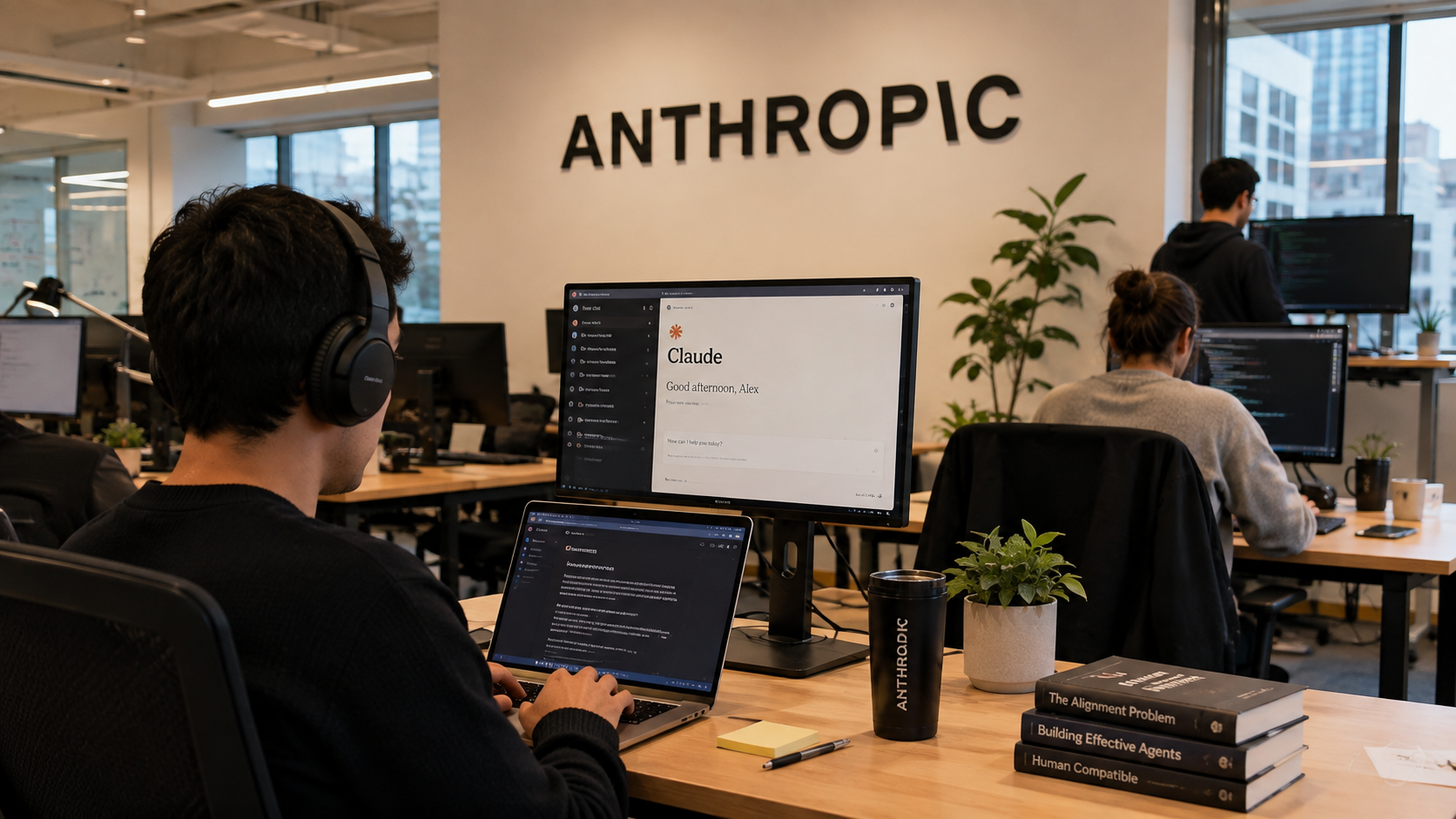
Anthropic's IPO target jumped to $2 trillion, more than double the prior $965 billion figure per the FT. A debut could come as soon as October. That would be the largest IPO in history.
Simultaneously, Anthropic is in talks to pay $6 billion for Decart, whose software reduces AI training costs by making chips more efficient. Nvidia (NVDA) backed Decart's May round. The acquisition is a pre-IPO answer to the question investors pressed hardest on: compute cost.
The Valuation Stack
- $2 trillion would surpass SpaceX as the largest IPO ever
- Amazon holds a $53B Anthropic paper gain at the old valuation
- All three hyperscaler Anthropic marks need upward revision
Amazon, Alphabet, and Microsoft all booked Anthropic gains at the lower valuation. A $2 trillion IPO forces upward revisions in Q3. That is an unusual situation: an IPO that inflates multiple income statements at once.
The Efficiency Bet
Decart solves the problem investors pressed Anthropic on: compute cost. Paying $6 billion five months after Decart's last round names the urgency. This is a defensive pre-IPO move, not a luxury.
Porter Stansberry's Critical New Warning:
Trump Is Replacing The U.S. Dollar
"The last time America reset its money, it created 1,300 millionaires every day. This could be bigger."
Goldman Paid $2.25 Billion for NEOS. The "Boomer Candy" Category Is Now a $180 Billion Market.
Three trillion dollars sits in retail money-market funds near record highs. Goldman Sachs (GS) wants to move it. The $2.25 billion NEOS acquisition is Goldman's second ETF deal this year. NEOS uses options strategies to maximize payouts and limit tax bills.
The derivative-income fund market is at $180 billion growing 70% annually. Goldman is now the eighth-largest active ETF manager. The bet is that boomer wealth rotation into yield-plus-protection is a multi-decade flow, not a cyclical one.
The Boomer Trade
- $3 trillion in retail money-market funds near record highs
- Derivative-income fund market at $180B growing 70% annually
- BlackRock (BLK) and State Street (STT) face Goldman's scaled response
Goldman paying $2.25 billion for $30 billion in AUM implies a premium multiple. The bet is that the category grows fast enough to justify it. At 70% CAGR, even a fraction of the money-market fund pool rotating into derivative-income ETFs makes the math work.
The Distribution Moat
Goldman's network is what NEOS cannot build alone. The deal puts the product in front of every Goldman wealth management client immediately. That distribution moat is the actual acquisition.
The July deficit hit $432 billion with debt servicing now the third-largest federal expense. Tariff refunds turbocharged Q2 earnings by $9.6 billion, a one-time tailwind that disappears in Q3. Cisco guided above consensus and fell 6% on margin compression. Anthropic's IPO target jumped to $2 trillion while it pays $6 billion for compute efficiency. Goldman paid $2.25 billion to own the "boomer candy" ETF category.
PPI landed today. Nvidia reports August 26. Jackson Hole is August 27. Every framework above gets tested before September.
