


PCE stayed hot and September hike odds jumped. Warsh heads to Jackson Hole without a clear inflation view. Meta settled for $18B. Gates wants to tax AI tokens. Intuit is losing customers on price.
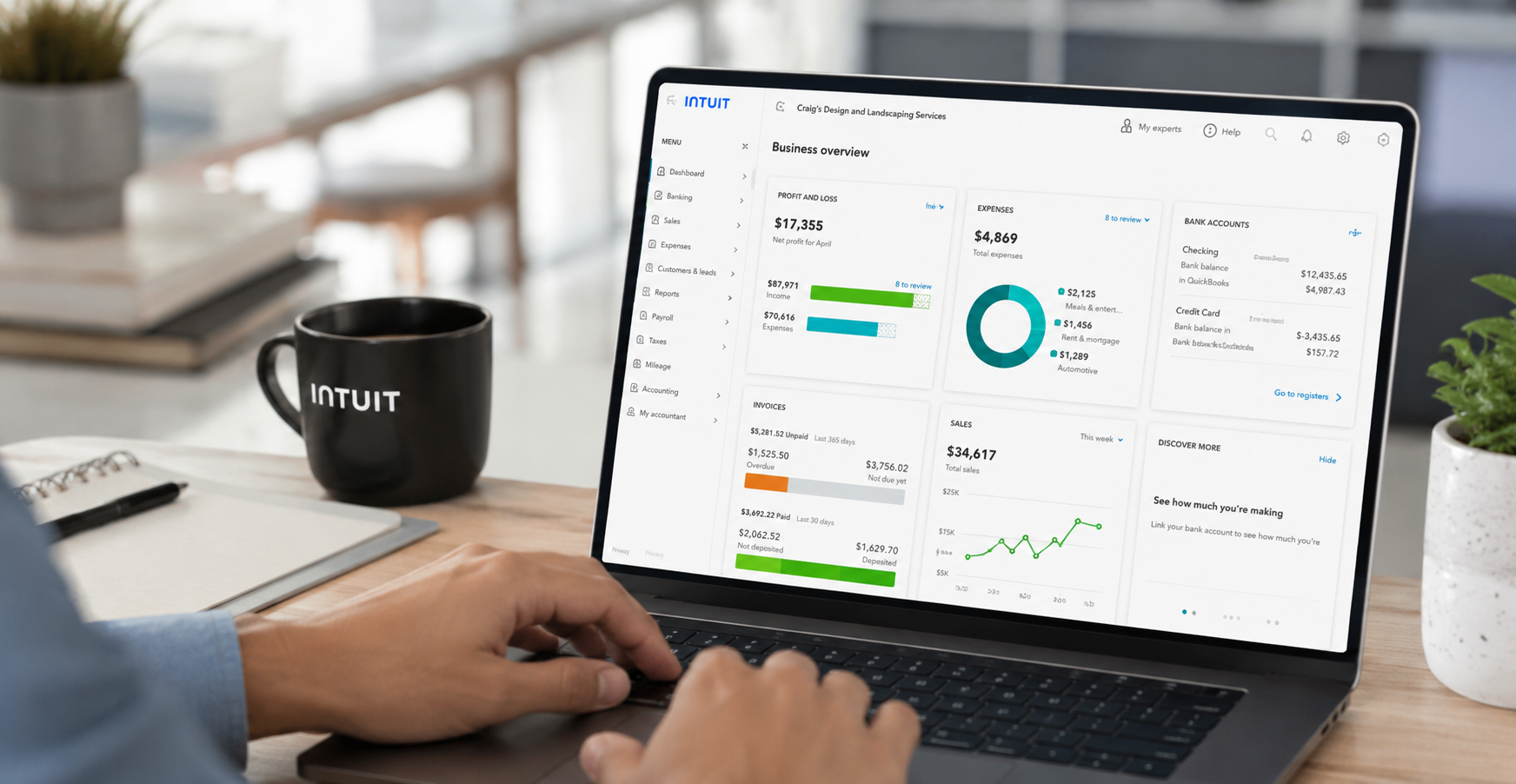
Stocks Barely Moved. The Data Underneath Did Not.
The S&P 500 and Nasdaq closed slightly lower. The Dow edged down. Nvidia (NVDA) slipped ahead of its report after the close. WTI traded down all afternoon, closing below $82.
Elsewhere in the session: Charles Schwab (SCHW) and LPL Financial (LPLA) fell after Vanguard announced the acquisition of Altruist, a fintech wealth management platform that competes directly with Schwab for adviser custody assets.
Boston Scientific (BSX) fell after disclosing a cyberattack that disrupted order processing and shipping. Anthropic's total addressable market estimate of $30 trillion leaked ahead of its IPO, topping SpaceX's $28.5 trillion figure from May.
Investor Signal
The session looked calm on the surface. Under it, PCE printed hot, September hike odds jumped, and Nvidia's upcoming earnings moderated the session. Warsh speaks Friday with a question he still has not answered publicly. The calm was a waiting room.
Markets Don't Reprice When a Mine Pours Its First Gold. They Reprice the Day Uncertainty Dies.
On May 21, 2026, a federal bank voted unanimously to lend nearly $3 billion to build a gold mine on American soil.
Congress got 25 days notice. Nobody objected.
Final papers expected before year's end. The day that ink dries, three things happen at once:
- Funding risk goes to zero
- The U.S. government becomes financially fused to the project
- Wall Street re-rates the stock from speculative developer to federally backed strategic asset
One more detail. This company's filings carry a phrase I've never seen on a gold project: substantial support and partnership from the Department of War.
Why? The deposit carries a second metal alongside its gold — one China formally banned from export to the United States. The only domestic reserve of it in the country.
Gold for the dollar war. The banned metal for the shooting war. Both from the same pit.
The company is about one fiftieth the size of Newmont.
PCE Stayed Hot. September Hike Odds Jumped to 44%.
Headline PCE held at 3.7 percent annually in July. Core PCE held at 3.3 percent. That is the 65th consecutive month above the Fed's 2 percent target. Core PCE came in at 0.246%, a hair below rounding to 0.3%. That is a one-month annualized rate near 3%.
Futures moved from about 36 percent odds of a September hike to 44 percent within hours. Traders are now fully priced for a hike by year end. The same report showed corporate profits posting their second-largest quarterly gain on record and consumer spending revised higher. Q3 GDP is tracking at roughly double the second quarter.
The Data Shift
The previous soft inflation prints that gave the Fed cover to hold in July closed with this print. September is now a live meeting. Barkin already called July's hold a close call. Three officials dissented in favor of a hike then. The question now is whether any of the remaining committee members have moved since.
Warsh Is Heading to Jackson Hole Without Answering the Question That Decides Everything.
Nick Timiraos framed Friday's speech around one question. Is inflation high because of one-off shocks like tariffs and the oil price spike from the conflict with Iran, or because the economy is running too hot?
The first answer requires nothing. The second requires hikes. Warsh has not said which he believes.
He has argued rising yields mean the market is doing the tightening for him. That argument broke when Bessent started managing the long end directly. Three officials dissented in July. Some committee members hoped Warsh would offer more substance before now.
Framework Gap
Warsh has not said whether inflation is shocks or an overheating economy. Bessent's buyback logic directly conflicts with Warsh's "markets tell the Fed what to do" framework
Three dissenters in July is the most in a decade. Friday is the first venue where he has to take a visible position
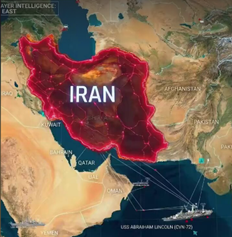
The REAL Reason Trump Is Invading Iran
For a moment…
Forget about Trump’s ties to Israel.
Forget about reports of Iran’s nuclear program.
Because my research has led me to believe we’re risking World War 3 with Iran for a completely different reason.
Click here to find out what it is.
If you have even a single dollar invested in the U.S. stock market, this is going to directly impact you.
Meta Settled With 48 States for $18 Billion. It Made a Third Contingent on TikTok and YouTube.
Meta (META) agreed to $18 billion with 48 state attorneys general, ending a federal trial over social media's harm to children. Meta guarantees roughly $12.7 billion. The remaining $5.3 billion is paid only if TikTok and YouTube each adopt matching restrictions and pay their own $5.3 billion share.
Meta's own commitments include default two-hour daily limits, overnight blocks, disabled push notifications during school hours, and parental controls over settings. The attorneys general had sought roughly $200 billion.
The stock rose on an $18 billion payment because the market was pricing the $200 billion the states asked for. Meta converted open-ended liability into a capped, scheduled expense.
Contingent Structure
- Meta guaranteed 70 percent and made a third someone else's problem
- Refusing costs TikTok and YouTube nothing. Accepting costs them $5.3 billion and saves Meta the same.
- Meta has now effectively written industry-level child safety standards and dared competitors to match them
- Alphabet (GOOGL) has not yet responded
The Liability Ceiling
Meta still faces thousands of suits from school districts and individuals. The $18 billion settles state AG exposure. It does not resolve product-liability claims, which run on a separate legal theory and have no cap.
Gates Said There Is No Plan. He Proposed Taxing Every Token.
Bill Gates published a 12-page essay today. The headline argument was direct: the world is not preparing for AI's labor disruption.
Entry-level and midlevel jobs face the fastest displacement. Blue-collar work is next. The shift from agriculture to office work took generations. Law, software, customer service, and manufacturing will feel it over a decade.
He called for taxes on AI tokens and bots. He proposed setting aside certain jobs for humans and called for US-China regulatory coordination.
A token tax directly threatens the unit economics every AI capex forecast assumes. The entire buildout is priced on inference costs falling toward zero. A per-token levy sets a floor under them permanently.
Policy Risk
- A token tax enters mainstream policy discussion from a source the industry cannot dismiss
- The "Pacing the Frontier" signatories named similar concerns just weeks ago
- Gates is not arguing AI fails. He is arguing it works, fast, and nobody has priced the consequence.
- That critique is harder to answer than the bubble case, because it assumes the technology succeeds
The Disruption Timeline
Gates estimated a decade for the full impact. The capex cycle being built now assumes revenue to match. If the labor displacement triggers policy before revenue arrives, the math on every data center lease changes.
Hidden in Tesla's Filing: A $12 Billion "Super Startup"
Pull up Tesla's most recent SEC filing. Page 5.
And you'll see a single line showing $12 billion in revenue from a brand-new "super startup" Elon Musk has been quietly incubating inside Tesla.
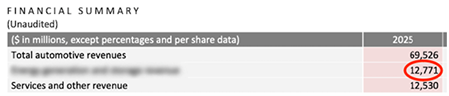
This new "super startup" has nothing to do with cars or robots or space or AI…
But it sits at the center of what Blackstone calls "a $23 trillion investment opportunity."
And on Oct 21st, Elon is expected to pull back the curtain and reveal exactly what he's building.
But Adam O'Dell already knows… and he reveals it all in this urgent video.
Intuit Cut Its Growth Outlook. It Is Losing Customers on Price.
Intuit (INTU) beat on the quarter. It cut guidance for fiscal 2027 revenue growth to 9 to 10 percent, down from 14 percent the prior year. The three-year growth target for its business solutions segment was also cut. The stock fell sharply before recovering to close down roughly 3 to 5 percent. It is down nearly half in 2026.
The CEO said the company is losing do-it-yourself tax customers to low-cost alternatives and plans to compete on price. TurboTax revenue has never grown below 7 percent in eleven fiscal years. The new guidance implies it will.
Separately, Microsoft (MSFT) buries Azure revenue inside a broader segment with no margins disclosed. It recorded over $24 billion in OpenAI revenue last year with no prior-period comparison.
The SaaSpocalypse
- TurboTax guidance cut below its eleven-year floor is not a one-quarter miss
- Intuit is not losing to an AI startup. It is losing to cheaper alternatives made credible by AI.
- Cutting price is the correct competitive response. It also permanently resets the margin.
- H&R Block (HRB) guided higher for the same period
Disclosure Pattern
Microsoft declining to break out Azure while OpenAI reports $24 billion in Microsoft revenue is a gap the market will eventually force closed. Intuit cutting guidance while it still has pricing power is a warning for any SaaS company that waited to act.
Wednesday delivered a session that looked quiet and was not.
PCE stayed hot and September hike odds spiked to 44%. Warsh arrives at Jackson Hole Friday without having answered the question that determines his next move.
Meta settled a massive child safety case for $18 billion and made a third of it contingent on its competitors. Gates argued there is no plan for AI's labor disruption and proposed taxing tokens. And Intuit cut its growth outlook because it is losing customers on price.
