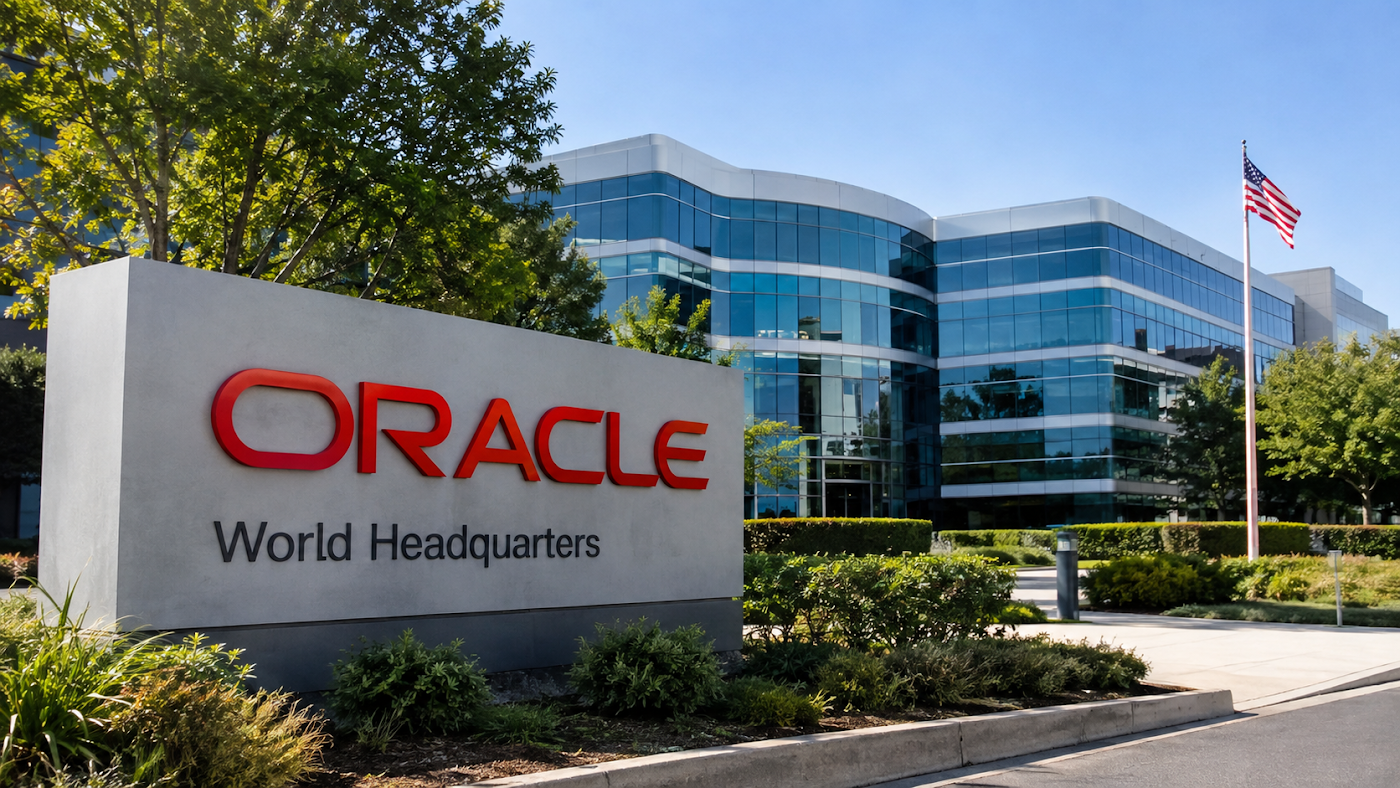
MARKET PULSE Bond Volatility Hit Its Highest Since the War Began. Stocks Barely Moved.Dow, S&P 500, Nasdaq, and Russell 2000 all closed slightly down. The story was not in equities. The MOVE index, the bond market's equivalent of VIX, surged to its highest level since the early days of the Iran war. The 10-year closed at 5.16 percent. The 30-year at 5.46 percent. WTI rose on conflicting oil headlines. Discussions of a phased Hormuz reopening emerged and then got muddled by fresh Houthi attacks. The Freddie Mac 30-year mortgage rate crossed 7 percent for the first time since early last year. Richmond's Tom Barkin, speaking Tuesday, put the AI investment surge alongside consumer spending, tariffs and the Middle East as forces keeping inflation more than a point above target, and warned that "one 'talking-to' might not be enough.” The Trump-Xi summit took place at the White House. China agreed to buy 25 million tons of US soybeans. Farm goods purchases are expected to be the headline deliverable. Beijing reportedly weighed larger purchases to help Trump before November. Investor Signal Bond volatility at a war-era high while equities barely flinched is the session in a sentence. The stock market is still treating this as a rates problem that resolves. The bond market is treating it as a regime change. One of them is right. The Oracle news suggests the credit market has already picked a side. PREMIER FEATURE I've Read a Lot of Mining Filings. They All Sound the Same.This one stopped me cold. Sitting in the filings of one small American gold company is a phrase I have never seen on a gold project: substantial support and partnership from the Department of War. The Department of War does not partner with gold miners. Except it's partnering with this one. Here's why. The deposit carries a second metal — one China formally banned from export to the United States. The only domestic reserve of it in the country. Gold for the dollar war. The banned metal for the shooting war. Both from the same pit. Washington didn't stop at words. On May 21, 2026, a federal bank voted unanimously to lend nearly $3 billion to build it. Congress got 25 days notice. Nobody objected. When final papers are signed, funding risk goes to zero — and Wall Street re-rates the stock from speculative developer to federally backed strategic asset. The company is about one fiftieth the size of Newmont. Read the filing for yourself AI BUILDOUT WATCH Oracle Invoked Force Majeure on a Data Center That Hasn't Opened.The clause built for hurricanes just showed up in an AI lease. Oracle (ORCL) sent a force majeure notice to Blue Owl's (OWL) development unit for Project Jupiter, the 2.45-gigawatt New Mexico campus behind the Stargate announcement. It is seeking to defer payments if the site misses its 2028 opening. Both sides said nothing has changed. The market disagreed. Oracle fell about 6 percent and is down 31 percent for the year. Blue Owl fell. Oracle's credit-risk gauge hit a record. A key gas pipeline slipped nearly six months after New Mexico rejected its route. Quinn Emanuel warned in June that data-center force majeure is no longer boilerplate. It now decides whether a delay stays isolated or cascades through the financing structure. Investor Signal Hyperscaler leases have been treated as the low-risk end of data-center construction debt, the contracted revenue that makes an $18 billion loan bankable. Oracle has now put on record a claim to pay later if the site slips, and lenders marked that loan below 90 cents within hours. The named cause is a pipeline permit in New Mexico, not demand for compute. The same OpenAI relationship covers four other US sites. One force majeure is a project problem. Two would be a template. RATES WATCH Wednesday Was the Shock. Thursday the Market Decided It Wasn't Done.The 30-year at a 2004 high. Futures pricing four more hikes. The 30-year reached about 5.46 percent, its highest since 2004. The 10-year closed at 5.16 percent. October hike odds moved above 75 percent from roughly 49 percent a week ago. Futures imply a policy rate near 4.8 percent by the end of 2027. New York Fed President Williams called another hike by year-end "reasonable." Philadelphia's Anna Paulson said underlying inflation is running 2.5 to 3 percent with "little signs of closing" the gap. She expects "some modest further tightening." Madison Investments' Mike Sanders said yields can no longer be attributed to deficit concerns alone. The risk of a policy mistake is rising. Investor Signal A week ago the debate was one more hike or none. Now futures carry four, and Williams, a permanent voter, is validating the direction. The gap between four hikes priced and the committee's own median of one is the risk Sanders is naming. Every week that gap holds wide, the cost of disappointing it compounds. FROM OUR PARTNERS Satellite Confirms: Elon Musk Activating Strange 'Dark Energy' Across U.S. South
Confirmed by satellites 300 miles above the Earth's surface... Elon Musk is rolling out a breakthrough technology that could replace our need for foreign oil and ignite a $10 trillion boom a small group of stocks. Click here to learn how you can invest in this before it becomes mainstream. TREASURY MARKET WATCH Hedge Funds Are Backing Out of the Basis Trade. The Opportunity Shrank Before They Did.The trade everyone worried about breaking the Treasury market is getting smaller, and not for the reassuring reason. Morgan Stanley estimates leveraged basis-trade holdings are down 20 percent this year to $1.2 trillion. Hedge funds' net short positions in 2-year futures have fallen more than 40 percent from a March high. The reason is opportunity loss, not caution. Looser bank leverage rules let dealers hold more Treasuries, removing the price gaps the trade arbitraged. Bessent's buybacks lifted older off-the-run bonds, eating into the rest. BofA's Meghan Swiber said the opportunity set is lower and asset manager demand for futures is also moderating. Morgan Stanley still calls the trade alive and well. Investor Signal A smaller basis trade reads as less systemic risk, and partly it is. But the bonds didn't disappear, they changed owners. Looser leverage rules let bank dealers absorb what hedge funds left, and those are the same desks stuck with an unusually large share of Wednesday's 5-year auction. The other side is pulling back too, with asset managers trimming the futures longs the trade depends on. Less leverage in the market leaves a plainer question, and the next auction answers it: who is still buying at these yields. WEALTH WATCH Family Offices Named Inflation Their Top Concern and Cut Only One Thing.A year ago tariffs were the worry. Now it's inflation, by a wide margin. Citi Wealth's survey of 351 family offices, taken in June and July, found 63 percent ranking inflation their top concern, up from 37 percent in 2025. Tariffs fell from 60 percent to 18 percent. Portfolios mostly held. A net 34 percent raised public equities. A net 15 percent added private equity and cash. The one clear cut was private credit, with a net 12 percent planning to reduce. The most bearish allocation in the survey. North American offices lean into real estate more than the global average. Investor Signal Family offices have long horizons and can wait through redemption queues. That makes them natural buyers of locked-up private credit structures. They are the ones stepping back. Blue Owl, whose development unit just received Oracle's force majeure notice, is a major private credit manager. The pipe that funded the buildout and the lender taking the notice are connected. PARTNER SPOTLIGHT Is Elon About to Create a New Generation of Millionaires?
When Elon took SpaceX public, an estimated 4,400 employees became millionaires – with top executives, welders, and even cafeteria workers getting rich overnight. Sources close to Elon indicate that he's about to hatch a new opportunity to create generational wealth – and you don't have to work for Elon to see massive potential profits. Click here for the full details. This ad is sent on behalf of InvestorPlace Media at 1125 N. Charles Street, Baltimore, Maryland 21201. If you're not interested in this opportunity, please click here. BANKS WATCH An AI Agent Made Deposits Look Easier to Move. Bank Stocks Went the Other Way.Meta's agent is up more than 20 percent. Bank stocks went the other direction. Meta (META) is up more than 20 percent since Muse launched two weeks ago. The KBW Nasdaq Bank index fell nearly 3 percent in the same stretch. Schwab (SCHW) and LPL (LPLA) each fell more than 6 and 7 percent Tuesday, respectively. Bank of America (BAC), JPMorgan (JPM), and Wells Fargo (WFC) all fell more than 3 percent. Every one of those firms earns a yield on customer cash that habit kept in place. If a customer can tell an agent to find the highest yield, that habit disappears. The personal savings rate fell to 2.6 percent in April, the lowest since 2022. Amazon blocked Muse from purchasing on its site. It has also blocked agents from OpenAI and Google. Investor Signal Cheap deposits were a competitive advantage built on friction, and removing friction doesn't require a new product to exist. The buildout presses on the same savings twice: bond issuance and loan growth bid up what cash earns, and the agents make what's left easier to move. With the savings rate at 2.6% in April, the lowest since 2022, there is less cash to compete for in the first place. Third-quarter deposit costs are where this stops being a narrative and becomes a number. CLOSING LENS Oracle asked for room on a data center that hasn't opened. Lenders marked the loan below 90 cents within hours. The 30-year held above a 2004 high. Futures carry four more hikes. The basis trade shrank because the opportunity did. Family offices cut private credit. And an app made deposit-moving feel trivial. The AM send framed the buildout as a credit question. By close, a tenant had invoked a clause to pay later, and family offices were already reducing exposure to the lenders funding construction. The credit market picked its side faster than the equity market did. 3 Stocks at a Major Turning PointSomething unusual is happening beneath the surface of three widely followed stocks.
In each case, the fundamentals are saying one thing... while institutional activity, management signals or the options market are saying something else. That kind of disagreement can matter. Because when the evidence stops lining up, the next move in the story often comes down to a handful of signals most investors never think to watch. Our new FREE Market Tell Special Report breaks down three of these situations, and shows you exactly what we’re watching next. Get the Free Report: 3 Stocks at a Major Turning Point → | 


