


Nvidia invested $3.5B in MediaTek to lock in its interconnect. Momentum just had its worst quarter in 25 years. Tariff refunds juiced Q2 profits but fade next quarter. FSB named frontier AI a systemic risk. California killed utility wildfire relief.
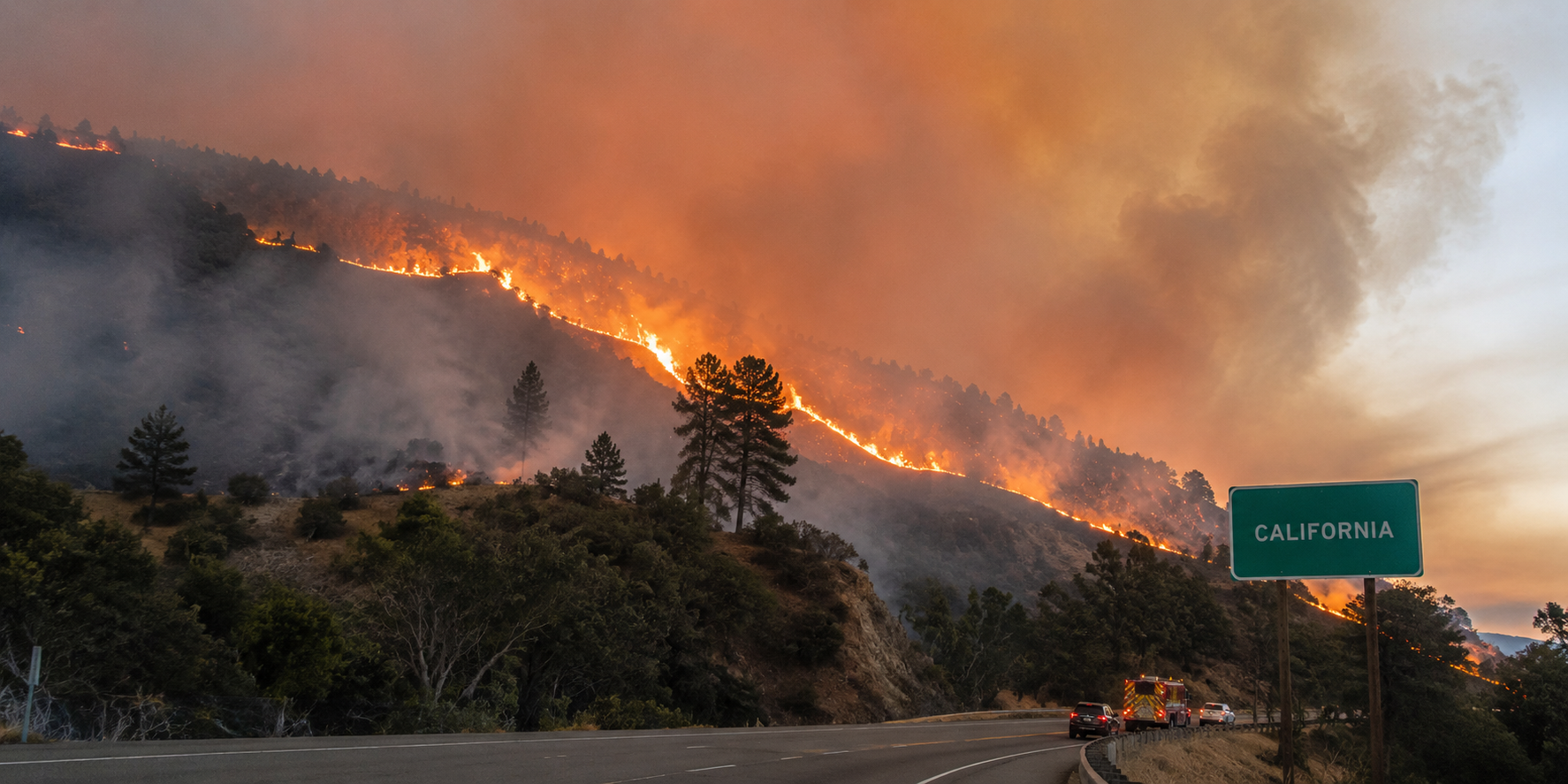
Oil Spiked. Stocks Fell. The Market Re-Priced the Weekend.
The Dow lead the selling, losing 0.7% on the day. The S&P 500 and Nasdaq were less severe, down 0.33% and 0.12%, respectively. WTI surged after U.S. forces struck Iranian rocket launchers in the Strait of Hormuz over the weekend. The 10-year Treasury yield pushed higher to 4.76%, extending Friday's post-Warsh move. VIX edged up. Gold fell. Bitcoin was flat.
PG&E (PCG) and Edison International (EIX) each fell roughly 20 percent after California lawmakers rejected wildfire liability relief. Both had gained this year, partly on AI data center demand.
Strategy (MSTR) bought Bitcoin for the first time since June. Aon (AON) agreed to acquire USI Insurance from KKR (KKR) for roughly $17 billion.
Investor Signal
Bessent outlined reasons the Fed might hold in September. Goldman's Solomon said long-term rates reflect fiscal reality, not a calamity. Oil up, utilities down, yields at new highs. Payrolls land Friday.
The Big AI Story Nobody Knows
|
There's a website called RentAHuman.ai. Its tagline: "Robots need your body."
721,000 people across 100 countries have signed up.
And according to Alexander Green - the man who bought Apple under $1, Netflix at $1.62, Amazon under $2* - this is the clearest signal yet that Phase 2 of the AI supercycle has arrived. (Split adjusted prices)
He's identified three companies set to dominate this next phase.
Nvidia Put $3.5 Billion Into MediaTek. Its Interconnect Goes With Them.
Nvidia invested $3.5 billion in MediaTek through convertible bonds. Alphabet (GOOGL) joined the $3.9 billion raise. MediaTek adopts Nvidia's NVLink Fusion and its new NVHBM memory technology. The two will collaborate on AI platforms for PCs and automobiles.
MediaTek is trying to challenge Broadcom (AVGO) and Marvell (MRVL) in the custom silicon market. It is building chips that help data center operators design their own components. Nvidia just made sure those chips plug into Nvidia's networking ecosystem. Huang called it a massive engineering alignment. On circularity, he said MediaTek does its own business and Nvidia does its own.
Locking In a Layer Down
- MediaTek's XPU becomes part of Nvidia's supply chain and vice versa
- NVLink Fusion is now in the custom silicon competitor's architecture
- Nvidia defending networking and memory interconnect is a layer below the GPU
- CUDA's playbook is being applied to where the next competition will happen
Huang's Real Answer
The GPU monopoly has challengers it cannot stop. Moving the lock-in to interconnect is the strategic answer to that. Broadcom's earnings on Wednesday will show whether that answer is working yet.
Momentum Just Had Its Worst Quarter in 25 Years. Positioning Is Still Unwinding.
The S&P 500 Momentum Index fell sharply since July 1 against a small S&P 500 gain. It is on track for its biggest quarterly underperformance in 25 years. July was the second-worst single month for momentum in roughly 40 years.
Goldman's most-popular hedge fund long basket posted its biggest one-month underperformance in more than 20 years. Short positions in Nasdaq-100 futures recently hit some of the highest levels in two decades. Moderna (MRNA) and other heavily shorted biotech names crushed the trade after cancer vaccine news. The momentum index had soared in Q2 before this reversal.
Not a Sentiment Story
- Goldman's hedge fund basket underperformed by more than two decades of comparable months
- Nasdaq-100 shorts near two-decade highs
- Nvidia rising after earnings inside the unwind shows the crowd is still there, just not adding
- Moderna's surge came in part from shorts covering, not necessarily new longs entering
Quarter-End Pressure
Performance reporting forces decisions when the clock runs out. The upcoming quarter-end adds accelerating pressure to Managers holding underwater momentum positions.
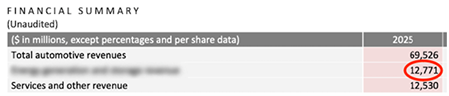
Hidden in Tesla's Filing: A $12 Billion "Super Startup"
Pull up Tesla's most recent SEC filing. Page 5.
And you'll see a single line showing $12 billion in revenue from a brand-new "super startup" Elon Musk has been quietly incubating inside Tesla.
This new "super startup" has nothing to do with cars or robots or space or AI…
But it sits at the center of what Blackstone calls "a $23 trillion investment opportunity."
And on Oct 21st, Elon is expected to pull back the curtain and reveal exactly what he's building.
But Adam O'Dell already knows… and he reveals it all in this urgent video.
Profits Rose Sharply in Q2. Tariff Refunds Did More Work Than Earnings Season Admitted.
S&P 500 per-share earnings rose 53% in Q2 against a year earlier. Sales grew 16%. Excluding large investment gains at Amazon (AMZN) and Alphabet, earnings still rose at their fastest pace since fall 2021. Companies raised profit guidance over lowering it by nearly two to one.
Tariff refunds are the hidden factor. Apollo estimates refunds account for more than 4 percent of current quarter economic growth. Abercrombie (ANF) cited roughly $120 million in expected refunds. Garmin (GRMN) booked $21 million. Walmart (WMT) received roughly $2.9 billion. Many companies flowed refunds to the bottom line rather than to shoppers.
Dollar General (DG) posted strong traffic and comparable sales growth but CEO Todd Vasos noted core customers remain financially constrained. Walmart said consumer behavior was softer than February.
Where the Growth Came From
- Tariff refunds are a one-time legal event, not a recurring revenue driver
- Companies that kept refunds as margin rather than cutting price will face tough comparisons
- Q4 guidance is the first print where the refund tailwind disappears
- Apollo's Torsten Slok tied the consumer outlook directly to the AI boom continuing
Slok's Conditional
Strong consumer income, elevated equities, and AI spending are his three pillars. Two of those are the same variable. If AI investment slows, equity values and corporate margins both adjust, and the payrolls number this week becomes the first data point in that sequence.
The Head of Global Financial Stability Told the G20 Frontier AI Is His Biggest Worry.
Andrew Bailey, writing as chair of the Financial Stability Board, told G20 finance ministers frontier AI may materially alter the speed, scale, and economics of cyber risk. He called it his most immediate concern for the financial system. He specifically flagged concentrated third-party service providers as the systemic vulnerability.
He said institutions must prepare for simultaneous disruption across firms sharing the same technology. He also cited fragilities in sovereign debt, growing leverage among equity investors, and stretched AI valuations.
Concentration Is the Risk
- The specific threat Bailey names is not a single breach but simultaneous disruption across firms
- Every major institution is converging on the same handful of cloud and model vendors
- CrowdStrike (CRWD) and Palo Alto Networks (PANW) are already pricing this demand
- A G20 communiqué that names AI cyber risk moves it from FSB letter to policy mandate
One Step From Mandate
Bailey's letter is the pre-policy layer. If the G20 communiqué picks it up, cyber resilience requirements become a regulatory conversation, not just a corporate one. That is a different environment for financial institutions running AI infrastructure.
Why are companies flying spy planes over Elon's closely-guarded AI lab?
Elon did the seemingly impossible – far faster than anyone expected...
And it's sent the tech industry into PANIC MODE.
ChatGPT, Claude, Google Gemini, and DeepSeek could soon become obsolete.
And three little-known firms could soar 10X or higher as a result.
California Killed the Wildfire Liability Shift. PG&E and Edison Each Lost Roughly a Fifth.
California lawmakers filed a wildfire bill that updates response protocols but leaves liability with publicly traded utilities. PG&E and Edison each fell roughly 20 percent. Sempra (SRE) also fell. Both had gained this year partly on expected AI data center load growth.
At least three analysts cut recommendations. BMO downgraded PG&E, saying it will be harder to attract capital against peers with large-load growth and no wildfire liability. Mizuho cut all three to neutral. A 2027 legislative attempt is an uphill climb.
Capital and Transmission Are the Same Problem
- PG&E and Edison both carry open-ended wildfire liability with no legislative floor in sight
- Both were gaining this year on AI data center demand in their service territories
- California data center interconnection queues may now shift toward other regions
- A 2027 legislative attempt starts with a new state administration after November
AI Infrastructure Needs Power Utilities Can Fund
Thalacker's framing closes the loop. AI needs power. Power needs capital. Capital avoids open-ended liability. California just confirmed that cycle does not close here without a legislative fix that is at least a year away.
Monday delivered a clean split between what the fundamentals say and what the positioning is doing.
Nvidia moved to lock in its interconnect as the layer custom silicon cannot escape. The momentum trade hit its worst quarter in 25 years with quarter-end two days away. Tariff refunds juiced Q2 profits in a way that disappears next quarter. The FSB chair named frontier AI a systemic risk to the financial system. And California declined to give utilities the liability relief they needed to keep building.
Payrolls land Friday. September 15 follows.
