


The bond market is pricing growth gaps, not just deficits. ADP came in weak with manufacturing negative. Data centers took $170B from housing. Ryanair cut winter capacity on fuel. PG&E slashed $2B after California failed to act.
Stocks Recovered. Yields Held. The Session Was Calmer Than It Looked.
The Dow, S&P 500, and Nasdaq all closed higher. The VIX fell sharply. The 10-year Treasury held near 4.8 percent. WTI was flat near $91. Gold edged up. Bitcoin slipped.
Alphabet (GOOGL) rose after a federal judge rejected the DOJ's request to break up its ad tech business. GitLab (GTLB) surged after strong earnings. Palo Alto Networks (PANW) fell sharply after hours on a quarterly loss despite a revenue beat. Uber (UBER) announced 3,300 job cuts, roughly 10 percent of its global workforce. Broadcom (AVGO) reports this afternoon.
Investor Signal
Three straight losing days broke today. But yields stayed near multi-year highs and oil held above $90. The relief rally ran on lower VIX, not on solved problems. ADP came in weak and the wildfire bill died in California without a special session planned. Payrolls land Friday into a week that already changed the September calculus.
When the Fed Cuts, These Go First
The rate-cut rally is already taking shape, and our analysts just pinpointed 10 stocks most likely to lead it.
They’ve dug through every chart, sector, and earnings trend to find companies positioned for explosive upside once the Fed eases.
From AI innovators to dividend aristocrats, these are the names attracting billions in early institutional money.
Miss them now, and you’ll be chasing the rally later.
Get the Top 10 Best Stocks to Own in the Second Half of 2026 — free today before the next leg higher begins >>
Japan Runs the Smallest G7 Deficit. It Still Hit a 30-Year Yield High.
Japan is expected to post the smallest budget deficit in the G7 this year for the third straight year. Italy is close to a small primary surplus. The U.S. runs a deficit near 7.5 percent of GDP this year and is forecast to stay there through 2030.
Bond yields are not rewarding the discipline. Japan's 10-year hit its highest since 1996. Germany hit a 15-year high. France, the UK, Italy, Australia, and Canada all moved higher. The U.S. 10-year touched its highest level since late 2023 overnight before retreating slightly.
The growth gap drives the difference. The IMF forecasts U.S. expansion at roughly 2.3 percent against 0.6 for Japan and 0.7 for Germany. Japan holds the largest foreign position in U.S. Treasuries. A competitive yield at home is the first real alternative in thirty years.
Why Fiscal Discipline Is Not Enough
Growth funds the debt service. Japan's population is projected to shrink 30 percent over fifty years. Its public debt is near 200 percent of GDP. A 3 percent yield on a 30-year structural decline is not a stability story. It is the market figuring out that discipline alone does not close the gap.
ADP Came In at 38,000. Strip Out Healthcare and August Was Negative.
Private companies added 38,000 jobs in August per ADP. That is below the 47,000 consensus and the weakest month since January. Education and health added 45,000. Leisure and hospitality and construction added more. Manufacturing fell 17,000. Professional and business services fell 16,000. Trade and transportation fell 5,000.
Strip out healthcare and the month was negative. That is not a slowdown. It is one non-cyclical sector holding the headline together while everything cyclical contracts.
Pay held steady. Wage growth for job stayers was unchanged from July. For all workers, the same.
Reading the Composition
- Healthcare added more than the entire net gain
- Manufacturing and professional services both fell
- Small businesses added almost nothing
- Large companies with 500-plus employees produced the vast majority of gains
Large companies are still hiring. Small businesses are not. That is the early warning sign. Small business hiring leads payrolls directionally, and three thousand new jobs across that entire category is effectively zero. Friday's number lands into this context.
What Friday Inherits
ADP is imperfect but the sector composition is harder to dismiss than the headline. If payrolls confirm manufacturing and professional services contraction, the September case for holding rates gets stronger. If they do not, Barr's condition goes unmet for another month.
Warren Buffett Issues Cryptic Warning on U.S. Dollar
In May, Warren Buffett announced his retirement.
And his “going away” speech had a cryptic warning for investors.
“We wouldn’t want to own anything in a currency that’s going to hell. And that’s the big thing we worry about with the United States...”
What could that possibly mean?
We recently sat down with multi-millionaire investor, Mark Jeftovic.
And he told us, Buffett is right to be concerned.
“America is facing a new kind of crisis,” he said. “We’re entering the most terrifying bull market in history.”
What on earth is a “terrifying bull market” and what could it mean for your money?
Jeftovic is part of a team with a long and storied record of making bizarre predictions – many of which have proven correct.
Recently he shared his shocking analysis, along with details on a handful of investments that could soar in the weeks ahead.
He told us, “This could be the best – or worst thing that ever happens to you.”
We’ve made his findings available, free of charge. For complete access, click here.
This ad is sent on behalf of Banyan Hill Publishing. P.O. Box 8378, Delray Beach, FL 33482.
If you would like to unsubscribe from receiving offers for Grey Swan, please click here.
Data Centers Took $170 Billion From Housing. The Household Is Paying for It.
Private construction spending on data centers ran at an annualized $75 billion in July, up $51 billion from the end of 2023. Over the same period, private construction spending on houses, offices, and shopping centers fell by $120 billion. The swing is $171 billion.
Mortgage rates are heading back toward 7 percent. Auto loans track the five-year Treasury, which is at its highest since early 2025. Gas averages roughly $4.10 nationally. July PCE ran at 3.7 percent. Futures see two hikes before year end as roughly even odds.
Who Pays When Yields Rise
Rising yields hurt variable-rate borrowers first. The household carries those. The hyperscaler signed fixed-rate build-to-suit leases. The pain is not evenly distributed, and the part that is most exposed is also the part that drives consumer spending.
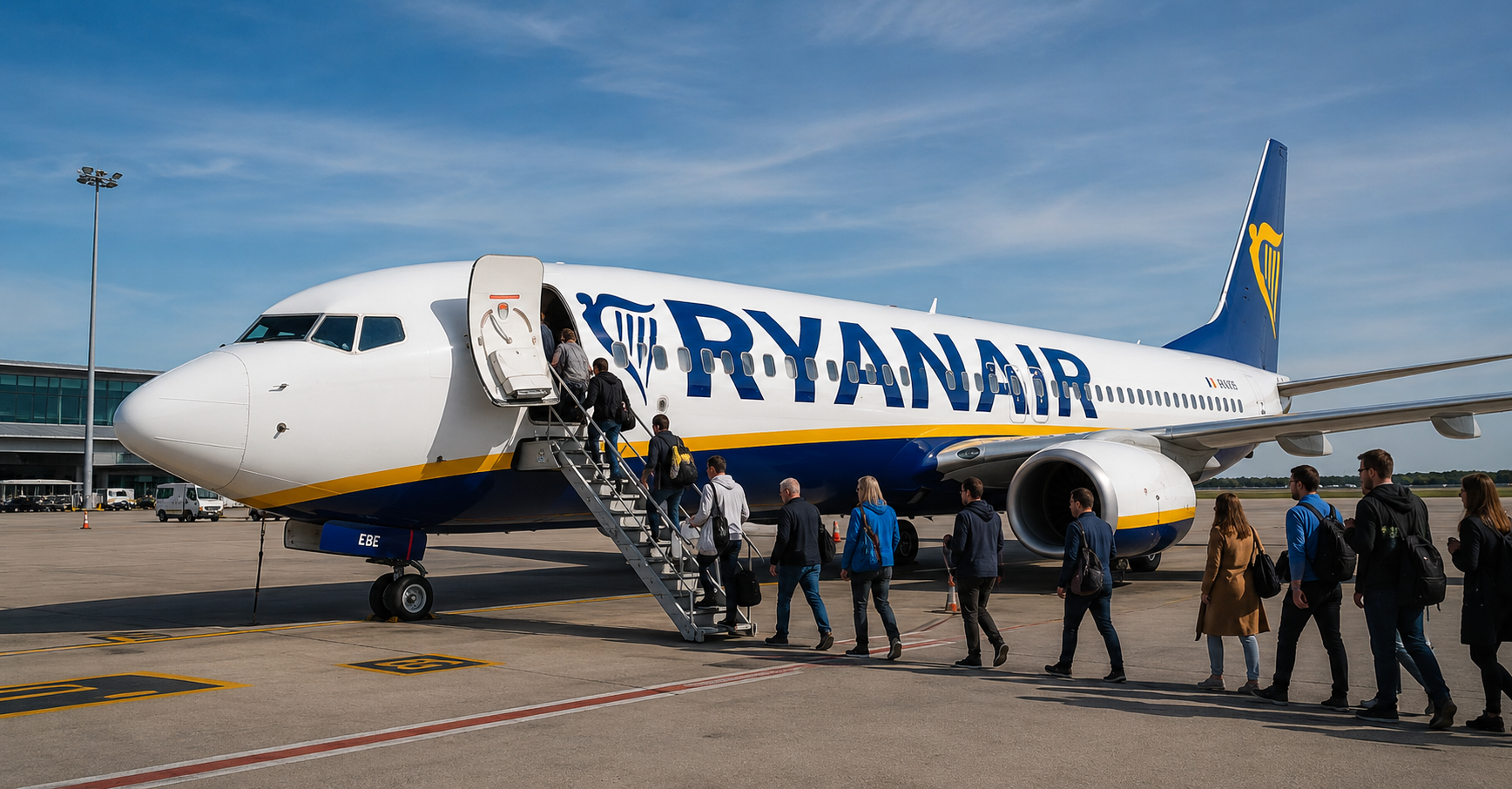
Ryanair Cut Winter Capacity. It Is 80 Percent Hedged and Still Blinked.
Ryanair is reducing winter capacity to limit exposure to unhedged jet fuel that could hit $140 a barrel. The airline is among the best-hedged operators in Europe. It warned carriers with less coverage will struggle to survive. Short-haul airfares across Europe could rise sharply next year.
The spread is the story. Brent traded just below $95 Wednesday, up more than 55% on the year. WTI held near $91. Jet fuel is at $140. Carlyle's Jeff Currie: "Nobody on the planet consumes crude oil except refineries. Everyone else consumes gasoline, diesel and jet fuel, and those markets look considerably uglier."
The government says Hormuz transit hit a wartime record Monday at more than 17 million barrels, against roughly 20 million prewar. Goldman's Rich Privorotsky called that figure "heavily debated." The SPR sits at 286 million barrels against a 250 to 300 million operational floor.
Crack Spreads Are the Right Number
A $45 gap between Brent and jet fuel is not a crude story. If 17 million barrels moved Monday, the best-hedged airline in Europe does not cancel flights. Watch crack spreads, not Brent.
15X Bigger Than SpaceX: Elon's New Launch

While the rest of the market goes crazy for "the mother of all IPOs", a new Elon Musk innovation is quietly being rolled out nationwide. It's been 27 years in the making, and it could have a radical impact on how millions of people manage their money… and even collect Social Security. Here's everything you need to know.
This ad is sent on behalf of InvestorPlace Media at 1125 N. Charles Street, Baltimore, Maryland 21201. If you're not interested in this opportunity, please click here.
PG&E Cut $2 Billion After California Adjourned Without a Fix.
California's wildfire bill died in the legislature on Tuesday. Assembly Speaker Rivas told colleagues in a closed meeting it did not go far enough. The session ended without a special session planned. PG&E (PCG) fell over 5 percent.
CEO Patti Poppe said PG&E faces a fundamental challenge. The current liability framework has effectively left the utility in sub-investment-grade territory. That raises borrowing costs, which pass to customers. The company is cutting $2 billion in planned spending for next year and reviewing its business.
Edison International (EIX) and Sempra (SRE) also fell. The earliest legislative fix now arrives in 2027. Every month of delay is a month PG&E is not building transmission.
Transmission Is AI's Problem Too
- PG&E serves the state with the largest data center interconnection queue
- $2 billion in cut spending directly reduces transmission capacity
- Sub-investment-grade financing costs delay projects that cannot be delayed
- The 2027 timeline assumes a new administration prioritizes a fix immediately
Rating Agencies Are Next
Poppe used sub-investment-grade language in a public statement. That is not casual phrasing. Rating agency reviews follow public management signals. A downgrade makes the financing cost problem permanent rather than temporary.
Wednesday recovered some of three days of losses without resolving anything.
The bond market is not punishing fiscal recklessness. Japan is thrifty and still at a 30-year yield high. The growth gap is doing the repricing. ADP came in weak with manufacturing negative and small business hiring near zero, two days before payrolls. Data centers absorbed $170 billion that used to build houses. Ryanair, 80 percent hedged, cut capacity anyway because refined product prices tell a different story than crude. And PG&E slashed $2 billion after California adjourned with no special session planned.
The relief rally was real. The problems that drove the selloff are still there. Payrolls land Friday.
