


Retail sales fell hard and consumer sentiment hit a two-year low. Goldman is structuring Nvidia's $500B financing platform. Hyperscalers have $1T in hidden lease commitments. Q2 earnings were mostly paper gains. SpaceX closed the Cursor deal.
Stocks Slipped. The Consumer Cracked. Yields Climbed Despite Soft Data.
The S&P 500 closed slightly lower after hitting a fresh record Thursday. The Nasdaq and Dow slipped as well. Small caps held up. The week still ends near records.
The consumer delivered the third soft print in a week. Retail sales fell sharply in July. University of Michigan consumer sentiment dropped to 51, below expectations and reversing last month’s uptick. Treasury yields climbed again despite the soft data, defying the usual relationship between weak economic numbers and lower rates.
Reddit (RDDT) surged on S&P 500 inclusion. Drone stocks jumped after Trump imposed tariffs on large drones. Oil gained. BofA estimated that by next year, the five hyperscalers will spend more on capex than the other 495 S&P 500 companies combined.
The Signal
Three soft prints in a week and yields are climbing. The consumer is decelerating. The AI capital stack keeps building leverage. The Fed has cover to hold, but rates disagree. Jackson Hole August 27 is where Warsh has to explain which force he is watching.
I've Read a Lot of Mining Filings. They All Sound the Same.
This one stopped me cold.
Sitting in the filings of one small American gold company is a phrase I have never seen on a gold project: substantial support and partnership from the Department of War.
The Department of War does not partner with gold miners. Except it's partnering with this one.
Here's why. The deposit carries a second metal — one China formally banned from export to the United States. The only domestic reserve of it in the country.
Gold for the dollar war. The banned metal for the shooting war. Both from the same pit.
Washington didn't stop at words. On May 21, 2026, a federal bank voted unanimously to lend nearly $3 billion to build it. Congress got 25 days notice. Nobody objected.
When final papers are signed, funding risk goes to zero — and Wall Street re-rates the stock from speculative developer to federally backed strategic asset.
The company is about one fiftieth the size of Newmont.
Retail Sales Fell Hard in July. The Consumer Just Aligned With Soft Inflation.
The consumer just gave the Fed its third soft print. Retail sales fell in July for the first time in nine months. It was the largest monthly drop in over a year. Core retail sales also missed expectations. Nonstore retailers, vehicles, and gasoline stations all fell.
University of Michigan sentiment dropped to 51 from 55.2. The tariff refund tailwind that boosted Q2 earnings has now run its course. The Q3 earnings cycle starts without that support.
The Spending Gap
- Nonstore retailers, vehicles, and gasoline all fell in July
- Michigan sentiment fell to 51, below the 54.5 consensus
- The tariff refund tailwind is now exhausted
Walmart (WMT) and Target (TGT) report next week. Both will show whether weakness is broad or concentrated. If Walmart holds and Target cracks, the consumer split becomes harder to ignore.
The Fed Cover
Three soft prints give Warsh a clean argument for a September hold. The consumer, CPI, and PPI all pointed the same direction. The hawks will argue the AI inflation channels are still running regardless.
Goldman Is Structuring Nvidia's $500 Billion AI Financing Platform. The Details Just Got Real.
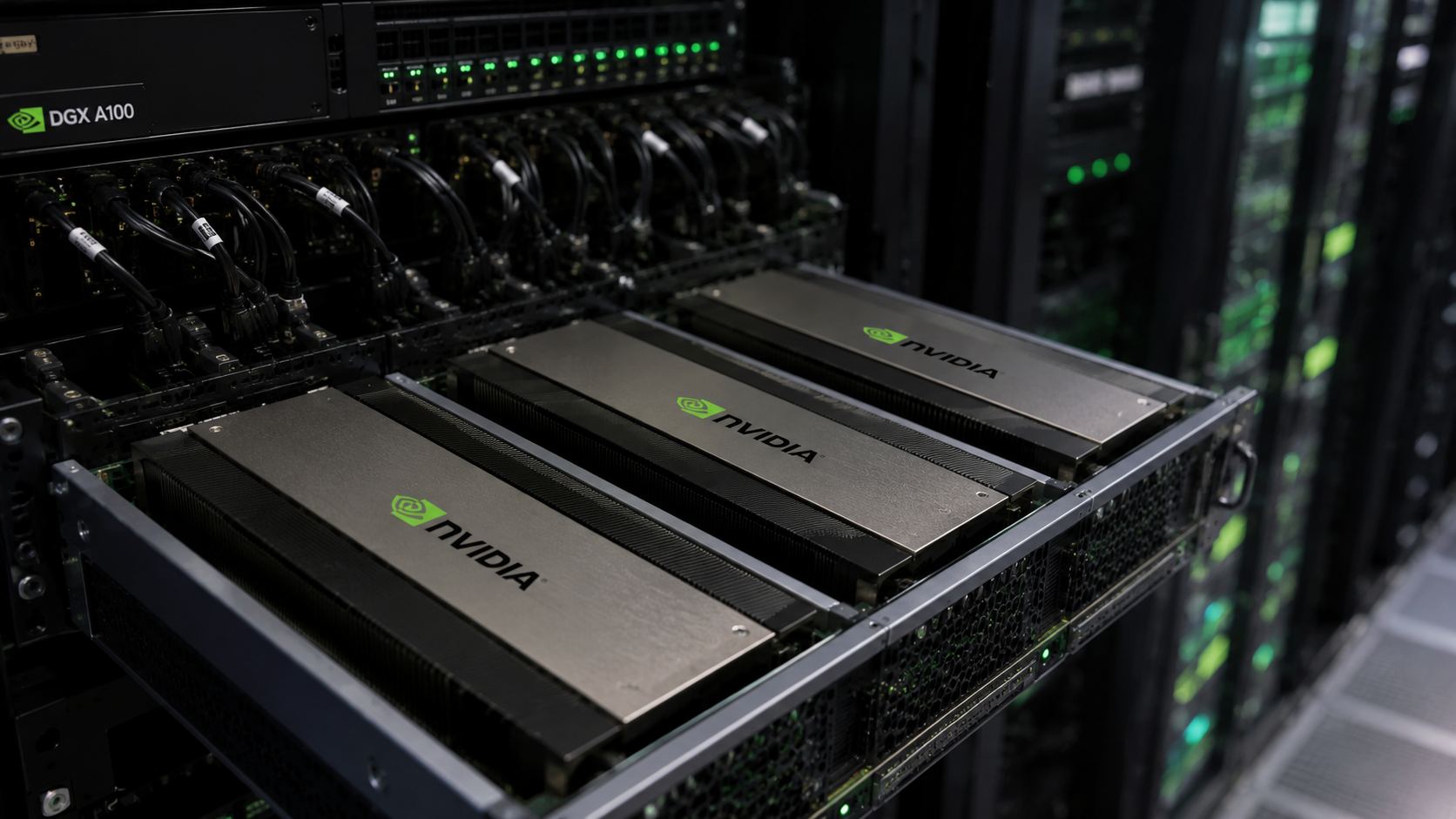
The $500 billion is moving from announcement to execution. Goldman Sachs (GS) is in talks with insurers, money managers, and banks. The firm can provide junior capital and private credit through asset management. It can also place debt into private credit funds and public markets.
Nvidia (NVDA) will backstop up to $125 billion. That equals up to 25% of potential deals. Bank of America analyst Vivek Arya called this a pivot away from vendor financing. The burden sits with the consortium, not Nvidia's balance sheet.
The Structure
- Goldman provides junior capital and private credit
- Asset managers are expected to retain much of the financing
- Nvidia's $125 billion backstop sets the credit boundary
The platform is being built while long-term rates remain elevated. The 30-year Treasury reached its highest yield since 2001 yesterday. Every loan in the platform prices against that rate. The consortium takes duration and credit risk together.
The Risk Transfer
Nvidia captures chip revenue. The consortium holds the duration and credit risk. That asymmetry works if chips hold value. It fails if open-source AI reduces H100 demand. The 25% backstop is the line.
The REAL Reason Trump Is Invading Iran
For a moment…
Forget about Trump’s ties to Israel.
Forget about reports of Iran’s nuclear program.
Because my research has led me to believe we’re risking World War 3 with Iran for a completely different reason.
Click here to find out what it is.
If you have even a single dollar invested in the U.S. stock market, this is going to directly impact you.
Hyperscalers Have $1.5 Trillion in Lease Commitments. $1 Trillion Is Off Balance Sheet.
The AI infrastructure buildout is larger than financial statements show. Goldman analysts estimate hyperscalers have $1.5 trillion in combined lease commitments. That is up from about $200 billion five years ago. About $1 trillion remains unrecognized.
BofA estimates the five hyperscalers will soon spend more on capex than the other 495 S&P 500 companies combined. PIMCO called this the largest investment cycle since 19th-century railways. Alphabet (GOOGL) and Amazon are issuing euro bonds as dollar demand shows fatigue.
The Hidden Stack
- $1 trillion in uncommenced leases remains unrecognized
- Hyperscaler capex could exceed the rest of the S&P 500
- Dollar demand fatigue is pushing issuance into euros
The Nvidia financing platform, bank infrastructure commitments, and lease commitments now stack together. Each layer is visible alone. The combined exposure is harder to see.
The Recognition Risk
Off-balance-sheet commitments eventually appear on the balance sheet. When $1 trillion in uncommenced leases gets recognized, reported leverage changes. The rate environment determines whether that transition is orderly.
Alphabet and Amazon Q2 Earnings Were Mostly Paper Gains. The Market Priced Them as Recurring.
The Q2 earnings story behind the S&P's record was unusual. Alphabet and Amazon combined other income reached roughly $121 billion after taxes. Most came from investment gains. Those gains reflected revaluations of Anthropic and SpaceX (SPCX).
S&P 500 trailing earnings are up over 30% year over year. Strip out Amazon and Alphabet, and growth drops by roughly a quarter. The market treated those gains like recurring earnings. They are marks-to-market that can reverse.
The Paper Stack
- Alphabet's other income was roughly 71% of quarterly profits
- Amazon's Anthropic mark drove most of its other income
- Nvidia excluded investment gains from adjusted earnings
Anthropic plans an IPO this fall at a target of $2 trillion. Amazon holds its stake at the prior round valuation. The IPO price becomes the next mark. A lower valuation would reverse part of the gain.
The IPO Verdict
The Anthropic IPO is the moment paper gains become real or disappear. Every fund holding hyperscaler equities is implicitly long that IPO. The revenue risk and earnings risk resolve together.
15X Bigger Than SpaceX: Elon's New Launch

While the rest of the market goes crazy for "the mother of all IPOs", a new Elon Musk innovation is quietly being rolled out nationwide. It's been 27 years in the making, and it could have a radical impact on how millions of people manage their money… and even collect Social Security. Here's everything you need to know.
This ad is sent on behalf of InvestorPlace Media at 1125 N. Charles Street, Baltimore, Maryland 21201. If you're not interested in this opportunity, please click here.
SpaceX Completed the $60 Billion Cursor Acquisition. Musk Says AI Revenue Exceeds Rockets by September.
SpaceX completed its $60 billion acquisition of Cursor, the AI coding assistant. Cursor now has access to SpaceX's GPU fleet. SpaceX has also struck multibillion-dollar deals allowing Anthropic and Google to use its computing resources.
Musk told SpaceX staff that AI revenue will exceed all other SpaceX revenue by September. That is a major revenue claim for a business that barely existed a year ago. Cursor's $60 billion price and Anthropic's $6 billion Decart deal both target AI coding and compute efficiency.
The Acquisition Stack
- Cursor gives SpaceX a major AI coding product
- SpaceX's GPU fleet is now accessible to Cursor
- Grok 4.5 and 4.6 support the AI expansion
SpaceX's IPO trades well below its June peak. Musk's September target is now the key test. It could drive a rerating or become another claim tested by Q3 results.
The Revenue Flip
SpaceX was priced as a rocket company. Musk is repricing it as an AI company. The Q3 revenue disclosure answers whether that repositioning was earned or invented.
Retail sales aligned with CPI and PPI, giving Warsh a clean hold argument. Goldman is executing Nvidia's financing platform with institutional buyers. Hyperscalers have $1 trillion in off-balance-sheet lease commitments. Q2 earnings included major paper gains from private AI holdings. SpaceX closed Cursor as Musk named AI its future revenue leader.
Nvidia August 26. Jackson Hole August 27. Anthropic IPO this fall. Three events, three verdicts, eleven days.
