


Four sovereign bond markets hit decade-plus highs in one session. The Fed confirmed a hawkish shift. The U.S. struck Iran again. Apple's new CEO inherits a memory crunch raising consumer prices. Shein listed at a quarter of its private peak.
Stocks Fell Hard. Oil Broke $90. Every Rate-Sensitive Asset Repriced.
The Dow, S&P 500, and Nasdaq all sold hard. U.S. Centcom confirmed new strikes on Iranian targets intraday. WTI climbed above $90. Energy ETFs hit all-time highs. The home construction ETF (ITB) fell sharply as mortgage rates jumped.
JOLTS job openings came in roughly in line with expectations. The yen slipped past 160 for a third straight session. South Korean semiconductor exports surged year over year in August.
Investor Signal
Energy is at all-time highs. Homebuilders are at multi-month lows. Yields are breaking out in four major markets simultaneously. The two data points that settle September, payrolls and CPI, have not arrived yet. Every position heading into those prints just got more expensive to hold.
7 AI Stocks to Lead the Next Decade
AI is fueling the Fourth Industrial Revolution – and these 7 stocks are front and center.
One of them makes $40K accelerator chips with a full-stack platform that all but guarantees wide adoption.
Another leads warehouse automation, with a $23B backlog – including all 47 distribution centers of a top U.S. retailer – plus a JV to lease robots to mid-market operators.
From core infrastructure to automation leaders, these companies and other leaders are all in 7 AI Stocks to Invest in Today.
Free today, grab it before the paywall locks.
Four Sovereign Bond Markets Hit Decade-Plus Highs in One Session.
Japan's 10-year hit its highest level since 1996. UK gilts reached levels not seen since 2008 and 1998. Germany hit a 52-week high. The U.S. 10-year crossed a 20-month high. All four moved together and for the same reason: energy drove eurozone inflation sharply higher in August.
ISM prices paid held flat while new orders fell. Demand is cooling. Costs are not. That is the configuration the hawks have been waiting for.
Japan's exit from ultra-low rates is more important than the move itself. Japan has been one of the most reliable buyers of foreign government debt for decades. That buying is slowing as its own rates rise. At the same time, September brings roughly $200 billion in corporate bond supply competing for the same buyers.
Demand Is Thinning From Both Ends
Supply is rising and Japan is buying less. That combination sets the floor under yields higher than any central bank meeting alone can address.
Barr Stated His Condition for a Hike. It Is Now on the Record.
Fed Governor Michael Barr backed the July hold. He then said: if inflation does not moderate sufficiently, the Fed should act decisively to raise rates. Barr votes at every single meeting.
The ISM data handed him the case. New orders fell. Factory employment edged down. Prices paid held flat. That is exactly what Barr described: demand cooling while cost pressure stays.
Reading the ISM Split
Demand cooling with costs steady is not a soft landing story. It is the one that makes holding rates harder to defend every week that passes. Barr has now stated publicly what tips him to yes. Next week's CPI and PPI are the test.
Major Buy Alert Issued

Keith Kaplan has invested $17 million into his own AI research and tools. He's built a platform that 180,000 people worldwide use in the stock market. Now he says there's a handful of stocks you need to buy asap, to set yourself up for 1,000% potential returns in the near future. Here are the stocks you need to buy for the chance to profit.
This ad is sent on behalf of TradeSmith at 1125 N. Charles Street, Baltimore, Maryland 21201. If you're not interested in this opportunity, please click here.
The U.S. Struck Iran Again. Seven Weeks Without Iranian Crude Through Hormuz.
U.S. forces struck Iranian Revolutionary Guard targets intraday. WTI crossed $90. The XLE, VDE, and XOP all hit all-time highs. Phillips 66 (PSX), Marathon Petroleum (MPC), and Valero Energy (VLO) hit 52-week highs.
Iran has not moved crude through Hormuz to China in roughly seven weeks. That is unprecedented. Even at peak sanctions in 2019-20, some Iranian crude cleared the strait every single month.
A country with near-zero outbound oil flow has nothing left to protect by keeping the strait open. That is what oil is actually pricing.
Asymmetry Nobody Priced
- Seven weeks without Iranian crude is a new historical low
- 29 tankers holding tens of millions of barrels sit inside the strait
- Energy ETFs at records while homebuilders hit multi-month lows in the same session
Tanker insurance and Aramco diversion decisions are moving without public disclosure. Both point the same direction as the oil price.
Supply Is the Wrong Frame
The question is whether oil is pricing a supply disruption or something wider: the probability the strait becomes unusable for all shipping. Those are different risks, and most energy models only capture the first.
Apple's New CEO Inherits a Problem That Has Reached the Checkout.
John Ternus took over as Apple's (AAPL) CEO. He inherited a specific mess. Hyperscalers outbid Apple for memory. Apple passed the cost to MacBook and iPad buyers in June. iPhone prices have not moved yet. Analysts expect they will early in his tenure.
The loop this closes is uncomfortable. AI capex drives memory scarcity. Memory scarcity raises Apple's costs. Apple passes those costs to consumers. Consumer goods inflation stays elevated. The Fed treats that as a reason to stay hawkish. The AI buildout was supposed to lower prices. Right now it is raising them.
Growth from price increases is not the same as growth from volume. Investors price them differently, and so does the Fed.
Price Increase Is Not a Strategy
- MacBook and iPad already raised, iPhone next
- Foldable expected this fall could reach $2,500
- Services revenue is where volume weakness eventually shows up
Apple is downstream of a spending cycle it did not start and cannot control. The question for Ternus is whether the iPhone holds through a price increase in a rate-tightening environment.
Ternus Inherits the Bill
Memory scarcity runs until hyperscaler capex slows. Nothing in Ternus's first week changes that. He can manage the pricing decision, but not the supply dynamic driving it.
Could This Stock Be “Trump’s Next Big Buy”?
Jim Rickards believes the Trump administration is about to take a direct stake in a tiny $2 stock.
The Trump administration has taken a direct stake in MP Materials, Lithium America, Trilogy Metals, and USA Rare Earth.
Each time, shares sprinted higher. Click here to see why Jim believes this one is next.
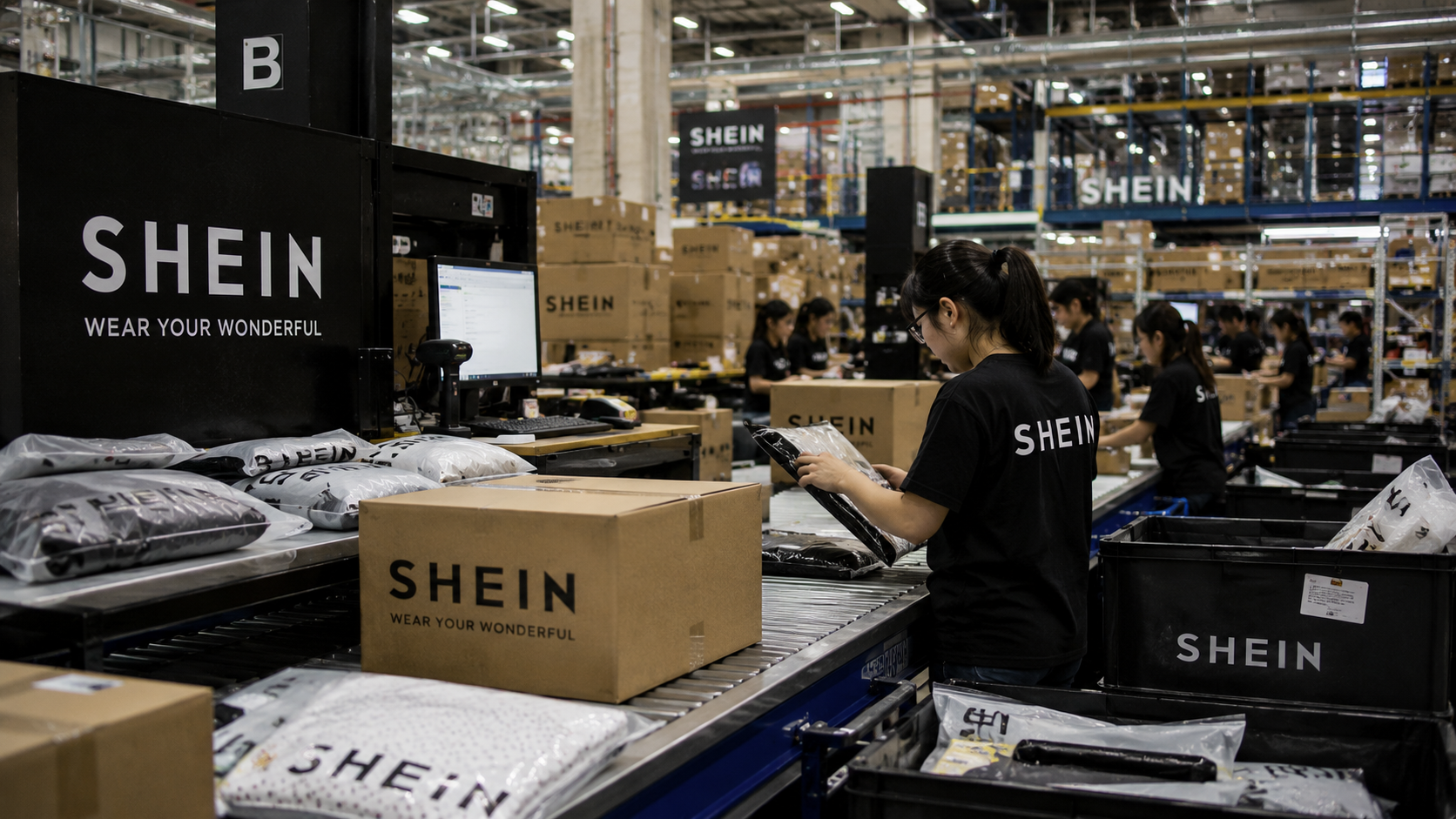
Shein Listed at a Quarter of Its Private Peak. The Math Is Worse Than the Price.
Shein fell sharply on its Hong Kong debut. The IPO valued the company at roughly $26 billion against a $100 billion private peak in 2022. Revenue growth fell from 41 percent in 2023 to barely above 1 percent in early 2026. The company posted a net loss in that period.
Here is the part that stands out. The IPO erased a nearly $4.4 billion cash obligation due December 31. It also triggered roughly $3.5 billion in payments to early investors. That payout is larger than what the IPO raised. Shein went public to retire a liability, not raise capital.
What the Ratchets Cost
- Early investor payouts exceeded total proceeds raised
- Revenue growth collapsed while the company still needed to pay guaranteed returns
- U.S. and Europe are more than half of revenue, the two most scrutinized markets
Shein is the first public mark on peak-vintage private market terms. Anthropic, Nscale, and Oura were all financed in similar conditions with similar protections. Shein is the first to show what those terms cost when the valuation goes the wrong way.
Anthropic's Benchmark
Shein priced at a quarter of its peak and still fell on day one. Anthropic files in weeks into the same market. That is not the precedent anyone on that cap table wanted set.
September opened with four bond markets at decade-plus highs, a Fed governor who stated his hiking condition publicly, energy ETFs at all-time records, and homebuilders at multi-month lows.
Apple's new CEO found out on day one that AI capex is raising consumer prices through his supply chain. And Shein showed the IPO market what peak-vintage private terms cost at exit, weeks before the most anticipated listing in years.
Payrolls Friday. CPI next week. September 15 decides.
