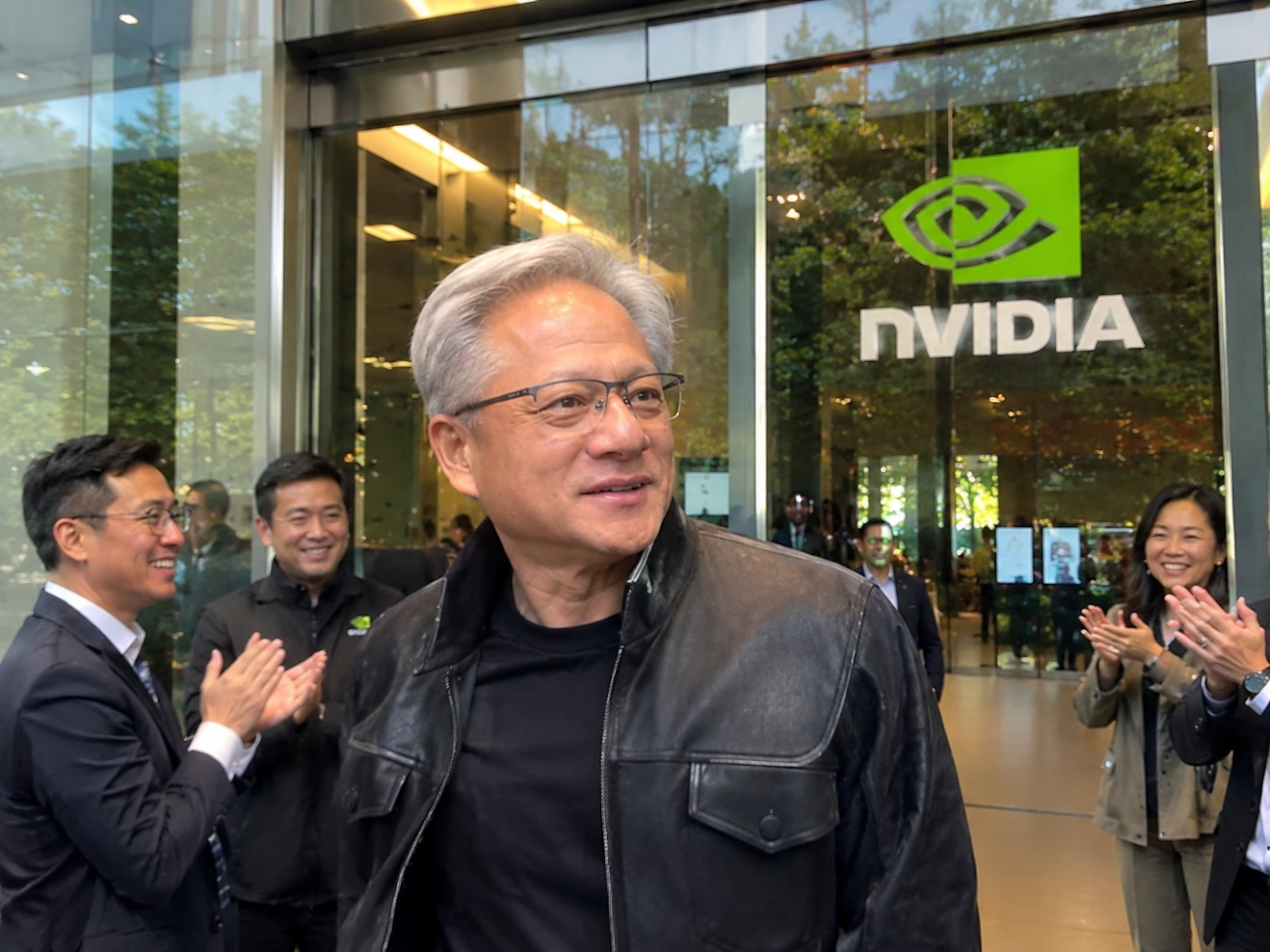
MARKET PULSE On Monday morning, investors were looking at a correction. The S&P 500 had closed the prior Friday at 6,910, about 11.6% below its October record. Nvidia had no permanent chief, and reports said the SEC was looking at its accounting. Then the leadership question ended. Nvidia's board reinstated Jensen Huang, and the S&P 500 jumped 4.7%, its best day since April 2025. The rest of the week tested that relief. AI hardware makers beat forecasts and fell on margin warnings. Core inflation ran hotter than expected, and Washington proposed new tariffs. Lenders to AI builders asked to be paid more. Stocks held most of Monday's gain anyway. By Friday's early close, the S&P 500 was up 5.7% for the week and the Nasdaq about 6.7%. Brent settled Thursday at a three-week high of $96.57 after attacks on Saudi refining, and Chinese stocks had their best day since October 2024 amid new state support. By Friday, the market had priced out one leader's exit. It had not priced out the cost of building AI. PREMIER FEATURE The SpaceX IPO made Elon Musk the wealthiest man who has ever lived. Now he's spending it to complete his dynasty... He's already acquired a $40 billion AI firm and a $1 billion turbine company. But a handful of companies still stand between him and total control of the space economy. Click here to see why early investors could walk away with a fortune. THREAD 1 Huang Returned. Nvidia Gave Back About 40% of the Jump. Nvidia's board voted unanimously to reinstate Jensen Huang 11 days after accepting his resignation. Nvidia (NVDA) closed Monday up 31% at $165.05, a record one-day gain in value. It fell the next two days and closed Wednesday at $149.30. On Thursday, reports said Nvidia told partners to stop shipping servers built on its chips to Malaysia, Singapore, Thailand and Indonesia. Those shipments now need licenses under the new Commerce rule. The board's own inquiry is still open. Huang faces a closed-door House interview on Dec. 1 and a public Senate hearing on Dec. 3. Investor Signal The stock now carries less leadership risk and more policy risk. A pause in Southeast Asia moves part of Nvidia's fastest-growing demand to Washington's pace. Quick licenses would make it a delay. A new outlook that drops those sales would make it lost demand. THREAD 2 AI Hardware Beat Forecasts and Sold Off on Margins Record results were not enough this week. Hewlett Packard Enterprise (HPE) grew revenue 50% to $14.55 billion and nearly doubled next year's growth outlook. The stock fell 16.3% the next day because margins slipped and will ease further. Analog Devices beat forecasts and fell 17.4% after guiding profit below last quarter's. Dell (DELL) booked $60.2 billion of AI orders, and its backlog hit a record $132.3 billion. Revenue of $54.9 billion beat forecasts near $49.3 billion. The stock still fell 11.8% before the report, then rose Friday. Investor Signal Server makers are now graded on what they keep per sale, not on demand. Their fastest growth comes with thinner margins as memory costs rise. If Dell's margin holds this quarter, the squeeze looks limited to HPE. Another margin warning would spread it across the group. FROM OUR PARTNERS I’m about to get into this Cybercab… and it’s going to take me to what Elon Musk called… “The most epic AI project ever.” Click here and come with me on this ride… Because this is all part of Elon Musk’s $320 trillion masterplan. THREAD 3 Core Inflation Ran Hot. Bond Yields Fell Anyway. Core PCE prices, the Fed's preferred gauge, rose 3.3% from a year earlier in October. Forecasts called for 3.2%. Third-quarter growth was revised up to a 4.3% pace, but spending after inflation was roughly flat in October. New York Fed President John Williams called inflation "simply too high" and said it may not reach 2% until 2028. Bonds looked past the heat. The 10-year yield ended Wednesday near 4.85%, and traders had already priced the December hike. Kalshi's quarter-point contract stayed in the low 90s. A Polymarket bet on a January hike held near 53 cents. Investor Signal A December hike is settled, so January is the open question. Bond buyers weighed flat spending more than hot prices. That helps homebuilders and rate-sensitive stocks. A rise in the 10-year back above 4.9% with January odds climbing would mean the bond rally was only a haven trade. THREAD 4 Washington Proposed Tariffs of Up to 35% The U.S. Trade Representative found that 14 economies feed excess factory capacity. It proposed rates of up to 35% for Vietnam, 25% for India and 20% for China, on top of China's existing tariffs. Japan, South Korea and the EU were set at 15%, matching their trade-deal caps. Nothing can take effect before hearings start Jan. 25. China, meanwhile, extended its pause on a ban on some critical mineral exports to the U.S. until Jan. 27. The proposals land just as tariff refunds padded retail earnings. Abercrombie & Fitch's beat included about 40 cents a share of refunds. Investor Signal The proposals delay the cost for importers rather than remove it. Makers in Vietnam and India carry the most exposure, and next year's retail profits start from a lower base without refunds. Final rates near the maximums would push the cost into 2027 margins. Trade deals that cut them would ease it. PARTNER SPOTLIGHT 
A lot of investors are still buying off a "top stocks" list someone made a year ago. Markets move faster than that. Our Top 10 Stocks to Buy This Quarter is rebuilt from scratch every quarter. Fresh picks. Fresh reasons. Fresh risks to watch. See the latest edition, free. THREAD 5 Buyers Paid Up, in Stock and in Cash CrowdStrike (CRWD) agreed to buy Zscaler in an all-stock deal valued at about $43.9 billion. Its own shares fell 9% on day one, so the 34% premium shrank to about 22%. Sanofi agreed to pay $175 a share in cash for Insmed, about $41 billion. Altria said it may make an all-cash bid for Imperial Brands and has until Dec. 24 to decide. Clariant confirmed talks to buy Ashland at a reported price near its market value. Investor Signal Buyers are still paying for growth, and they are setting the price on slower assets. In stock deals, the buyer's share price is the offer, so CrowdStrike's moves now set what Zscaler holders get. A narrow gap to Sanofi's $175 would show confidence in an on-time close. A signed Ashland deal near its trading price would confirm buyers hold the leverage. THREAD 6 Lenders to AI Builders Asked for More Stocks bounced Monday, but AI credit did not follow for long. CoreWeave's (CRWV) notes due 2032 fell as low as 74.9 cents on the dollar Tuesday, their lowest since issue. Credit lagged the stock rebound. The biggest slice of SpaceX's $44 billion chip debt priced last Friday at about 8.3%, against about 5.95% for high-grade bonds. Goldman Sachs is reportedly selling $1.5 billion of private loans at 94.75 cents. Anthropic closed below its $83 IPO price for the first time Tuesday, then closed Friday at $91.76. Investor Signal Lenders still fund AI, but at a higher price, and bonds now set what new capacity costs. Builders that borrow face the squeeze first. A CoreWeave bond rebound above 80 cents would show lenders regaining confidence. A new low would point to tighter funding across the group. JUST FOR YOU (SPONSORED) What is Elon Building in Texas?
Elon's mysterious Texas project will be 3X the size of Central Park… Cost $122 billion to build… And singlehandedly DOUBLE American chip production. One investment (not Tesla/SpaceX) is at the center of it all. Click here to get its name and free ticker. This ad is sent on behalf of InvestorPlace Media at 1125 N. Charles Street, Baltimore, Maryland 21201. If you're not interested in this opportunity, please click here. CLOSING LENS Monday removed the biggest single risk in the market. The rest of the week showed what was left behind it. Margins, inflation, tariffs and loan prices all set terms that a new chief cannot change. Stocks kept most of the rebound, but AI now has to earn it on cost, not on demand alone. Big Pharma’s new ‘AI co-scientist’ |