
MARKET PULSE The week opened on a settled script. The Fed would hold Wednesday and hike in December. Prediction markets priced that December move at about 76 to 79 cents. Big Tech's reports would show whether AI spending could keep paying for itself. Brazil gave the first warning. A crowded bet on Sunday's runoff unwound in one session. Then the buyers reported. Microsoft (MSFT) paid from cash and still drew about $115 billion of bond orders. Alphabet (GOOGL) raised about $41 billion from outside and lost about $500 billion of value in a day. Amazon's (AMZN) spending outran its cash by $42.4 billion over a year. The Fed held, and two officials wanted a hike. Bonds did not follow. The two-year yield fell to 4.56% from 4.69%. Friday sealed it. After Intel's warning, the S&P 500 fell 2.1% and the Nasdaq 2.9%. For the week, the Nasdaq lost about 2% and the S&P 500 about 0.8%. Six threads. One shift. On Monday, investors asked whether AI spending would hold. By Friday, they paid only for cash already in hand. PREMIER FEATURE 
The Guardian calls it "the beginning of the biggest gold rush in history"... and one stock under $5 owns exclusive rights to harvest these rare earths. Elon Musk and his companies need these minerals before a January 1 Pentagon deadline. See the full story here. THREAD 1 Microsoft Paid Cash. Alphabet Raised $41 Billion. The Market Split Them. Alphabet (GOOGL) spent $51.4 billion on property and equipment, up 114%. Free cash flow was negative $9.1 billion. It covered the gap with about $41 billion of outside money, about $28.7 billion of notes and $12.4 billion of stock. The shares fell 12.6% Thursday, even as Google Cloud revenue rose 103%. Microsoft (MSFT) spent $45.2 billion and produced $18.6 billion of free cash flow. Its first U.S. bond sale since 2017, at least $25 billion, drew orders near $115 billion. Meta Platforms (META) priced $25 billion of common stock at $625 and $12.5 billion of preferred. Nvidia (NVDA) will invest $3 billion and AMD (AMD) $1 billion. Amazon (AMZN) spent $77.3 billion in the quarter and said spending will be meaningfully higher next year. Investor Signal All four are growing fast. The market priced how each one paid. Alphabet expects a significant spending increase in 2027, so its funding needs are rising. Amazon's 2027 spending figure, when it gives one, will show how long its cash flow stays negative. THREAD 2 The Fed Leaned Toward a Hike. Bonds Leaned the Other Way. The Fed held its range at 3.75% to 4.00% in a 10-2 vote. Governor Lisa Cook and Cleveland's Beth Hammack wanted a hike. Chair Kevin Warsh called inflation "too high" and made no commitment on December. On Friday, St. Louis Fed President Alberto Musalem said more tightening "will be necessary, and soon." The data gave both sides something. The economy grew at a 3.4% annual rate last quarter, up from 2.2%. Core PCE inflation ran at 3.1%. Spending after inflation stalled in September. Labor costs rose 0.8%, matching forecasts. Bonds rallied anyway. The 10-year yield ended at 4.94%, from 5.00% a week earlier. Kalshi's December hike contract fell to 73 cents from about 79 cents before the meeting. Investor Signal The Fed is talking about inflation, while bonds are trading on slower growth. The two-year yield is the tell, and it fell 13 basis points. A lasting drop there would mean traders doubt the December hike itself. The Nov. 6 jobs report follows a September gain of just 29,000. FROM OUR PARTNERS Porter Stansberry’s Bombshell Exposé “TRUMP IS REPLACING THE U.S. DOLLAR” How Executive Order 14241 Could Reset Every Dollar You Own – And The #1 Move To Make Before December 14. CLICK HERE FOR THE FULL STORY THREAD 3 Intel's Warning Hit the Whole PC Chain Intel (INTC) beat its own forecast, then guided about $1.6 billion below estimates. It closed down about 29% Friday at $65.76. Chief Executive Lip-Bu Tan said customers "began signaling a PC slowdown based on memory prices and availability." The selling spread. Dell (DELL) and Qualcomm (QCOM) each fell about 11%. Sandisk (SNDK) lost about 13% and Micron (MU) 5%. The chip index fell 7.2%, and technology stocks fell about 4.9%. The warning landed on a week of doubt. Seagate (STX), Teradyne (TER) and ServiceNow (NOW) beat forecasts and still fell. Investor Signal Memory makers fell even though higher memory prices lift their revenue. That suggests the fear is lost volume, not lost pricing. AMD (AMD) reports Tuesday after the close. Its PC outlook will show how far Intel's slowdown reaches. THREAD 4 Oil Held Above $110 as Strike Bets Swung Brent stayed above $110 all week. U.S. crude got back above $100. Saudi, Pakistani and Turkish officials met Iran's leaders Monday. U.S. officials told regional allies to prepare for possible military action after the Nov. 3 elections, the Associated Press reported. Strike bets moved faster than oil. Polymarket's contract on the ceasefire holding through Oct. 31 fell from about 96 cents to 68 cents late Thursday. It then recovered to about 92 cents. December 2027 Brent sat about $28 below the front month. Refiners collected. Exxon Mobil (XOM) and Chevron (CVX) beat as refining profits surged and hit record highs. Exxon earned about $9.1 billion from refining and fuels, more than the $7.3 billion it made producing oil and gas. Investor Signal Traders appear to be pricing a date after the election, not damage today. That premium can fade on one report and return on the next. Fuel keeps feeding the inflation the Fed is fighting. Polymarket's Nov. 8 contract, near 73.5 cents Friday, is the next marker. PARTNER SPOTLIGHT Satellite Confirms: Elon Musk Activating Strange 'Dark Energy' Across U.S. South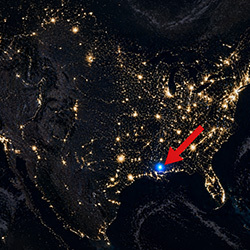
Confirmed by satellites 300 miles above the Earth's surface... Elon Musk is rolling out a breakthrough technology that could replace our need for foreign oil and ignite a $10 trillion boom a small group of stocks. Click here to learn how you can invest in this before it becomes mainstream. THREAD 5 Brazil's Election Trade Broke in One Session Luiz Inácio Lula da Silva won Sunday's runoff with 51.79% of valid votes. Prediction markets had priced a Flávio Bolsonaro win at about 82 cents that afternoon. The trade came apart Monday. The Ibovespa tripped its first circuit breaker since 2020 and fell as much as 17%. The real fell as much as about 12%. The iShares MSCI Brazil ETF (EWZ) ended the week about 24% lower. The selloff stayed in Brazil. A broad emerging-markets fund slipped about 0.2%, and the Mexican peso firmed. Investor Signal The market is pricing Brazil's budget, with public debt above 82% of GDP. Lula's choice of finance minister is the first test. The vote also shows what an 82-cent favorite is worth. Prediction markets put Democratic Senate odds above 70% four days before Tuesday's midterms. THREAD 6 Buyers Kept Bidding for Steady Cash. Private Credit Showed Strain. DoorDash (DASH) agreed to buy Instacart (CART) for $65 a share, about $17 billion of equity. ADT (ADT) agreed to a $10-a-share cash buyout, with all financing from funds tied to Apollo (APO). Global Payments (GPN) rose about 13% on a reported joint buyout bid. The lending side looked weaker. Ares Capital (ARCC) agreed to buy MidCap Financial (MFIC), an Apollo-managed fund, at about 15% below its stated value. Fitch put its U.S. private credit default rate at a record 6.3%. Investor Signal Buyout money is still bidding for steady cash flow. A Global Payments deal near $40 billion would need a large debt package from lenders whose default gauge has risen every quarter for a year. Global Payments reports Nov. 5, the same day MidCap gives its final asset value. JUST FOR YOU (SPONSORED) Middle East Conflict Lights Fuse on US Debt BombAmerica was already drowning in $38 trillion of debt, but the recent conflict in the Middle East just accelerated the timeline. As oil spikes, a 100-year-old stock market signal that accurately predicted the 2008 and 2020 crashes is flashing a massive "Sell" on dozens of popular U.S. equities. If you hold the wrong stocks when this debt crisis hits, it could wipe out years of gains. Click here to see the 10 popular stocks to dump immediately 11780 US Highway 1, Palm Beach Gardens, FL 33408-3080 Would you like to edit your e-mail notification preferences or unsubscribe from our mailing list? Copyright © 2026 Weiss Ratings. All rights reserved. CLOSING LENS The week split the market by where the money comes from. Microsoft's cash drew a crowd of bond buyers. Alphabet's outside funding cost it $500 billion of value in a day. Bonds and the Fed now disagree on December. Next week's election, Treasury borrowing plans and jobs report will test which side reads growth better. Rates Just Reset. Who Feels It First?On January 2, the 10-year Treasury yielded 4.19%. By September 30, it was 5.29%. Most of that move landed in a single quarter.
The bond market repriced and companies are starting to report it. Some companies earn from higher rates. Some pay for them. And each one runs on a different clock. We traced three of them, IBKR, WRB and FIS, in a new FREE Special Report:
Rates Just Reset. Who Feels It First? Who earns it fast. Who earns it slowly. Who pays. One has already reported. The other two report next, and the report tells you the exact line to check. We'll text the report straight to your phone. Get the Free Report by Text → | 


