


CPI landed at 3.4%, in line with forecasts. AI capex is now a named Fed inflation variable. Wall Street built a $500B chip financing pipeline. BofA pledged $250B to AI infrastructure. And S&P earnings growth may have just peaked.
CPI Came In Clean. Stocks Rallied. CoreWeave and Super Micro Led the AI Bounce.
CPI landed at 3.4% year over year, exactly in line with forecasts. Core came in at 2.5% year over year, the lowest since 2021. Month-over-month, both headline and core matched expectations. The Fed got a clean print. The market got a relief rally.
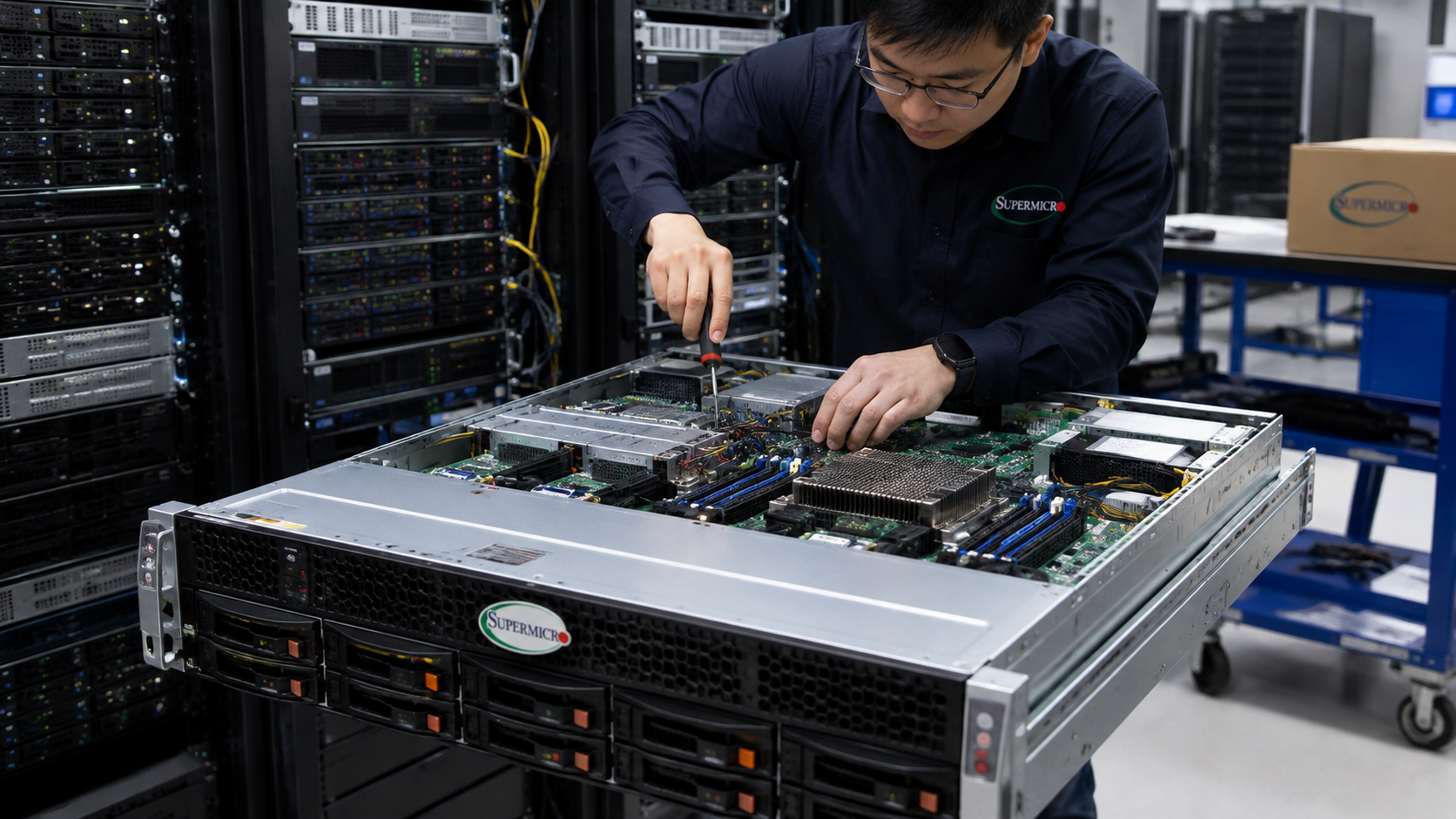
The S&P 500 closed up 0.26%. Nasdaq gained 0.5%. The Dow closed flat. VIX fell over 5.5%. CoreWeave (CRWV) closed up nearly 20%. Super Micro Computer (SMCI) gained 19%. Both are continuations of premarket moves from Tuesday's blowout earnings.
WTI moved marginally lower, closing just under $83. Treasury yields were flat to slightly lower. The 10-year bond auction met solid but not spectacular demand. Gold closed higher, near $4,470. KBW Bank Index rose over 1% on the hike-off relief.
The Signal
The CPI print was not cool enough to fully take September off the table. It was not hot enough to force it. The Fed got cover to hold. The market got permission to rally. The tension between AI-driven inflation and the soft-landing narrative was not resolved today. It was deferred to August CPI and Jackson Hole.
The Shadow Market Is Shaping 2026
By its nature, an IPO seems public. But what no one hears about are the hush-hush transactions that happen earlier.
Before companies approach public markets, early employees and venture investors sometimes sell shares in private secondary deals — leaving clues long before a ticker exists.
In the 2026 IPO cycle, this shadow market has been especially active.
Our analysts identified 7 of Wall Street’s hottest upcoming IPOs.
CPI Came in at 3.4%. The Fed Got Cover. September Stays a Coin Flip.
July CPI fell to 3.4% from 3.5% in June. Core slowed to 2.5%, tying February as the lowest since 2021. Shelter rose modestly, helped by falling hotel rates.
September odds shifted toward hold. State Street called it enough to take September off. Fitch said without forward guidance it remains a close call until the end.
The September Math
- Rate hold probability moved to 58% from Tuesday’s 52%
- August CPI arrives before September 15-16 FOMC
- State Street called it enough to take September off
The market has been pricing an inflation problem. Today's print said the problem is smaller than feared. It did not say the problem is over. The AI-driven inflation channels Kashkari named in his July dissent, electricity up 10% and DRAM up 400%, are still running.
The Deferred Verdict
CPI gave the tape permission to rally, not the Fed permission to cut. If August CPI reverses today's trend, the multiple expansion from today unwinds just as fast.
AI Is Now the Fed's Specific Inflation Problem. Warsh Has a Task Force on It.
Household electricity rose 10% in two years. DRAM prices rose 400% from 2024 per JPMorgan. Computer software prices rose over 22% since July 2024. AI infrastructure demand is driving each channel.
Warsh appointed Stanford professor and Anthropic advisor Charles Jones to a task force on AI-driven inflation. Kashkari named data center capex as inflationary in his July dissent. The Fed is formally studying what it was previously ignoring.
The Price Channels
- Electricity up 10% in two years on data center demand
- DRAM up 400% from 2024, hitting device and server costs
- Software and accessories up 22%, historically a deflationary category
The Fed cannot hike to slow AI demand without slowing the broader economy. It cannot hold without letting AI inflation channels keep running. The task force is the acknowledgment that standard monetary policy was not built for this.
The Policy Bind
Kashkari wanted a hike in July because of AI capex. Today's print gave the majority cover to disagree. August CPI and Jackson Hole are the next two moments the tension resurfaces.
Porter Stansberry: This Could Be Bigger Than A Stock Crash or Financial Collapse
A brutal, invisible new force is about to rip America apart… and the resulting civil unrest, political chaos, and cries for radical change will be immense. Unlike any we’ve seen in living memory.
And unless you prepare now you could see your wealth decimated in the years ahead. I shared everything you need to know about what’s coming next in my new exposé.
Wall Street Built a $500 Billion AI Money Pipeline. The Customers Cannot Afford the Chips.
Jensen Huang built a $500 billion AI money platform because many customers cannot afford Nvidia (NVDA) chips. Nvidia may backstop up to 25% of each loan. AI-related bond issuance hit $344 billion by early August, up over $200 billion from 2025.
CoreWeave borrowed at 5.5 points above benchmark. Galaxy Digital's $3.5 billion data center bond priced near 10%. The financing is getting done at junk rates, not investment grade.
The Financing Stack
- Apollo (APO), BlackRock (BLK), Blackstone (BX), Brookfield (BN), Goldman (GS), KKR (KKR) all in
- CoreWeave borrowing at 5.5 points above benchmark
- Galaxy Digital data center bonds priced near 10%
The credit tiering between hyperscalers and their smaller customers is now structural. Hyperscalers borrow at investment grade. CoreWeave borrows at near 10%. The pipeline fills the gap. The question is what happens to collateral values if GPU prices fall.
The Collateral Question
Nvidia's backstop is only as good as GPU prices. If open-source models reduce H100 demand, the collateral backing these loans loses value. Burry named the mechanism. He did not predict the timing.
Bank of America Pledged $250 Billion to AI Infrastructure. Three Banks Now Total Over $1.75 Trillion.
Bank of America (BAC) pledged $250 billion to AI data centers, chips, energy, and critical minerals. Morgan Stanley (MS) announced $1.5 trillion in infrastructure commitments. JPMorgan (JPM) committed to direct investment in national security-critical companies. Combined, three banks have pledged over $1.75 trillion.
State insurance regulators disclosed they have been privately meeting with insurers on private credit risk. Bessent asked commissioners in May whether they have the right tools to assess it.
The Commitment Stack
- BofA's $250B covers data centers, chips, energy, minerals
- State regulators met privately with insurers on private credit risk
- Wells Fargo has not made a comparable commitment yet
When four of the largest U.S. banks formally align with a single industrial policy, it becomes structurally embedded in credit allocation. The companies that fit the framework get funded. The ones that do not get repriced.
The Regulatory Undertow
Insurance regulators and Bessent are building the oversight framework for private credit simultaneously with the capital commitments. When that framework arrives, the marks that were opaque become visible.
"A Dangerous Financial Plan Unfolding in D.C. Could Cost You 40% of Your Wealth"
Former Goldman Sachs executive who traded through Black Monday warns this plan is all written down in black and white, spearheaded by a financial insider who infiltrated the Federal Reserve... It's gone "viral" in the hedge fund circles… and yet practically nobody on Main Street understands this financial shock playing out across America. He lays out all the evidence... plus a detailed roadmap for exactly what to do. (And it doesn't require shorting... options... or perfectly "timing the market.")
You must see this critical market briefing today.
This ad is sent on behalf of Stansberry Research, 1125 N Charles St, Baltimore, MD 21201. If you would like to optout from receiving offers from Stansberry Research please click here.
Q2 Earnings Beat Rates Hit the Highest Since 2021. The Deceleration Is Already Priced In.
S&P 500 Q2 earnings growth ran above 30%, the strongest in nearly five years. 85.2% beat EPS expectations. Only 10.8% missed. Citadel Securities called it the steepest revision path in at least 26 years.
Bank of America expects growth to fall below 20% in Q1 2027 and moderate into the mid-teens. When EPS growth is above trend but decelerating, the S&P's median 12-month return is 6.7%. That is less than half the return from an accelerating environment.
The Peak Signal
- 85.2% beat rate, highest since 2021, possibly the ceiling
- Beats on top and bottom line averaged flat excess returns
- Western Digital (WDC), Datadog (DDOG), Sandisk (SNDK) all beat and sold off
- Nvidia August 26 is the next beat-rate test
The market is not rewarding beats anymore. It is punishing anything that does not exceed the already-revised consensus. That repricing dynamic compounds when earnings growth decelerates from 30% toward mid-teens. The re-rating starts before the numbers confirm it.
The Multiple Problem
Peak earnings with decelerating growth is where multiple compression becomes the dominant force. The multiple was justified by earnings acceleration. If that acceleration is over, so is the multiple.
CPI landed in line and the market rallied. AI is now the Fed's named inflation problem. Wall Street built a $500 billion chip financing pipeline because the customers cannot pay full price. Bank of America joined the $1.75 trillion infrastructure commitment club. And Q2 earnings growth may have peaked at the exact moment the market stopped rewarding beats.
Nvidia reports August 26. Jackson Hole is August 27. Both arrive before September's decision.
