


July CPI came in on consensus. CoreWeave posted a $104B sales backlog. Super Micro guided $10B above the highest analyst estimate. CME launched GPU futures. Jane Street refinanced $14.6B. And SLR said private credit recoveries are heading to 50 cents.
AI Earnings Lit Up Futures. CPI Landed. The Week's Biggest Question Got Its Answer.
Futures opened green on blowout AI earnings. CoreWeave (CRWV) jumped roughly 15% in premarket. Super Micro Computer (SMCI) rose roughly 9%. The Nasdaq futures led gains. The AI trade was back on top before the open.
Then CPI landed, and it came in soft: headline CPI rose 0.1% in July, pulling the annual rate to 3.4% from June's 3.5%, in line with the Dow Jones consensus. Core CPI rose 0.2% for the month and 2.5% year-over-year, down from 2.6%, also matching consensus. Shelter and food each rose 0.1%; energy fell 1.5% on the month but is still up 14.7% year-over-year.
WTI held near $83. Treasury yields ticked slightly lower before the print. The yen slid back toward 159 per dollar, approaching the 160 level where intervention has historically followed. Gold extended to near $4,470.
The Signal
Two consecutive days of equity losses reversed on AI earnings before the open, and CPI just removed the one thing that could have knocked that reversal back down. The September hike debate that's run for two weeks got its answer: no, not on this data. The AI trade gets to run today without a rate headwind.
AI's "All In" Moment
In the dot-com days, former Wall Street money manager Alexander Green bought Apple under $1. Netflix at $1.62. Amazon under $2. (Split adjusted.)
Now he's doing the same with AI.
And he says it's the biggest opportunity he's seen in 40 years.
Every few decades, a window opens that can change your financial life forever.
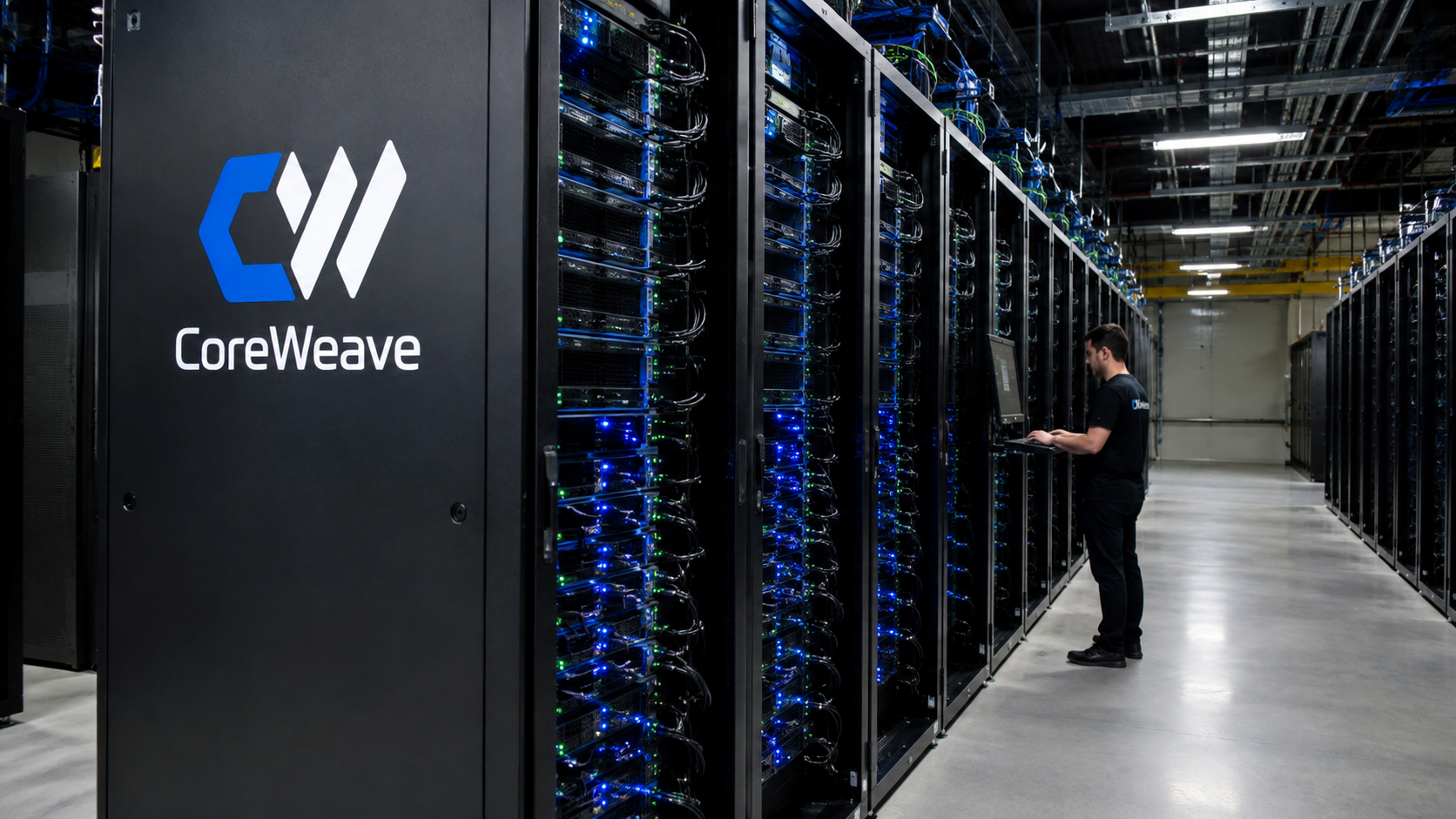
CoreWeave Posted a $104 Billion Backlog. Demand Extends 18 Months Out at Record Scale.
CoreWeave reported its fifth consecutive quarter of record revenue. Sales backlog reached $104 billion, nearly doubling the November figure. A new $2.6 billion loan facility closed Monday.
CoreWeave sits between Nvidia (NVDA) and hyperscalers like Microsoft (MSFT) and OpenAI. Nvidia owns 12.8% of CoreWeave. Net losses in the quarter brought cumulative losses since IPO to nearly $2.3 billion.
The Backlog Signal
- $25 billion in Q3 commitments not yet in the Q2 reported backlog
- Nvidia's August 26 earnings is the next critical test of whether the backlog converts to chip shipments
The gap between demand ($104 billion backlog) and profitability (cumulative $2.3 billion in losses) is the specific tension CPI eased. Today's in-line print keeps the financing window open. The rate backdrop for funding that gap didn't get more expensive this morning.
The Unit Economics Problem
Record revenue growth alongside record losses is the AI infrastructure paradox. The backlog buys time. The financing platform funds the gap. A soft CPI print just bought that financing platform more runway.
Super Micro Guided $10 Billion Above the Highest Analyst Estimate. The AI Demand Catalog Is Clearing.
Super Micro guided fiscal 2027 revenue of $65 to $72 billion. Consensus was $54.4 billion. The highest single analyst estimate was $10 billion below the guidance floor. Q4 revenue grew 93% year over year.
Lumentum (LITE) Q4 revenue rose 109% and guided the next quarter well above consensus the same session. Two AI infrastructure names above the highest estimates in 24 hours is not a coincidence. The demand catalog is clearing faster than Wall Street modeled.
The Guidance Gap
- Consensus $54B, floor $65B, ceiling $72B
- Lumentum Q4 revenue up 109%, also above estimates
- Both names guided above the highest analyst estimate
When guidance comes in $10 billion above the highest analyst estimate, the Street's model is wrong. That is not a beat. It is a structural miss in Wall Street's AI demand forecasting. Every AI infrastructure name gets its estimates revisited.
The Estimate Reset
Super Micro forces upward revisions across every AI server name. The stocks furthest below where Super Micro implies demand is running benefit most.
Buffett, Gates and Bezos Quietly Dumping Stocks—Here's Why

The world's wealthiest individuals are making huge moves with their money.
Warren Buffett just liquidated billions of shares. Bill Gates sold 500,000 shares of Microsoft. Jeff Bezos filed to sell Amazon shares worth $4.8 billion.
What is going on? One multi-millionaire believes they are preparing for a catastrophic event. But not a crash, bank run, or recession. It’s something we haven’t seen in America for more than a century.
CME Launched AI Compute Futures. GPU Rental Prices Are Now a Tradable Asset Class.
CME Group (CME) is launching two AI compute futures contracts on October 5 with Silicon Data, pending approval. Contracts trade against the rental cost of Nvidia's H100 and B200 GPUs. Silicon Data indexes track hourly rental prices.
GPU rental prices have been opaque and wildly variable. CME is turning that opacity into a benchmark. Oil, electricity, and carbon credits all went through the same transition. Each created a new institutional market.
The New Commodity
- H100 and B200 contracts launching simultaneously on October 5
- Silicon Data hourly index creates price visibility that doesn't exist today
- Oil, electricity, and carbon all went through the same transition
The futures launch converts AI compute from a negotiated, opaque private market into a transparent public benchmark. That structural shift takes years to fully price but starts on October 5.
The Hedge Opportunity
Anthropic, OpenAI, and every enterprise AI buyer now has the ability to hedge compute costs the same way airlines hedge jet fuel. The first institutions to build compute hedging programs will have a structural cost advantage over those that don't. That race starts in October.
Jane Street Refinanced $14.6 Billion in Senior Secured Notes. Opacity Has a Price.
Jane Street is refinancing through $14.6 billion in new senior secured notes maturing across 2031, 2033, and 2036. S&P rated the new debt BB, two rungs below investment grade. Fitch rates it BBB-, the lowest investment grade.
Jane Street generated $39.6 billion in trading revenue last year. Choosing public notes over private credit means accepting quarterly disclosure for better pricing. At BB/BBB-, the cost of opacity is now visible.
The Debt Decision
- S&P rates BB, Fitch rates BBB-, a split signal
- Proceeds fund technology and expanded trading strategies
- Citadel and Susquehanna face the same decision next
The split rating between S&P and Fitch is itself a signal. Two rating agencies with different views on the same balance sheet means the institutional buyer base will be split too. BB buyers and BBB buyers have different risk frameworks.
The Disclosure Trade-Off
The spread Jane Street accepted for going public is the cost of disclosure. That price gets quoted every time another trading firm faces the same decision.
FREE Gold Ticker to Buy ASAP: (NYSE:___)
Jim Rickards – the world’s #1 gold expert – has just revealed one of his favorite gold plays… 100% FREE

As Jim sees it, we’re witnessing the biggest gold boom of the last 100 years – and those who keep their money on the sidelines are missing their chance at a fortune thanks to gold’s epic run.
But smart investors who get in now, could make 10X their money in the coming months.
SLR Capital Said First-Lien Recoveries Fall From 76 Cents to 50 Cents. Software Is Worse.
SLR Capital's Michael Gross said first-lien private credit recoveries will drop from the historical 76 cents to closer to 50 cents. Software will be much less. The mechanism is covenant erosion. Historical data came from deals that let lenders intervene early. Current covenants offer almost no protection.
PIK provisions dropped to 13.5% of new loans in Q2 from 25% at year end. More than half of deferrals were agreed to after origination. Gross named quiet restructurings and PIK agreements as the pattern going forward.
The Recovery Reset
- Historical 76 cents anchored allocator models across the institutional base
- Software recoveries below 50 cents reprices the 20% of portfolios in SaaS names
When an active market participant publicly names a 35% reduction in recovery assumptions, it is not a prediction. It is a current assessment. The models that haven't updated yet are the ones mispriced.
The Cascade
Lower recoveries mean lower NAVs, redemption pressure, and forced selling into stressed positions. The cascade has not started. Gross naming 50 cents publicly sets the clock.
CoreWeave posted a $104 billion backlog and the AI demand case got its strongest institutional data point yet. Super Micro guided $10 billion above the highest analyst estimate. CME is making GPU rental a tradable commodity. Jane Street chose public debt over private credit opacity. And SLR said first-lien private credit recoveries are heading to 50 cents.
CPI landed today, and it landed soft. The week's biggest question got its answer, and the answer was the one the AI trade needed: rates aren't the obstacle this morning. The backlog, the guidance, and the financing all get to run on their own merits into Nvidia's August 26 print: the next number that actually tests whether this demand is real.
