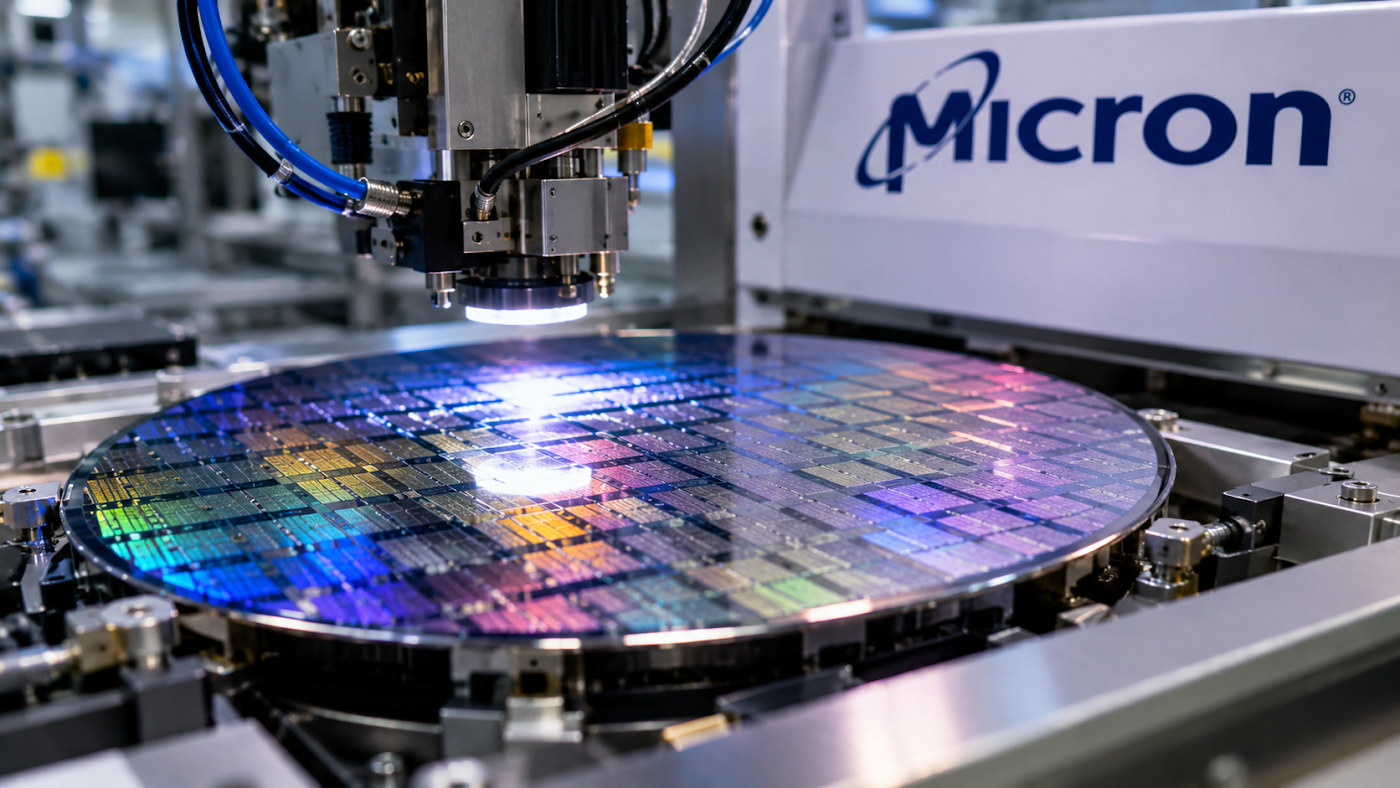
MARKET PULSE Chips Took the Hit a Day Before Nvidia The AI trade is facing three tests: a new export rule, a Fed sketch of an AI bust and lenders pressing for more protection. The S&P 500 closed down about 1.9%. The Nasdaq fell about 2.5%, and the Philadelphia chip index lost about 5.3%. Memory and server makers fell hardest. Micron (MU) dropped about 7.6%, and Dell (DELL) lost about 7%. New York factories sent a split message. The Empire State index fell to 7.8 from 25.5 as new orders stalled. Yet hiring grew at its fastest pace in more than four years. Investor Signal AI hardware makers led the drop, and the broad indexes followed. That looks more like investors cutting AI exposure before Nvidia's report than a broad growth scare. If chip stocks steady after Nvidia's results, the drop will look like positioning rather than a new verdict on AI demand. PREMIER FEATURE Musk walked away from the biggest IPO in history with a massive "war chest." Now he's spending it... He's already purchased a $40 billion AI firm. And a $1 billion turbine company. But to complete his monopoly on the space economy, he still needs to acquire three specific companies. Each is publicly traded and still under the radar. Get positioned before he moves... and you could see 100% overnight gains. Click here for the full story. CHIP RULE WATCH Washington's New Chip Rule Asks Who the Customer Is Washington now cares about who uses an AI chip, not just where it ships. A new Commerce Department rule would require a license for advanced chips sent to any data center that rents large amounts of computing power to China-linked companies. Shipments to Indonesia, Malaysia, Singapore, Thailand and Brazil would also need licenses. In those five countries, buyers headquartered in the U.S. would be exempt if exporters file monthly reports. That appears to give American cloud providers an easier path there than local rivals have. The rule is not yet in force. Once it is published, data centers already serving China-linked customers get 90 days to obtain a license. Nvidia (NVDA) fell about 4%, and AMD (AMD) lost about 5.6%. The chip slide began before the rule was first reported, and Nvidia moved in line with its sector. Nvidia's $108 billion revenue outlook already assumed no data-center sales to China. Investor Signal The rule puts China-linked rental of computing power at risk. U.S.-based clouds would gain an edge in the five named countries. If Nvidia's next outlook makes no cut tied to the rule, it reads as a narrow fix. A cut tied to Southeast Asian customers would show a real demand channel closing. FED WATCH Warsh Described an AI Bust, and Bonds Acted as the Hedge Fed Chair Kevin Warsh laid out three staff scenarios for the AI economy and called them "not forecasts." In the third, AI disappoints, stock values fall and unemployment rises. Governor Michael Barr said the seven largest AI firms should carry more than $800 billion of balance-sheet debt by year-end. Their possible obligations kept off the books top $3 trillion, he said, a maximum figure rather than money already borrowed. Stocks were down more than 1% before Warsh spoke, so the speech did not start the selling. The 10-year Treasury yield fell about 3.5 basis points to roughly 5.12%. Futures still treat a December quarter-point hike as close to fully priced. Investor Signal Lower long-term yields cut borrowing costs, which offsets part of the damage when stock values fall. With that hike already priced, the cushion comes from bond buyers, not the Fed. If Treasuries fall with stocks on the next weak day, the cushion breaks and conditions tighten through both markets. FROM OUR PARTNERS Louis Navellier: My #1 AI stock for 2026 (name & ticker inside)
"I want to give you a free stock pick today. This company's sales are up 28% year over year. It holds over 30,000 patents in wireless and video technology. And it just earned an A-rating in my proprietary Stock Grader system. That's the same system that helped me flag Nvidia back in 2005 — before its 82,000% run. In fact, this system has identified the top-performing S&P 500 stock for 12 years running. Over the years, it has cost me $9 million to build and maintain. And right now, it's flashing its highest possible rating on this AI play." — Louis Navellier Click here to see which AI stock my $9 million system is flagging right now, free. This ad is sent on behalf of InvestorPlace Media at 1125 N. Charles Street, Baltimore, Maryland 21201. If you're not interested in this opportunity, please click here. AI FINANCING WATCH Amazon Sells Most of 13 Data Centers, Then Rents Them Back AI builders are finding new ways to raise money. Amazon (AMZN) agreed to sell a 75.1% stake in 13 new data centers to Blackstone Digital Infrastructure Trust (BXDC) at a $5 billion value. Amazon keeps 24.9% and leases back all the space for an initial 12 years, extendable to 32. The trust gets a 7% starting yield, about 1.9 percentage points above the 10-year Treasury. Its shares ended slightly higher on a down day. Other borrowers have met tougher terms. QTS, a data-center operator owned by Blackstone (BX), cut a planned private debt sale by more than half rather than pay up, a report said last week. Nvidia's financing platform with six private-capital firms has not closed a deal in three months. Partners want a bigger backstop than the up to 25% support Nvidia offered, another report said. Investor Signal Income investors are set to earn about 1.9 points over Treasuries to own AI buildings. That spread is one price of turning finished data centers back into cash. If a second hyperscaler sells data centers at a similar yield, sale-leasebacks become a standard funding route. Nvidia's first platform deal needing a backstop above 25% would show lenders pricing more risk in AI customers and chips. BITCOIN TREASURY WATCH Strategy Spent Seven Times as Much on Buybacks as on Bitcoin The largest corporate holder of bitcoin spent far more last week buying back preferred stock than adding coins. Strategy (MSTR) bought 485 bitcoin for $33.4 million. It spent $228.1 million buying back its STRC preferred stock, mostly with cash from selling common shares. With bitcoin near $65,000, Strategy's coins are worth about $8.9 billion less than it paid. Its shares fell almost 8%. Coinbase (COIN) lost about 6% after touching a 52-week low. MSCI plans to drop Strategy from its U.S. indexes after Nov. 30. Investor Signal Common shareholders are paying, through new share sales, to buy back preferred stock whose price matters for future fundraising. If next week's filing shows bitcoin purchases larger than preferred buybacks, the company is back to accumulating. Another week led by buybacks would point to balance-sheet defense ahead of the MSCI exit. PARTNER SPOTLIGHT The REAL Reason Trump Is Invading Iran
For a moment… Forget about Trump’s ties to Israel. Forget about reports of Iran’s nuclear program. Because my research has led me to believe we’re risking World War 3 with Iran for a completely different reason. Click here to find out what it is. If you have even a single dollar invested in the U.S. stock market, this is going to directly impact you. Discover the reason here. ENERGY DEALS WATCH Diamondback Paid a Lower Multiple This Time Buyers appear to hold the pricing power in Permian oil deals as crude slides. Diamondback Energy (FANG) agreed to buy Double Eagle assets for cash and stock worth about $5 billion at Friday's close. It priced the deal at about 4 times expected 2027 cash earnings. In 2025, the same EnCap-backed sellers got about 5.2 times that year's earnings from Diamondback. The two multiples use different years. More of the price now comes in stock. Diamondback shares fell about 4%. Brent crude settled about 3.6% lower, near $92.40, even as a third U.S. aircraft carrier headed into the Middle East. The International Energy Agency expects supply to top demand by about 1.7 million barrels a day this quarter. Investor Signal Energy private equity can still sell to public buyers. This deal came at a lower multiple and with more stock, which ties the sellers to Diamondback's share price. If Diamondback's shares recover before the deal closes, the stock payment holds its value. Further weakness would cut what the sellers receive. CLOSING LENS The AI build-out ran into tighter terms from three directions. Washington moved to control who can rent computing power built on American chips. The Fed sketched what a bust would look like, and lenders have been asking for more protection. Nvidia's results now test whether AI demand is strong enough to carry those terms. |