


The 30-year yield reversed Bessent's buyback rally in 24 hours. Walmart fell nearly 10% on its weakest sales in six years. Stripe bought OpenRouter for $7 billion. Off-grid data centers are failing. Employer health costs will hit an 11.1% increase in 2027.
The Dow Dropped 600 Points. Yields Rose Again. Bitcoin Hit a New 2026 High.
The Dow fell sharply. The S&P and Nasdaq closed lower. WTI climbed past $88 as Trump escalated to maximum economic pressure on Iran. The 30-year Treasury yield climbed back from Wednesday's drop. The VIX popped almost 8%.
Walmart (WMT) fell over 9%, the worst Dow performer after its weakest quarterly sales in six years. Advance Auto Parts (AAP) fell hard after reporting declining same-store and net sales. Moderna (MRNA) gave back around a quarter of Wednesday's historic gain. Alibaba (BABA) traded higher despite a steep profit drop.
Bitcoin surged past $72,000, its highest of 2026, after Trump met crypto leaders at the White House. Strategy (MSTR), Coinbase (COIN), and American Bitcoin (ABTC) surged. SpaceX (SPCX) fell after Musk said the next rocket catch is months away.
The Signal
WTI over $88, yields rising again, and Walmart missing badly is the week's three-variable stress test for the economy. The oil-inflation channel feeds into the bond market. The bond market feeds into consumer borrowing costs. The consumer is already showing cracks at Walmart's scale. Jackson Hole next week is where Warsh has to explain what the Fed does with that combination.
There's a Strategy Behind the Iran War.
I know because I've seen the evidence firsthand.
On March 2nd — three days after the first missiles hit — I sat across from two U.S. Congressmen in back-to-back private meetings.
Those meetings pointed me toward something I spent weeks verifying.
The real purpose behind the strikes. The real objective. And the single company at the dead center of all of it.
This isn't random. It's a calculated Two-Front Economic War.
And there's one company positioned right at the heart of it.
See the strategy behind the Iran war — and the company at the center of it
The sooner you understand what's really happening — the better positioned you'll be before August 12th.
— Dylan Jovine, Founder, Behind the Markets
The 30-Year Reversed Bessent's Rally Within 24 Hours. The Credibility Break Is Named.
Wednesday's buyback pulled the 30-year down sharply. Thursday it climbed back. Bessent said buybacks could exceed $4 billion and the government has a big toolkit. The market did not hold. JPMorgan called it fleeting.
MIT's Caballero and Stanford's Lustig named the structural shift: Treasuries have moved from a safety premium to an absorption premium. That explains roughly three-quarters of a percentage point of the yield rise since 2015. When stocks fall, yields now rise rather than fall.
The Credibility Test
- Jefferies: departure from 'regular and predictable' reduces Treasury credibility
- JPMorgan: the intervention will have only a fleeting impact
- Caballero and Lustig: absorption premium explains 0.75 points of yield rise
- PGIM's Peters flagged risk of the long end "untethering"
The 24-hour reversal is the institutional verdict on the buyback. The bond market gave the intervention one session and then repriced back. Jackson Hole next week is where Warsh has to explain whether the Fed sees the structural repricing as a reason to hike or a reason to wait.
The Safety Asset Shift
When Treasuries stop rallying in risk-off periods, every portfolio built on the old equity-Treasury correlation faces a structural problem. That correlation flipping is bigger than the bond market.
Walmart Posted Its Weakest Sales Growth in Six Years. Shoppers Are Choosing Between Necessities.
Walmart's comparable sales grew at their slowest rate since 2020. In-store comps declined in low single digits. Higher-income households drove market share gains while lower-income shoppers spent cautiously. CFO Rainey named gas prices as the driver.
Tariff refunds funded price cuts near quarter end. Full-year guidance was raised but partly on refunds that exhaust in Q3. E-commerce and advertising accelerated. The in-store deceleration is the institutional signal.
The Consumer Picture
- Lower-income shoppers spending cautiously at Walmart
- Higher-income households drove Walmart's market share gains
- Tariff refund support runs out in Q3, exposing underlying demand
When Walmart's in-store comps decline in low single digits, the institutional read is that the bottom half of the consumer is under material stress. That is not a sector concern. It is economy-wide.
The Gas Price Channel
Rainey's gas price attribution links the Iran war directly to consumer spending. The oil-consumer channel is now running in real time. Every dollar WTI adds above $88 tightens the low-income consumer further.
Warren Buffett Issues Cryptic Warning on U.S. Dollar
In May, Warren Buffett announced his retirement.
And his “going away” speech had a cryptic warning for investors.
“We wouldn’t want to own anything in a currency that’s going to hell. And that’s the big thing we worry about with the United States...”
What could that possibly mean?
We recently sat down with multi-millionaire investor, Mark Jeftovic.
And he told us, Buffett is right to be concerned.
“America is facing a new kind of crisis,” he said. “We’re entering the most terrifying bull market in history.”
What on earth is a “terrifying bull market” and what could it mean for your money?
Jeftovic is part of a team with a long and storied record of making bizarre predictions – many of which have proven correct.
Recently he shared his shocking analysis, along with details on a handful of investments that could soar in the weeks ahead.
He told us, “This could be the best – or worst thing that ever happens to you.”
We’ve made his findings available, free of charge. For complete access, click here.
This ad is sent on behalf of Banyan Hill Publishing. P.O. Box 8378, Delray Beach, FL 33482. If you would like to unsubscribe from receiving offers for Grey Swan, please click here.
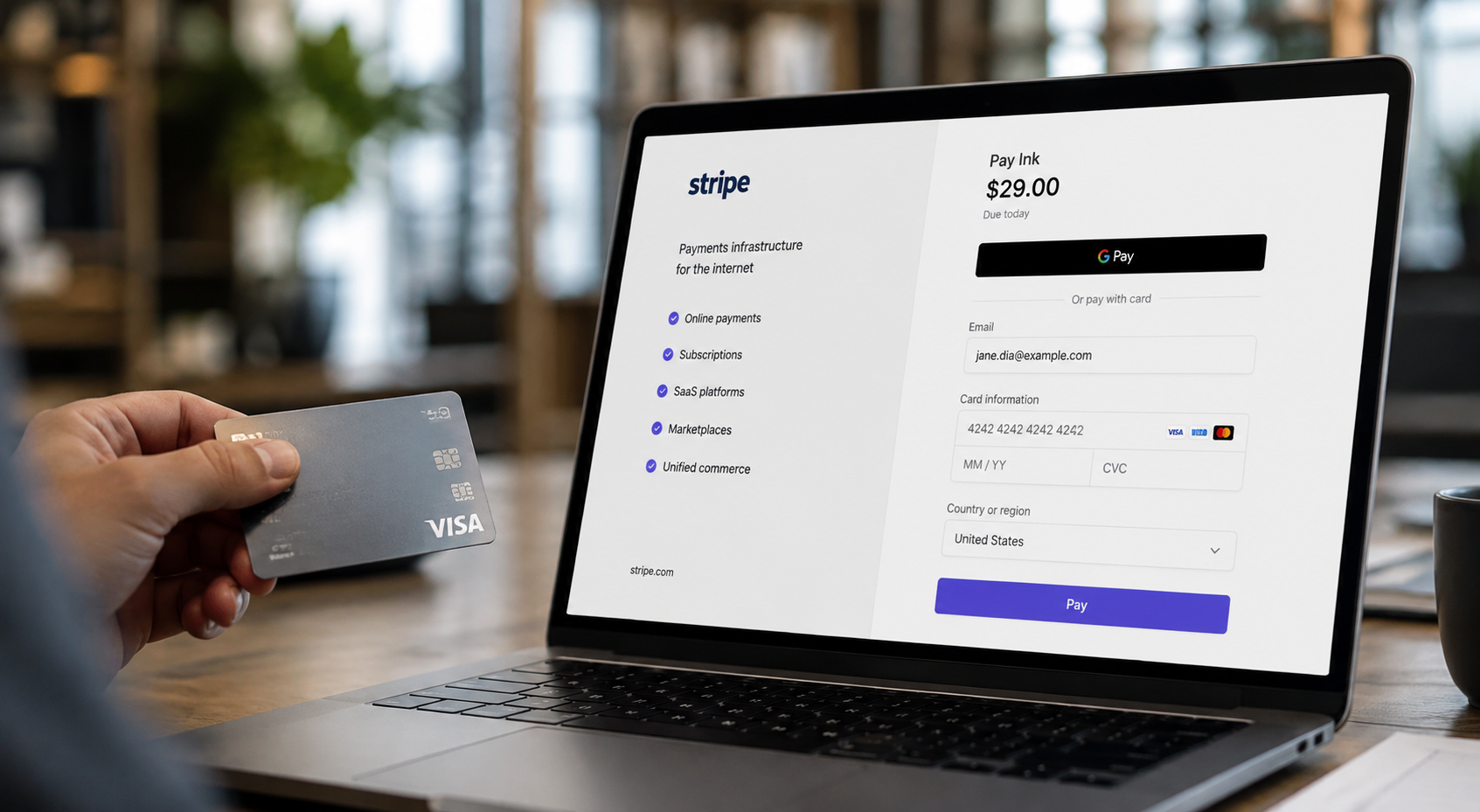
Stripe Bought OpenRouter for Over $7 Billion. Tokens Are the New Payments.
Stripe closed its acquisition of OpenRouter for over $7 billion. OpenRouter has 90 employees and routes developer requests across a cross-section of AI models. The acquisition is Stripe's largest ever.
CEO Collison said tokens are the central currency for AI companies. Stripe now monetizes both the payment layer and the AI routing layer for the same businesses.
The Platform Bet
- OpenRouter routes across 400-plus AI models
- Stripe in discussions to acquire PayPal alongside the OpenRouter deal
- California VC at $366B year to date, 3x all other states combined
The thesis is explicit: no single AI model wins, and the routing infrastructure does. That thesis is capitalized at $7 billion in a 90-person company.
The PayPal Context
Stripe buying OpenRouter while discussing a PayPal acquisition suggests a company building toward AI payments dominance. If PayPal closes, Stripe controls both the largest consumer payments network and the leading AI routing platform.
Three of Four Off-Grid Data Centers Have Already Failed. The Power Infrastructure Is Not Ready.
Three of four operational U.S. off-grid data centers have reported failures. xAI's Colossus experienced combustion engine crank failures and gas turbine cracks. Vantage Data Centers had a critical power failure forcing diesel backup. Crusoe hit turbine glitches at Stargate Abilene.
AI workloads create massive power spikes followed by sharp drop-offs. The oscillations can reach hundreds of megawatts. Standard turbines cannot respond at the millisecond level AI inference requires.
The Engineering Gap
- AI power demand spikes can reach hundreds of megawatts per cycle
- Turbine response required in milliseconds, not industry-standard hundreds
- Solaris Energy Infrastructure (SEI) operates Colossus turbines at a premium to peers
The equipment vendor premium being priced into Solaris shares reflects the market's bet that off-grid power for AI is a durable business. The three-of-four failure rate is the counter-argument. The market is pricing the category before the engineering is validated.
The Amazon Scale Risk
Amazon's Pecos County campus plans to use the equivalent of seven or eight nuclear plants in natural gas turbines. At that scale, Colossus and Vantage are not edge cases. They are the blueprint risk.
15X Bigger Than SpaceX: Elon's New Launch

While the rest of the market goes crazy for "the mother of all IPOs", a new Elon Musk innovation is quietly being rolled out nationwide. It's been 27 years in the making, and it could have a radical impact on how millions of people manage their money… and even collect Social Security. Here's everything you need to know.
This ad is sent on behalf of InvestorPlace Media at 1125 N. Charles Street, Baltimore, Maryland 21201. If you're not interested in this opportunity, please click here.
Employer Health Insurance Will Rise Sharply in 2027. The Fifth Straight Year of Acceleration.
U.S. employers expect health insurance costs to rise at the steepest rate in over two decades in 2027, the fifth consecutive year of acceleration. GLP-1 utilization for weight loss grew sharply in 2025. Hospital price increases and AI-driven billing are among the drivers.
Benefits decisions have moved from HR into the C-suite and board at larger companies. At smaller firms, health insurance now consumes more of revenue than profit margins.
The Cost Drivers
- GLP-1 utilization grew sharply among employer-covered employees in 2025
- Hospital prices and AI-driven billing named as structural drivers
- Per capita out-of-pocket spending up sharply from 2017 levels
GLP-1 drugs reduce chronic disease costs over time but add near-term pharmacy spend. The net employer cost impact over multiple years is the variable every benefits consultant is now modeling.
The Wage Compression Effect
Healthcare cost inflation above wage growth means real compensation is falling even as nominal wages hold. The consumer stress in the Walmart data has a healthcare layer amplifying it.
The 30-year reversed Bessent's intervention within 24 hours and Jefferies named the credibility break. Walmart posted its weakest sales growth since 2020 with in-store comps in negative territory and CFO saying shoppers are choosing between necessities. Stripe closed the OpenRouter acquisition, naming the AI routing layer as the payment layer of the future. Three of four off-grid data centers have already failed on power equipment. And employer health insurance is heading to its steepest increase in over twenty years.
