


The 30-year Treasury cleared at the highest yield since 2001. Applied Materials beat and guided to 2030 and still fell. Sandisk surged 16% on locked-in capacity. Silver Lake is in talks for Workday. OpenAI's run rate doubled.
The S&P Hit Its 27th Record of the Year. A Tanker Got Hit. Oil Moved.
The S&P 500 hit its 27th record of the year yesterday. Two cool inflation prints removed near-term hike pressure. Futures opened roughly flat.
Oil rose after a tanker attack in the Persian Gulf. Bessent threatened tougher Iran restrictions. WTI edged up roughly 0.5%. Oil refiners Marathon Petroleum (MPC) and Valero Energy (VLO) gained roughly 20% and 15% on the week. The Iran war is good for refiner margins.
Reddit (RDDT) jumped roughly 12% on S&P 500 inclusion. Retail sales landed at 8:30 AM. DeepSeek raised prices fourfold but remains well below Western rivals.
The Signal
The S&P at a record with the 30-year yield at a 25-year high is the week's defining tension. Two soft prints bought time. The supply problem did not disappear. Nvidia August 26 and Jackson Hole August 27 are the next two tests.
Mode Mobile won't be under-the-radar much longer.
The price on pre-IPO shares goes up August 14 — and over 60,000 investors have already put in more than $100 million, including Shark Tank's Kevin Harrington.
Mode is still private — but the Nasdaq ticker $MODE is already secured. And this price change could signal a public listing is getting closer.
The traction is already there:
- 490M+ users
- $115M+ lifetime revenue
- $1B+ earned and saved by users
- 170+ countries served
- Deloitte's #1 fastest-growing software company in North America — 32,481% growth
Uber turned cars into taxis. Airbnb turned homes into hotels. Mode is turning everyday phone use into something that pays you back.
This isn't early-stage hype. It's about timing.
The 30-Year Yield Just Hit Its Highest Level Since 2001. The Treasury Has a Supply Problem.
The 30-year Treasury auction cleared at 5.216%, the highest yield since 2001. The 10-year on Wednesday drew the highest cost since 2007. Two soft inflation prints did not solve a supply problem.
Fiscal year-to-date interest expense hit $1.17 trillion, up 15%. Traditional long-dated buyers are backing away. The Fed is not a major buyer anymore. Fitch kept its AA+ rating but warned the deficit-to-GDP ratio will widen.
The Supply Squeeze
- Fiscal interest expense up 15% year over year
- Treasury tweaked guidance to potentially cut long bond supply
- Fitch warned the deficit-to-GDP ratio will widen in 2026
- Bid-to-cover held average but at a 25-year yield cost
The bid-to-cover ratio held in line with recent averages. The auction cleared. The problem is not that buyers disappeared. The problem is what they required to show up. A 5.2% 30-year yield means every AI financing structure, every corporate bond, and every mortgage is priced against a risk-free rate that just reached a 25-year high.
The Rate Floor
The 30-year yield sets the floor under every long-duration asset. At 5.2%, that floor just moved to a 25-year high. The repricing happens quietly until it doesn't.
Applied Materials Named Customer Visibility to 2030 and Fell 5%. The Beat-Rate Breakdown Is Real.
Applied Materials guided fiscal Q4 revenue $700 million above consensus. Customer conversations extend to 2030. Packaging revenue is expected to grow more than 70% in calendar 2026. DRAM's share of systems revenue rose to 26% from 22%.
The stock fell more than 5% anyway. Same pattern as Cisco: beat, guide above consensus, fall. The market has already priced the AI demand signal. It wants margin expansion, not just more of the same.
The Beat Breakdown
- Fiscal Q4 guide $10.25B versus $9.54B consensus
- DRAM revenue share rose to 26% from 22% year over year
- Packaging revenue growing more than 70% in calendar 2026
Cisco fell despite 50% profit growth. Applied Materials fell despite $700 million above consensus guidance. The market is not rewarding AI infrastructure beats anymore. The question is whether Nvidia is different or whether the reaction function holds through the most important AI earnings report of the cycle.
The Nvidia Test
Nvidia is the last AI infrastructure name without a reaction function data point. Every name that reported got repriced on margin concerns. August 26 answers whether Nvidia is different.
Navellier Warns: This Could Leapfrog Elon's SpaceX IPO
Elon Musk could take SpaceX public in 2026, at an estimated $1.75 trillion valuation. The IPO would include Elon's AI model, Grok. But according to Louis Navellier, a radical new AI model will launch this year… over 1,000 times more powerful than Elon's. And the company behind it could outperform SpaceX in the process.
Click here for full details (including Louis' new pick — free).
This ad is sent on behalf of InvestorPlace Media at 1125 N. Charles Street, Baltimore, Maryland 21201. If you're not interested in this opportunity, please click here.
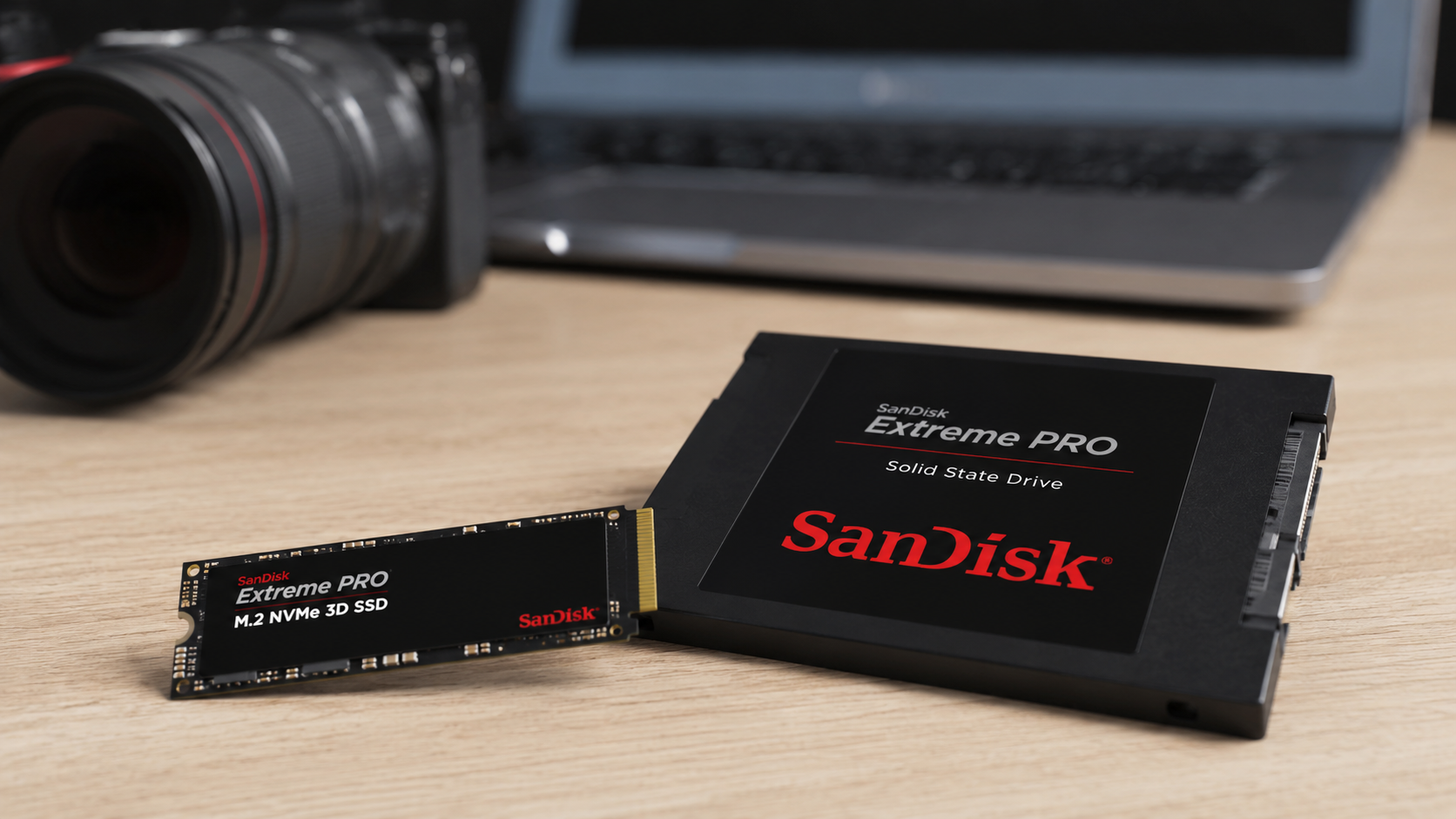
Sandisk Surged 16% on 2030 Guidance. Two-Thirds of Fiscal 2028 Capacity Is Already Locked In.
The memory boom-bust cycle just ended. Sandisk (SNDK) guided fiscal 2028-2030 revenue growth at mid-to-high teens with 80% adjusted gross margins and 50% free-cash-flow margins. Two-thirds of fiscal 2028 capacity is already contracted. Shares jumped 16%.
Micron (MU) rose roughly 7% on the read-through. SK Hynix ADRs (SKHY) jumped roughly 8%. Decades of boom-bust memory cycles are being replaced by a contracted demand floor. Hyperscaler capex commitments are converting from quarterly guidance into multi-year supply contracts.
The Contract Floor
- Half of fiscal 2027 capacity already in multiyear agreements
- Eight customers signed, hyperscalers are the implicit base
- Adjusted gross margins at 84.6% last quarter, stable guidance at 80%
The memory sector's new normal is high-margin, contracted, and visible through 2028. That reprices the entire sector against its historical volatility discount.
The HBM Signal
High-bandwidth memory is driving the contract structure. Micron and SK Hynix disclose next. Their HBM contracts either confirm Sandisk's framework or reveal concentration risk.
Silver Lake in Talks to Buy Workday. PE Says the AI Derating Is Overdone.
The private equity counter-thesis to the SaaS collapse just reached its largest test. Silver Lake is in talks to acquire Workday (WDAY) at roughly $51 billion, one of the largest software buyouts in history. Workday generated $9.6 billion in revenue last year and $2.9 billion in operating cash flow. Shares had fallen roughly 15% year to date before the report.
Thoma Bravo also agreed to buy Accelerant for over $4 billion at a 49% premium. Both deals are conviction bets the market overpriced AI displacement risk.
The Buyout Logic
- Workday at $9.6B revenue, $2.9B operating cash flow
- Silver Lake may bring co-investors, following the EA-Saudi PIF playbook
- Salesforce (CRM), ServiceNow (NOW), and Adobe (ADBE) are the next read-throughs
PE paying a premium for software the credit market is stress-testing is the week's contradiction. Credit prices default risk. PE prices replacement risk. The deal lives in the gap between them.
The Replacement Bet
Bravo and Silver Lake are both betting proprietary workflows and data survive AI disruption. Both bets get tested when Workday, Salesforce, and ServiceNow report Q3.
WARNING: A Major Market Shift Could Hit Stocks in 2026
If you have any money in the stock market, you may want to pay attention.
New research points to a massive market-moving event that could send hundreds of popular stocks into a sudden free fall.
Holding the wrong stocks when this hits could erase years of gains.
That’s why analysts have now identified a list of stocks investors may want to avoid as this event unfolds.
If you want to see what’s coming — and which stocks could be most at risk
OpenAI's Run Rate Topped $40 Billion. It Doubled in Eight Months.
OpenAI's revenue run rate crossed $40 billion, doubling from year end 2025. Revenue accelerated on AI coding software, subscriptions, and a nascent advertising business. Anthropic's May run rate was $47 billion.
OpenAI announced its second new CRO in under a year. Revenue doubled while sales leadership rotated twice.
The Revenue Reality
- Run rate doubled from $20B to $40B in eight months
- Second CRO in under a year appointed the same week
- DeepSeek raised prices fourfold but still far below OpenAI
OpenAI's revenue acceleration is the institutional validation of Eisman's concentration argument. The faster it grows, the more the hyperscalers depend on it. The more they depend on it, the more the Chinese open-source threat matters.
The IPO Sequence
Anthropic IPOs first, OpenAI follows. Anthropic at $2 trillion sets the benchmark. OpenAI prices against it. Every hyperscaler Anthropic mark gets revised upward with the IPO. The concentration risk becomes the valuation risk in the same moment.
The 30-year Treasury cleared at the highest yield since 2001 and nobody is talking about it. Applied Materials named 2030 customer visibility and fell 5% anyway. Sandisk locked in two-thirds of fiscal 2028 memory capacity and jumped 16%. Silver Lake is testing the PE counter-thesis to the SaaS collapse at $51 billion. OpenAI's run rate doubled to $40 billion while its sales leadership rotated.
Nvidia August 26. Jackson Hole August 27. The week ends at a record. The questions that made it expensive remain unanswered.
READER POLL
Which framework most changes your AI positioning?
- A) The 30-year yield at 2001 highs challenging the AI financing stack
- B) Applied Materials falling despite 2030 visibility confirming the beat-rate breakdown
- C) Sandisk's multiyear agreements replacing the memory boom-bust cycle
- D) OpenAI and Anthropic together representing 70% of hyperscaler AI revenue
