


TSMC delivered record earnings. Chips sold off anyway. The AI trade is now being tested on costs, returns, and whether the biggest winners can keep winning.
TSMC Beat Records. Chips Sold Off. The AI Trade Is Having an Identity Crisis.
TSMC posted its fifth consecutive quarter of record earnings and the market's response was to sell chips across the board. The Nasdaq closed down nearly 1 percent. Sandisk (SNDK), Western Digital (WDC), and Marvell (MRVL) led the losses. Dell (DELL) fell again after yesterday's 10 percent drop on AI overbuild fears.
South Korea's Kospi fell over 6 percent. Regulators there banned new single-stock leveraged chip ETFs mid-session.
UnitedHealth (UNH) was the day's standout winner, rising sharply on a decisive earnings beat. WTI closed near $79. Netflix (NFLX) reports after the close, giving markets one more data point before Friday.
Investor Signal
The session split cleanly. Hardware is being sold on beats. Healthcare and industrial names are rising as AI delivers real margin improvement outside the chip complex. That rotation is visible in the tape right now. The question Friday answers is whether it holds or snaps back when Netflix sets the tone for next week's earnings.
7 Buy-and-Hold Stocks You’ll Wish You’d Found Sooner
Not every great buy-and-hold stock is a household name. Our 7 Stocks to Buy and Hold Forever report includes under-the-radar leaders quietly dominating their niches - alongside global brands with unmatched staying power.
Together, they form a portfolio core that can produce rising income and steady growth year after year.
You can get the entire list free today… but only if you act before it moves behind the paywall.
TSMC Beat and Raised. The Market Responded by Selling Everything.
TSMC (TSM) reported Q2 profit up 77 percent and raised full-year revenue growth guidance from above 30 percent to above 40 percent. Gross margin hit a record 67.7 percent. The company also raised capex guidance and announced an additional $100 billion in U.S. investment, bringing its total U.S. commitment to $265 billion.
The market said thanks and sold it anyway. TSMC's U.S. shares fell roughly 3 percent. Micron (MU) fell 8 percent overnight. Arm Holdings (ARM) fell 5+ percent. South Korea banned new single-stock leveraged chip ETFs. The WSJ noted that some big hedge funds are simply ending their relationship with the sector, regardless of the earnings.
That is the story. Not the numbers. When a sector sells its best quarter ever, the trade is over until something new changes the story.
The Capex Inversion Signal
- TSMC capex raised to $60-64 billion from $52-56 billion
- Record 67.7 percent gross margin still not enough to lift the sector
- Dell fell another 1 percent after yesterday's 10 percent AI overbuild drop
- South Korea banned new single-stock leveraged chip ETFs during the session
TSMC makes chips for Nvidia (NVDA), Apple (AAPL), Qualcomm (QCOM), and Advanced Micro Devices (AMD). When that company gets sold on a record beat, the market is pricing the cost of the buildout rather than the demand for it. Those are very different things.
The Guidance Signal
A second TSMC capex raise before year-end confirms the buildout is running faster than capital markets want to fund it. No revision names the current guidance as the ceiling the market needed before it could breathe again.
UnitedHealth Posted a Decisive Beat. AI Is Running the Cost Framework Now.
UnitedHealth Group (UNH) reported adjusted earnings of $6.38 per share against $4.90 expected. Medical loss ratio improved sharply to 86.7 percent from 89.4 percent a year ago. Full-year guidance was raised well above consensus. Shares rose significantly.
The company invested roughly $1.5 billion in AI in 2026, targeting prior authorizations, fraud detection, and payment accuracy. The medical loss ratio improvement is the direct outcome. This is what AI looks like when it works on cost structure rather than revenue generation.
Apollo's Torsten Slok asked earlier this week whether the AI capex boom would generate real margin improvement for the 493 companies outside the Magnificent Seven. UnitedHealth answered yes in one earnings report, on the same day TSMC's record beat was being sold. Both things happened on the same Thursday afternoon.
The AI Margin Signal
Elevance (ELV) stabilizing alongside UnitedHealth in coming sessions names yesterday's 10 percent Elevance drop as company-specific execution failure. Continued Elevance weakness names UnitedHealth as the sector outlier that got it right, not the trend.
Hidden in Tesla's Filing: A $12 Billion "Super Startup"
Pull up Tesla's most recent SEC filing. Page 5.
And you'll see a single line showing $12 billion in revenue from a brand-new "super startup" Elon Musk has been quietly incubating inside Tesla.
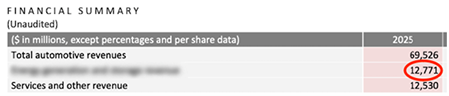
This new "super startup" has nothing to do with cars or robots or space or AI…
But it sits at the center of what Blackstone calls "a $23 trillion investment opportunity."
And on July 22, Elon is expected to pull back the curtain and reveal exactly what he's building.
But Adam O'Dell already knows… and he reveals it all in this urgent video.
SpaceX Has $123 Billion in Shares Waiting to Unlock in Early August.
SpaceX (SPCX) has been trading around its $135 IPO price all week. The reason is mechanical. In early August, after SpaceX's first quarterly earnings report, 911 million shares became eligible for sale. At current prices that is roughly $123 billion in new supply entering a market where only $86 billion worth of shares currently trade on Nasdaq.
The stock is down a third from its peak and trades at nearly 50 times expected revenue. Tesla (TSLA) trades at 15 times. SpaceX lost nearly $5 billion last year. The index inclusion buying is done. The lockup supply is coming. Nothing structural supports the stock until earnings justify the valuation independently.
Anthropic's fall IPO roadshow opens directly into this backdrop. Every institutional buyer in that room will have the SpaceX chart on their screen.
The Lockup Supply Signal
- 911 million shares unlock in early August after first quarterly earnings
- Worth roughly $123 billion, eclipsing the current $86 billion float
- An additional 455 million shares unlock if stock sustains above $175.50 for five of ten days
- 27 of 32 analysts still recommend buying despite the decline
The specific quarterly earnings date announcement is the event that sets the lockup trigger. That date is now the most important single item on the AI IPO calendar.
The Anthropic Window Signal
SpaceX recovering above $135 before Anthropic's investor meetings gives the fall roadshow a cleaner backdrop. Continued weakness forces the valuation conversation before Anthropic files a single document.
Retail Sales Rose in June. The Iran Ceasefire Did the Work. That Window Is Gone.
Retail sales rose in line with expectations in June. Excluding gas stations they were up a solid 0.7 percent. Gas station receipts fell sharply as fuel prices dropped during the temporary Iran ceasefire. Autos did well. Amazon (AMZN) Prime Day boosted nonstore retail. Jobless claims came in better than expected. Manufacturing activity in the Philadelphia region surged to its highest level since 2021.
The data looks strong. But the ceasefire that pulled gas prices down in June has since collapsed. Jet fuel is up roughly 34 percent in July alone. The same consumer who drove the June beat is now filling up at prices that have fully reversed.
June retail data captured a window that no longer exists. The July print will tell a different story.
The July Reversal Signal
Continued strength in higher-income spending in July data confirms the fuel shock is being absorbed at the top of the income distribution. Any weakness there names the fuel cost as having reached the tier that drove June's beat. That distinction separates a soft landing from something more complicated.
15X Bigger Than SpaceX: Elon's New Launch

While the rest of the market goes crazy for "the mother of all IPOs", a new Elon Musk innovation is quietly being rolled out nationwide. It's been 27 years in the making, and it could have a radical impact on how millions of people manage their money… and even collect Social Security. Here's everything you need to know.
This ad is sent on behalf of InvestorPlace Media at 1125 N. Charles Street, Baltimore, Maryland 21201. If you're not interested in this opportunity, please click here.
JPMorgan Named a Second Oil Shock. Russian Refining Is the New Problem.
JPMorgan's commodity team flagged that Russia's refining system is breaking down on top of the Hormuz disruption. Russian refinery output fell sharply this week. Diesel exports have collapsed to near zero from roughly 800,000 barrels per day in 2025.
Hormuz is a crude supply problem. Russian refining is a refined products problem. Both are hitting at the same time. Global onshore oil inventories have fallen to record lows. Refining margins in both the U.S. and Europe are surging toward records. Refiners are printing money on the same shock that is eating airline profits and squeezing consumers at the pump.
A Senate bill proposing 100 percent tariffs on the top buyers of Russian crude including China and India would add a third layer on top if it passes.
The Supply Stack Signal
- Russian diesel exports near zero versus 800,000 barrels per day average in 2025
- Global onshore oil inventories at record lows
- Refining margins near records in both U.S. and Europe
- JPMorgan forecasts WTI to average $81 per barrel in Q3
The Russian sanctions bill passing in the next 30 days converts a two-layer supply crunch into a three-layer one. That changes the oil price floor for Q3 regardless of what happens in Hormuz negotiations.
The Sanctions Signal
Senate passage names the oil supply crunch as live through Q4 regardless of any Iran deal. Continued delay preserves the current structure. Either way the Russian refining story now sits alongside Hormuz as the specific driver of where oil goes next.
The AI capital cycle spent Thursday stress-testing itself from every angle.
TSMC posted record after record and chips sold off hard. UnitedHealth proved AI can move the needle on margins outside the chip complex. SpaceX is pricing $123 billion in lockup supply before Anthropic's roadshow even begins. June's consumer strength was built on a ceasefire that no longer exists. And JPMorgan named Russian refining as a second oil shock running alongside Hormuz.
Friday still ahead. Netflix after the close sets the tone.
